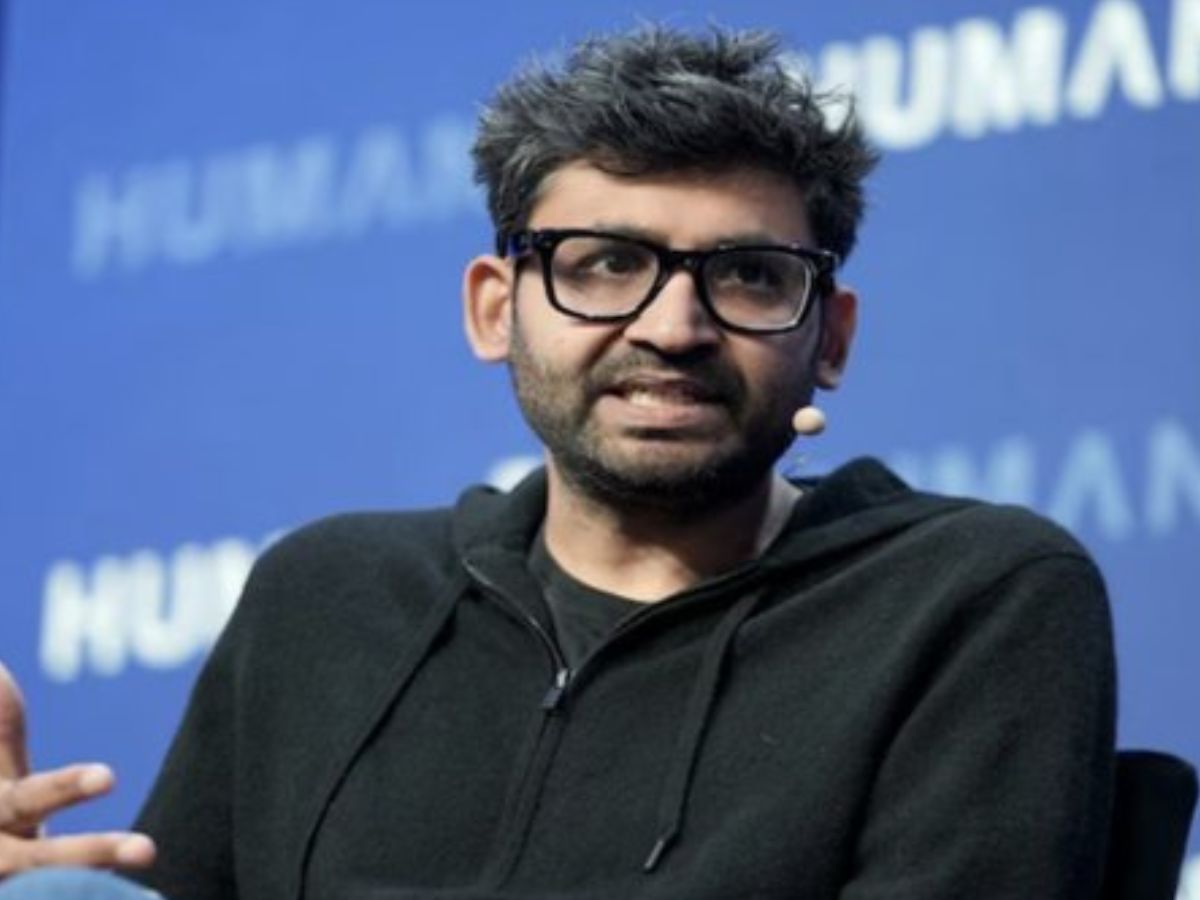
Parag Agrawal, the former CEO of Twitter who was ousted by Elon Musk during his $44 billion takeover, is back in Silicon Valley with a bold new mission. His startup, Parallel Web Systems, is already being hailed as one of the most important AI companies of 2025. Early benchmarks reveal that its accuracy outperforms GPT-5 by 10–15%, positioning Agrawal as a major player in the global AI race.
From Twitter CEO to Forced Exit
Agrawal became Twitter’s CEO in November 2021, succeeding co-founder Jack Dorsey. Less than a year later, Elon Musk bought the platform, rebranded it as X, and fired Agrawal along with most top executives. Musk not only mocked his departure but also refused to pay his full severance package, dismissing it as bogus.
Despite the setback, Agrawal quietly regrouped. He started meeting engineers in Palo Alto coffee shops, reading research papers, and writing code again. Instead of stepping away from tech, he began planning a new vision one that could challenge not just Musk’s X, but also Sam Altman’s OpenAI and other AI leaders.
Parallel Web Systems: Building the Web for AI Agents
In late 2024, Agrawal launched Parallel Web Systems, raising over $30 million from investors like Khosla Ventures and Index Ventures. The startup is now valued at $450 million and handles millions of AI research queries daily.
Agrawal’s idea addresses a core problem in AI: large models like GPT-5, Google Gemini, and Anthropic Claude often “hallucinate” facts or produce unreliable information. Businesses lose billions each year due to these flaws.
To solve this, Agrawal designed eight specialized research engines, each built for a different depth of analysis. For example, Ultra1x provides results in just 60 seconds, while Ultra8x delivers deeper research within 30 minutes. Every answer comes with confidence scores and verifiable citations, eliminating guesswork and boosting trust.
The results are striking:
-
Parallel Web Systems: 58% accuracy
-
GPT-5: 41% accuracy
-
Google Gemini: 23% accuracy
-
Anthropic Claude: 7% accuracy
This leap has made Agrawal’s company a strong rival to both OpenAI, led by Sam Altman, and XAI, Elon Musk’s AI unit.
Also Read: AI’s Privacy Blindspot: What Grok’s Data Leak Means for Users
Musk, Altman, and Agrawal: Three Visions for AI
The AI race is increasingly defined by three figures:
-
Elon Musk, who turned Twitter into X and built xAI, promoting a future where AI is fully aligned with human values.
-
Sam Altman, who leads OpenAI, pushing models like GPT-5 into mainstream applications while raising billions for global expansion.
-
Parag Agrawal, once dismissed by Musk, now leading Parallel Web Systems, which focuses not on building the biggest model, but on making AI more reliable, research-driven, and accountable.
Agrawal’s approach has earned him the label of Silicon Valley’s “quiet disruptor” an engineer who prefers coding over hype but may end up shaking the foundations of the AI industry.
Personal Life and Roots
Parag Agrawal was born in Ajmer, Rajasthan, in 1984. After excelling in academics, he went on to graduate in Computer Science from IIT Bombay in 2005. Determined to deepen his expertise, he pursued higher studies at Stanford University, where he completed his Ph.D. in 2012 with research focused on distributed systems. He lives in California with his wife, Vineeta Agarwala, a partner at Andreessen Horowitz, and their two children. Beyond work, he enjoys skiing, hiking, cricket, and celebrating Indian festivals with his family. His professional journey began when he joined Twitter as an engineer in 2011. Over the years, his sharp technical insights and leadership helped him rise through the ranks, and by 2017 he was appointed as Twitter’s Chief Technology Officer. In a major milestone, he became Twitter’s CEO in 2021 at just 37 years old, making him one of the youngest leaders in Silicon Valley. However, his tenure was cut short in 2022, when Elon Musk acquired Twitter and rebranded it as X, resulting in Agrawal’s exit. Refusing to let the setback define him, Agrawal staged a comeback in 2024 with the launch of Parallel Web Systems, an ambitious AI platform now drawing global attention for its advanced accuracy and innovation. 2025 Startup reaches $450 million valuation, surpassing GPT-5 in accuracy. Parag Agrawal’s return is not just a comeback story it’s a challenge to the AI status quo. In a world dominated by Musk’s XAI and Altman’s OpenAI, Agrawal has carved a unique space by focusing on trust, accuracy, and research-driven AI. His journey from Twitter’s downfall to Silicon Valley’s rising disruptor shows that he may now be one of the most important names in shaping AI’s future.
Also Read: Ex Twitter CEO Parag Agrawal’s Parallel: Redesigning the Internet for Artificial Intelligence