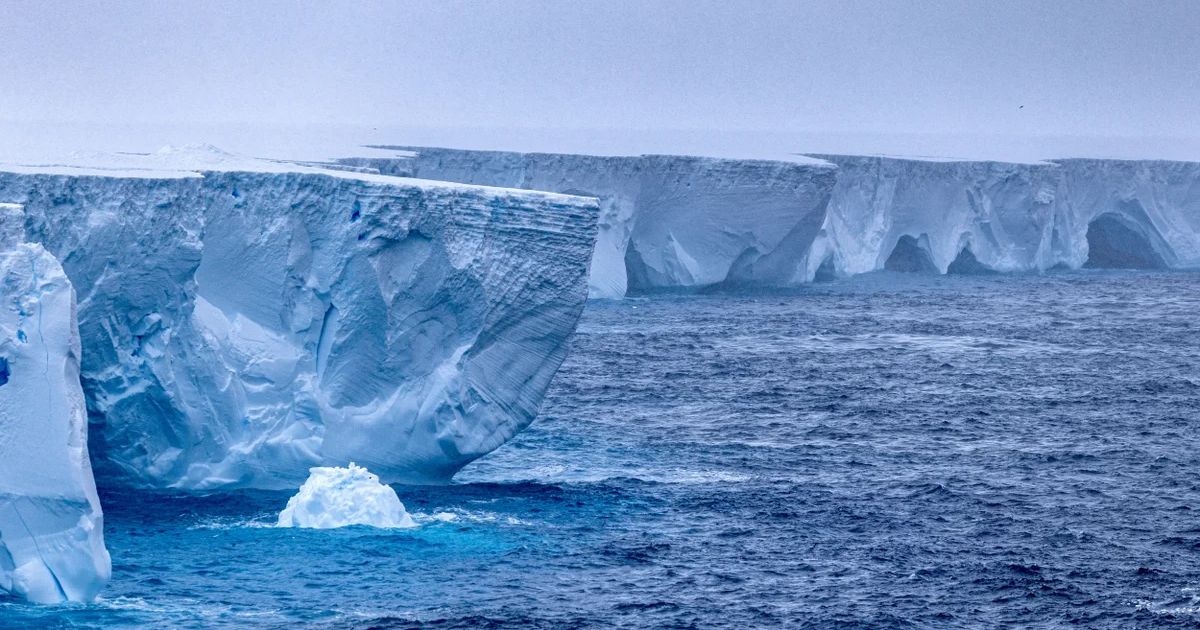
One of the planet’s most remarkable icebergs, A23a, is now close to the end of its life of decades. Experts say the colossal slab of ice, which was at one time the world’s largest iceberg, is fragmenting fast and may disappear in weeks.
From Stalled Giant to Free Drifter
A23a calved from Antarctica’s Filchner Ice Shelf in 1986. It was stranded on the bottom of the Weddell Sea for over 30 years before breaking off in 2020. Driven by strong currents into the South Atlantic, it slid into the infamous “iceberg alley,” the graveyard for many of Antarctica’s ice giants.
In earlier this year, the iceberg was still an enormous 3,100 square kilometres in size larger than Long Island and over two times bigger than London. However, satellite images from the EU’s Copernicus program in recent times show its size has been reduced significantly to approximately 1,770 square kilometres, less than half the initial size.
Breaking Apart in Warmer Seas
The berg’s breakdown has been quick and spectacular. Huge pieces have shattered off, including a block with an area of 400 square kilometres. Thousands of smaller bergs now cover the waters around, posing potential dangers to shipping channels.
“On this iceberg is disintegrating quite dramatically,” said Andrew Meijers, an oceanographer with the British Antarctic Survey. A23a had even grounded earlier this year just off South Georgia island, and there was a fear that it could seal off access for tens of millions of penguins and seals that nurse their young there. Fortunately, it floated free in May and continued on its way, but its meltwater keeps flowing into the ocean, changing ecosystems in the area.
ALSO READ: Earth’s Core Leaks Gold in Lava from Hawaiian volcanoes: Scientists Discover Rare Metals Escaping
Climate Change and the Iceberg Graveyard
The splitting of A23a is within the natural cycle of calving of icebergs in Antarctica, but researchers say that global warming is speeding up the process. The continent is warming at a quicker rate than the rest of the world, making more giant icebergs calve more often.
Now floating into seas where previous behemoths such as A68 rapidly disintegrated, A23a’s destiny is sealed. Warming seas and pounding waves are disintegrating it. Although the iceberg’s nutrients can temporarily stir up marine life, its death shows the precarious balance of a region squeezed by the climate emergency.
Finally, after close to four decades, the megaberg’s epic journey is coming to an end not with a sensational catastrophe, but with a gradual and inexorable melt.