
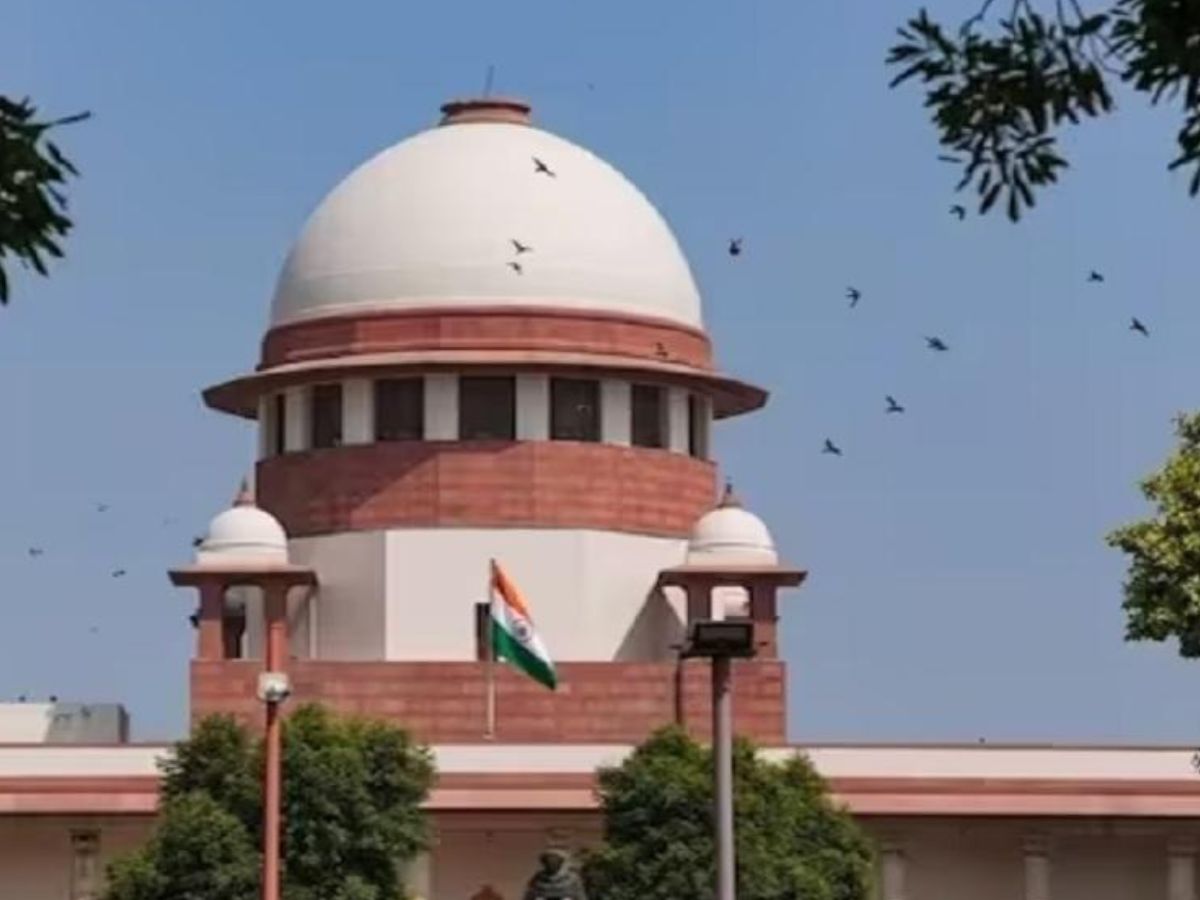
Delhi: The Supreme Court on Monday raised serious concerns over how the Delhi government is implementing the Delhi School Education (Transparency in Fixation and Regulation of Fees) Act, 2025, particularly during the ongoing academic year. A Bench comprising Jus- tices P. S. Narasimha and Alok Aradhe observed that while the law was enacted for a valid regulatory purpose, its timing and method of implementation appeared unclear and po- tentially impractical.
The Court noted that the academic session has already begun and ques- tioned why fee-related approvals are being introduced at this late stage. The Bench cautioned that rolling out new approval mechanisms once the academic year is underway could create administrative challenges for schools, par- ents, and students. It suggested that such a rushed approach may not align with the normal function- ing of educational institu- tions during an active session.
The observations came while hearing a batch of pe- titions filed by associations representing private unaid- ed schools in Delhi. These schools have challenged both the implementation of the Act and a subsequent circular issued by the Delhi government. Advocate Satya Ranjan Swain, who previously ap- peared before the Delhi High Court in matters related to school fee hikes, described the Delhi School Education (Transparency in Fixation and Regulation of Fees) Act, 2025 as a well-considered and pro- gressive law.
He said the Act addresses the long- standing issue of arbitrary fee hikes by private schools and aims to bring transpar- ency, accountability, and a structured system for fee fixation.
Swain emphasised that the law does not undermine the autonomy of schools but ensures that fee increases are reasonable, justified, and linked to actual costs and educational outcomes.
He added that such regulation is necessary in a sector that directly affects access to quality education and welcomed the Supreme Court’s deci- sion not to intervene at this stage, keeping the legisla- tive intent in mind.