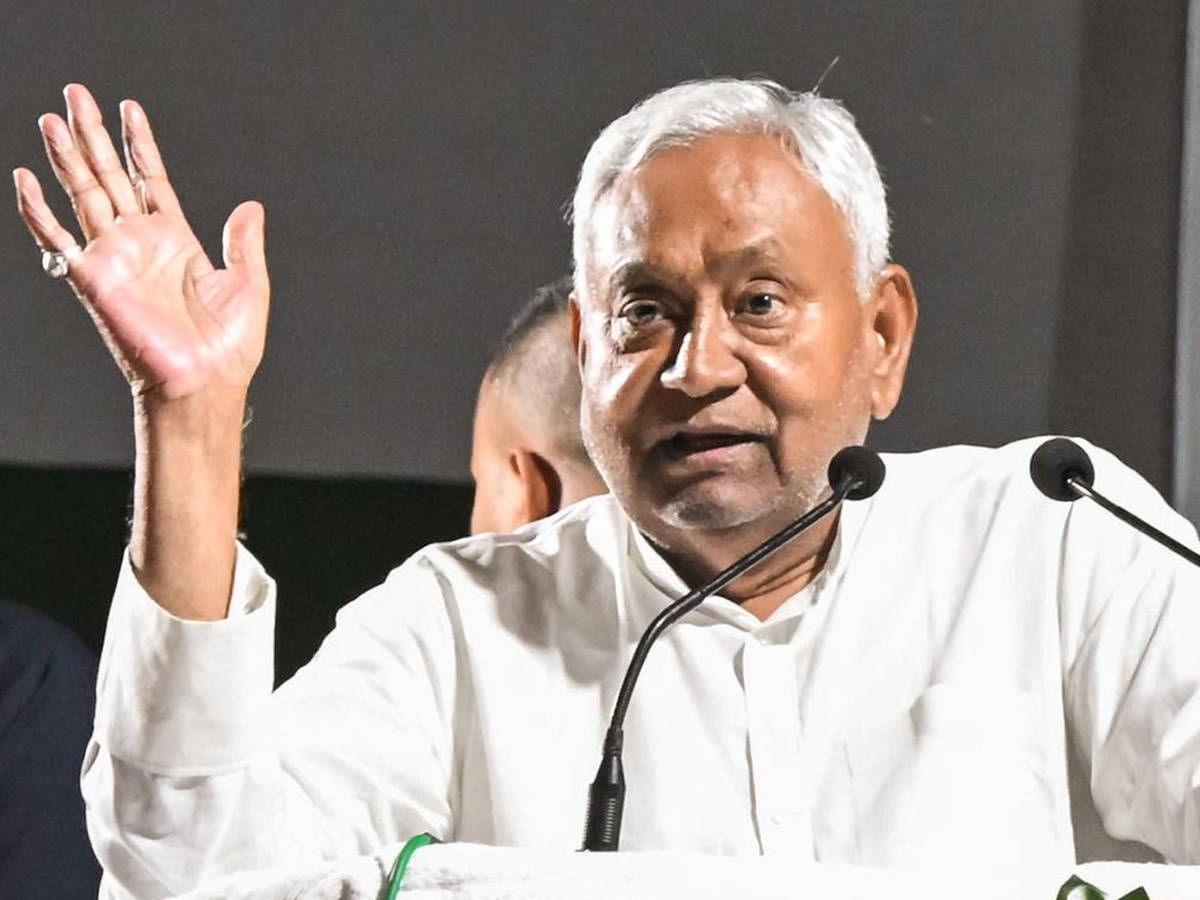
Bihar is preparing for a significant political moment as Nitish Kumar gets ready to take the oath as chief minister once again on Thursday. With strong backing from the National Democratic Alliance (NDA), he is set to begin yet another term, one that reflects both his long journey in state politics and the evolving political landscape of Bihar. The oath ceremony will take place at 11:30 am at Patna’s historic Gandhi Maidan, where senior national leaders and NDA workers will gather in large numbers.
The NDA secured a big victory in the 2025 Bihar elections by winning 202 seats in the 243-member assembly. Following the win, the 75-year-old JD(U) president was unanimously chosen as the leader of the NDA legislature party on Wednesday, clearing the final step before the oath-taking ceremony.
Nitish Kumar’s First Tenure: A Brief and Turbulent Chapter
Nitish Kumar’s 10th oath stands in sharp contrast to his very first experience as chief minister in 2000. That year, after a split verdict in the state elections, he served as chief minister for barely a week.
In the February 2000 Bihar assembly polls, Lalu Prasad Yadav’s RJD won 124 seats while the BJP–Samata Party-led NDA secured 122 seats in the then 324-member House. The majority mark was 163, leaving both blocs short of the required numbers.
Despite this, Governor Vinod Chandra Pande invited Nitish Kumar, then a Union minister and the BJP’s chosen face in Bihar, to form the government. He took oath on March 3, 2000, with the support of 151 NDA and allied MLAs.
Role of the Vajpayee government in the 2000 Bihar Government
The Vajpayee government at the Centre strongly backed him, with leaders like LK Advani and George Fernandes playing key roles. But RJD, which had 159 MLAs and remained numerically ahead, protested aggressively. The next few days saw intense political attempts from both sides to bring MLAs to their camps.
With no side able to secure the majority mark, the Nitish Kumar government collapsed on March 11. His tenure lasted just seven to eight days, making it one of the shortest in Bihar’s political history.
From One of the Shortest Terms to a Historic 10th
As Nitish Kumar steps into his new term, the moment carries symbolic significance. It shows how far he has come—from struggling to run a government for a week in 2000 to taking the oath for the 10th time with one of the strongest alliances behind him.
Nitish Kumar has described the upcoming term as a continuation of the governance model he claims began in 2006. He has also said that development work will move faster with “central support”.
With the NDA returning with a huge mandate and long-time partners sharing the platform with him once again, Nitish Kumar begins his new term with both political experience and public expectations shaping his path forward.