The image of Vinayak Damodar Savarkar being put on a formal Independence Day poster in 2025 has yet again escalated a decades-old controversy, making the political narrative more difficult for the Congress-led opposition and revealing inherent ideological fault lines in Indian politics.
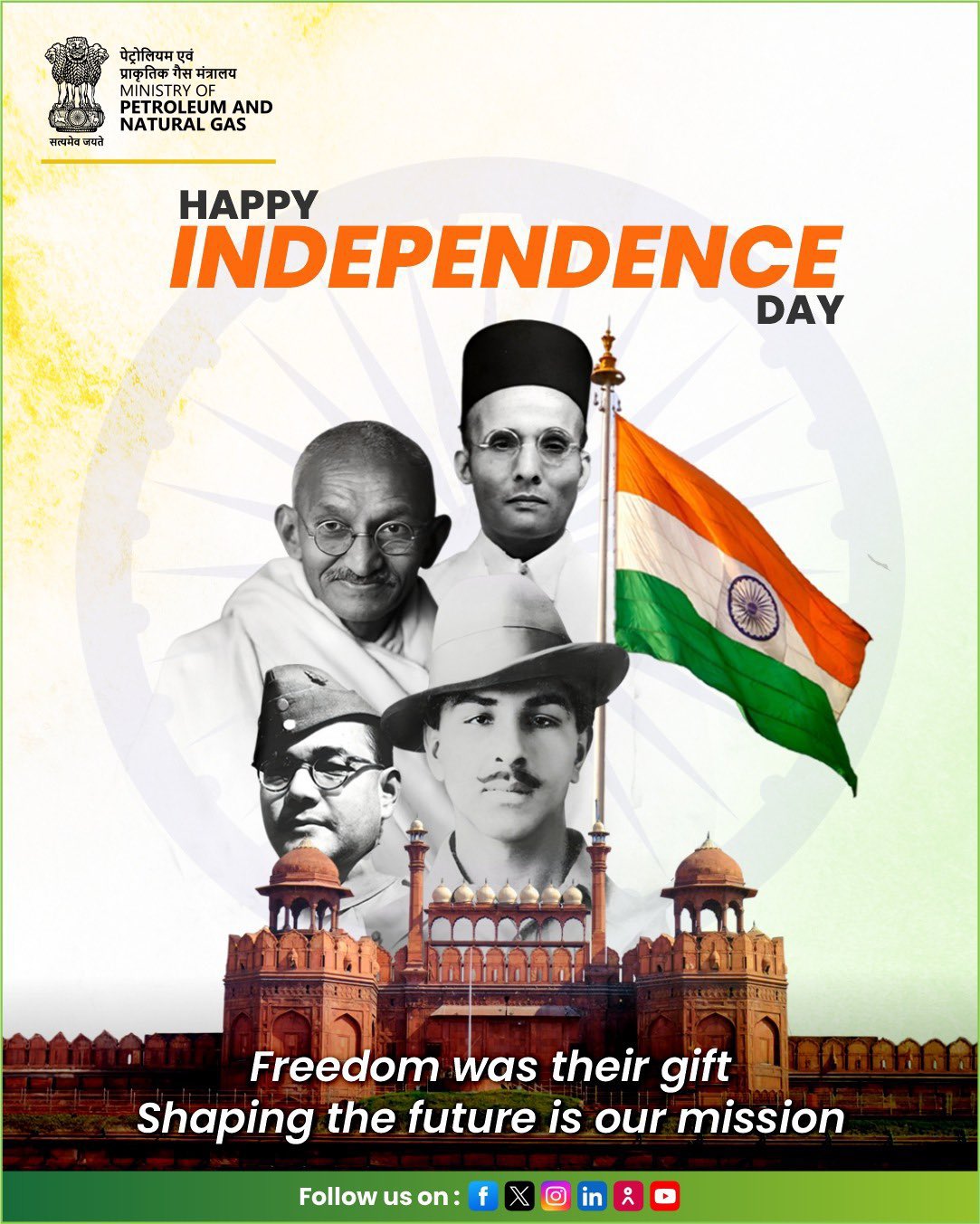
Ministry of Petroleum and Natural Gas tweeted ‘Happy Independence Day’ with a poster having Gandhiji, Netaji Subhas Chandra Bose, Bhagat Singh and VD Savarkar. This seems to have given Congress clearly an avoidable chance to have at it and denigrate the Savarkar’s image to the person they claim he was.
The Historical and Ideological Divide
Savarkar, a Hindutva ideologue and a freedom movement hero and controversial figure to some, continues to be an icon for much of the BJP and its supporters. Yet, his record is disputed: his dangerous divisive ideology, alleged connections to the assassins of Mahatma Gandhi, and his notorious mercy petitions to the British colonial rulers during those times are cited as reasons against him. Congress, which honours the secular and inclusive tradition of freedom fighters such as Gandhi, Nehru, and Patel, has never accepted Savarkar as a true freedom fighter, citing that his work was contaminated with his involvement in sectarian politics and alleged lack of dedication towards the Quit India movement.
Ministry of Petroleum and Natural Gas tweeted the following, with Independence Day wishes.
As we celebrate our nation’s independence, let’s remember — liberty thrives when we nurture it every day, through unity, empathy, and action. 🇮🇳
Happy #IndependenceDay #MoPNG pic.twitter.com/oeb39NlZBb— Ministry of Petroleum and Natural Gas #MoPNG (@PetroleumMin) August 15, 2025
A Political Lightning Rod
Every time Savarkar’s face is plastered on national emblems or government billboards, protest from Congress and coalition partners is inevitable. For opposition parties, such actions are a BJP and ally bid to re-write India’s consensus history, putting ideologues of Hindutva above symbols of pluralism. Congress leaders, in fact, have strongly protested, characterising the 2025 poster as an insult to India’s martyrs’ spirit and an effort to push aside more mainstream heroes.
Examples in Karnataka and Kerala have indicated that Savarkar’s portrait on Congress headquarters or as part of Bharat Jodo Yatra banners can generate intense intra-party criticism, media shame, and even party disciplinary measures. Regional Congress leaders have at times had to quickly remove or cover his photographs, due to misprints or acts of provocative impulse by opposition parties, to prevent themselves from being perceived as supporting Savarkar’s legacy.
Social Discord and Electoral Calculus
For the Congress, Savarkar is a symbol employed by the BJP to solidify its Hindu nationalist constituency and challenge the opposition into irate responses—a tactic that yields electoral gains in polarised settings. His inclusion on the Independence Day poster is therefore not only a historical controversy but a deliberate political manoeuvre.
Kerala Congress retweeted the Ministry’s tweet after a ‘fix’. Have a look:
Fixed! https://t.co/g1SvExtWc4 pic.twitter.com/gylqetij9D
— Congress Kerala (@INCKerala) August 15, 2025
Now this places the Congress-led opposition in a dilemma: protesting too vociferously risks alienating Hindu voters swayed by Savarkar’s persona and rhetoric, while avoiding such allusions enables BJP to further normalise ideologues of India’s right-wing history. The outcome is a perennial battle over the symbol of freedom and narrative of Indian history.
Conclusion
Finally, Savarkar’s inclusion on the Independence Day poster reveals the ideological struggle for India’s national narrative. To the Congress-led opposition, it is a plain affront to secular and pluralist values, prompting them to grapple with internal fissures as well as changing public attitudes, as the BJP uses the controversy to political ends.