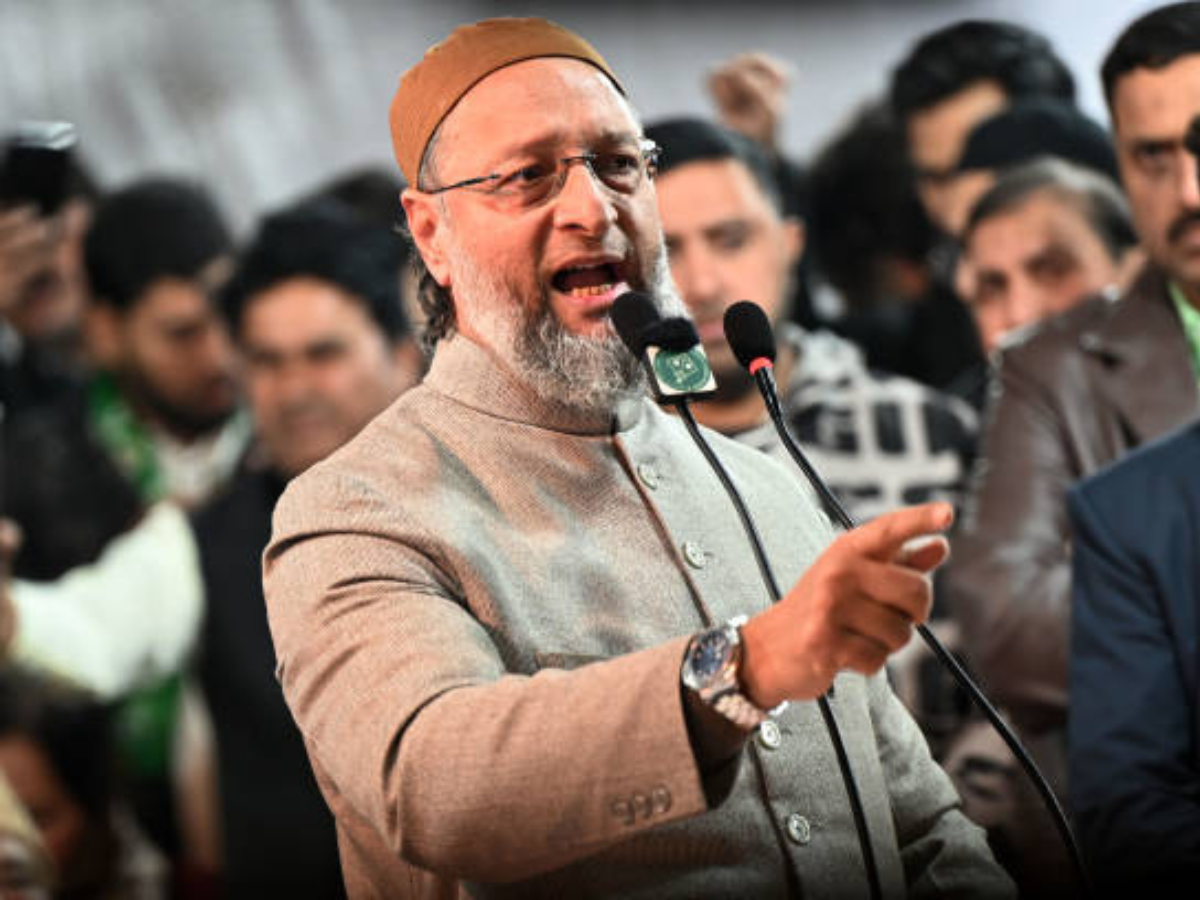
Today, the president of all India Majlis-e-Ittehadul Muslimeen (AIMIM), Asaduddin Owaisi, had very serious misconceptions when it spoke out against the recently constituted bills that would call for depriving Prime Ministers, Chief Ministers and even ministers from holding office on account of being detained for 30 days. By speaking to reporters, Hyderabad MP questioned whether the power exists within the ideology of India for the President of India to remove a sitting Prime Minister. This was also termed as very much direct contradiction of the constitutional principles.
VIDEO | Speaking to reporters about the Constitution (130th) Amendment Bill, AIMIM chief Asaduddin Owaisi says,”… We have stated in the Constitution that the President of India will be guided by the aid and advice of the Council of Ministers. This article is in the… pic.twitter.com/5uLHWZE9xF
— Press Trust of India (@PTI_News) August 25, 2025
ALSO READ: ‘Morality changed due to 3 election losses’: Amit Shah Slams Rahul Gandhi over bill
Accordingly, the Constitution makes it clear that the said Presidency is bound by the advice from the Council of Ministers. Therefore, under this legislation to allow the President to dismiss a Prime Minister, there exists the danger whereby this parliamentary system may even fall apart, throwing off the tenuous balance of powers, as enshrined in the Constitution.
Affecting Federal Well-Being
The AIMIM chief cautioned that there would be effects at large in regard to a state government if the bill would pass into law. If the Centre would detain at least two or three ministers in a cabinet in a state, the whole government would come to a halt and practically, federal autonomy would be under siege. According to Owaisi, that would generally undercut the newfound independence of elected governments and put them at risk through arbitrary Central control.
#WATCH | Hyderabad | On the Constitution (130th Amendment) Bill, 2025, AIMIM MP Asaduddin Owaisi says,” …We will request the Speaker to include us in the JPC…You should make the investigative agencies independent. Does constitutional morality not come here?…” pic.twitter.com/iyY84pmxu0
— ANI (@ANI) August 25, 2025
ALSO READ: SC Reopens Death Penalty Sentencing: Article 32 Invoked to Protect Rights in Capital Cases
This could well clarify the point whereby political battles would not be fought in legislatures but through arrests and detentions to deny people’s rights of choosing and retaining their governments.
On the Road to Police State
Owaisi’s comments in Parliament were no less critical, as he characterized the bills as a step closer to creating a Police State and a death sentence for elected governments. As he put it, the laws would not just contravene the division of powers but also hamstring democratic institutions because they grant undue powers to the executive.
According to him, governance must primarily be patriotic in constitutional morality by the will of the people, and not by provisions that can allow government to cause destabilization in the opponents by means of legal processes. By questioning the intent and implications of these bills, Owaisi has revived debate on the limits of executive power and the future of India’s democratic framework.
ALSO READ: Amit Shah Dismisses Rahul Gandhi’s Viral Reels as ‘Illusions’ Amid Congress Digital Rise