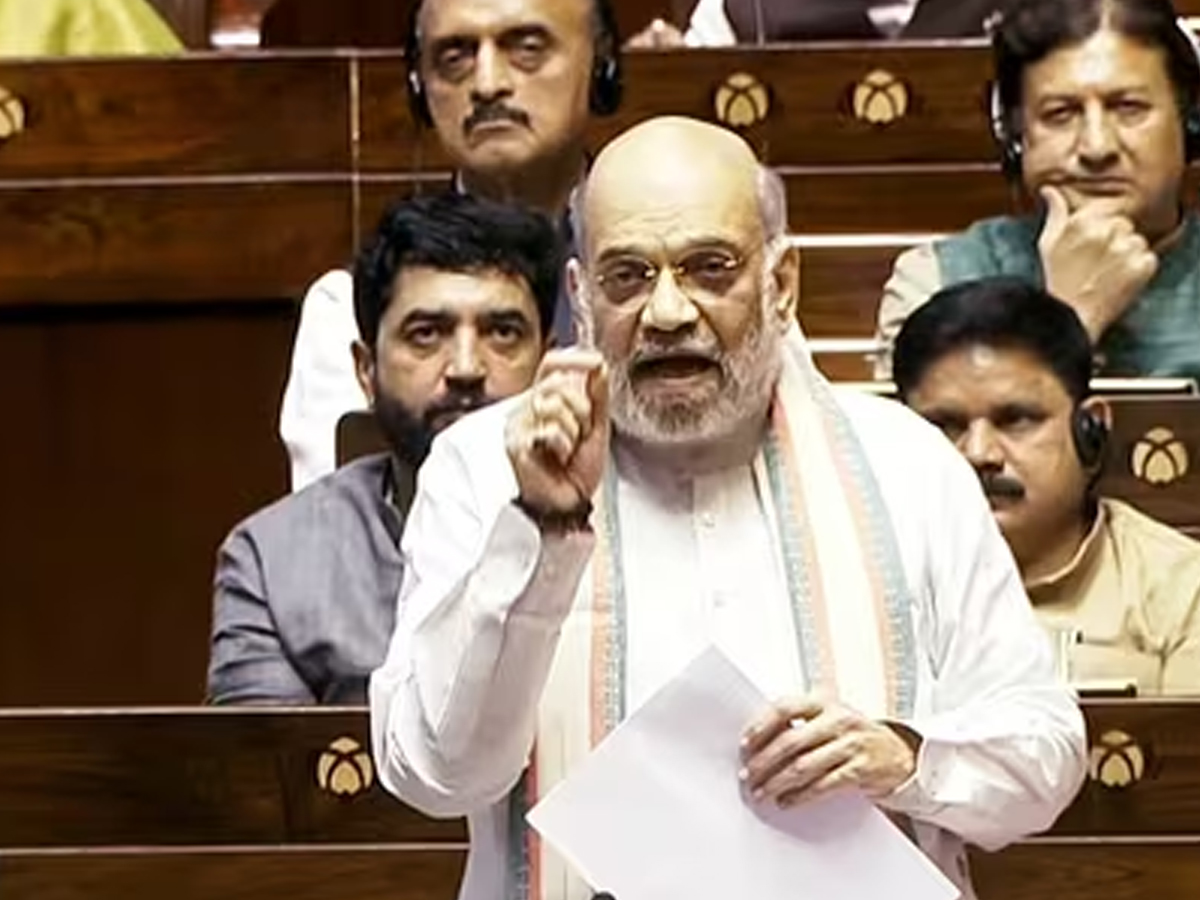
Union Home Minister Amit Shah on Wednesday introduced three controversial bills in the Lok Sabha. These bills propose that any sitting minister, chief minister, or even the prime minister can lose their position if they are arrested or detained for 30 consecutive days. The rule will apply to offences carrying a punishment of five years or more in jail.
The moment Shah introduced the bills, AIMIM chief Asaduddin Owaisi strongly opposed them. His objections led to loud protests from the Opposition. The uproar forced Lok Sabha Speaker Om Birla to adjourn the House until 3 pm.
Owaisi argued, “This violates the separation of powers. It gives executive agencies power to play judge, jury, and executioner. This bill would empower the unelected to play the role of the executionary.”
VIDEO | Parliament Monsoon Session: Union Home Minister Amit Shah (@AmitShah) tables the Constitution (130th Amendment) Bill, 2025, the Government of Union Territories (Amendment) Bill, 2025, and the Jammu and Kashmir Reorganisation (Amendment) Bill, 2025 in Lok Sabha.… pic.twitter.com/AB8NBhPj3C
— Press Trust of India (@PTI_News) August 20, 2025
He also warned, “Sections of this bill can be used to destabilise governments. This bill is nothing but creating a Gestapo.”
What the Bills Propose
The three bills are:
- The Constitution (130th Amendment) Bill
- The Jammu & Kashmir Reorganization (Amendment) Bill
- The Government of Union Territories (Amendment) Bill
Together, these bills create a new framework that applies to ministers and chief ministers in states and Union territories, and even Union ministers and the prime minister at the Centre.
Laid the Constitution (One Hundred and Thirtieth Amendment) Bill, 2025 in the Lok Sabha. pic.twitter.com/wsohG2UP6x
— Amit Shah (@AmitShah) August 20, 2025
Importantly, the proposal allows a dismissed leader to return to their position once released from custody.
Congress Slams Move as “Destructive”
Congress MP Manish Tewari also opposed the move, calling the bills “squarely destructive.” He argued, “The Indian constitution says there should be a rule of law, and the basis of that is that you are innocent until proven guilty. This bill hopes to change that. It makes an executive agency officer the boss of the Prime Minister.”
Tewari urged Speaker Om Birla to give the Opposition time to explain why they believe the bills are dangerous for democracy.
Why the Bills Matter
If passed, these bills could mark a dramatic shift in Indian politics. Investigating agencies may have an indirect voice in political stability if they have the authority to remove a minister, chief minister, or a prime minister for being detained. It might be abused to overthrow governments, according to critics. Advocates might contend that it encourages responsibilities.
For now, the debate remains heated, and the bills are likely to see more protests when the House resumes.
ALSO READ: Did Stray Dog Rulling Trigger Attack on Delhi CM Rekha Gupta?