
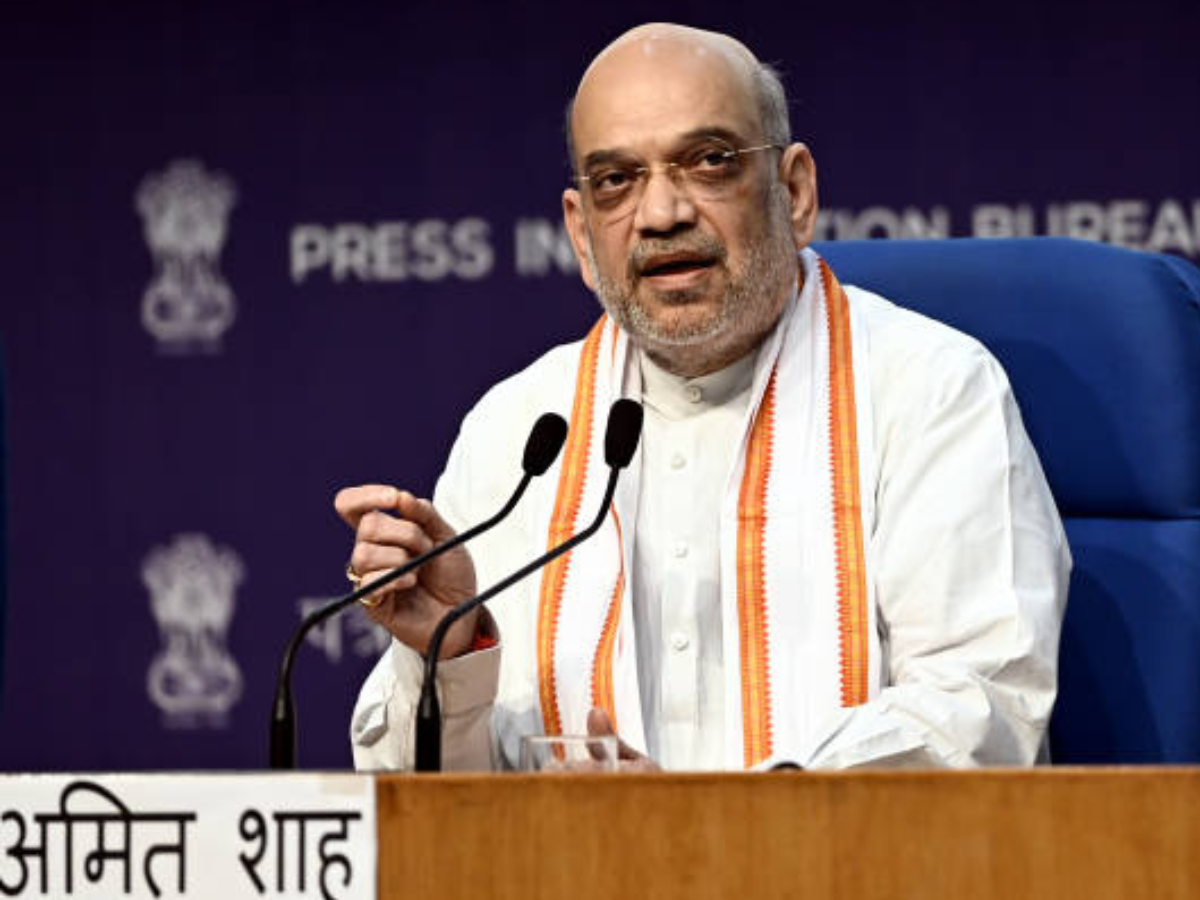
Three significant bills will be introduced in the Lok Sabha by Union Home Minister Amit Shah, which include the most significant bill, namely the Constitution (130th Amendment) Bill, 2025.
The proposed law makes an unprecedented provision any minister, be it at the Centre or the states, who continues to be in custody for 30 days on charges punishable with five years or more of imprisonment would stand to be disqualified from holding office. In this situation, the President would act on the advice of the Prime Minister for such disqualification.
Jammu & Kashmir and Union Territories in Focus
Concurrently, Shah would bring in amendments to the Government of Union Territories Act and Jammu and Kashmir Reorganization Act, 2019.
ALSO READ: IIM Amendment Bill Passed in Lok Sabha Despite Opposition Uproar
The bills would establish a similar legal mechanism for removing chief ministers or ministers who are under prolonged detention on serious charges. The amendment goes on to State that such leaders destroy “constitutional morality and public trust” and must vacate their office in order to protect democratic integrity.
Parallel Legislation on Online Gaming
In addition, Union IT Minister Ashwini Vaishnaw will table the Promotion and Regulation of Online Gaming Bill, 2025.
With the draft law intended to curb cross-border and interstate money-based online games on youth, vulnerable communities and financial system grounds, it promotes responsible digital use and safeguards public order from the detrimental impacts of unregulated gaming.
Opposition Voices Alarm
The opposition reacted sharply to the bills, terming them “draconian.” The leaders maintained that these bills could be used for destabilizing the opposition-led governments through politically motivated arrests.
Congress MP Abhishek Manu Singhvi warned that the proposed move would then provide the ruling authorities with an opportunity to utilize investigative agencies to malign opponents without establishing any guilt before a court of law.
ALSO READ: PM Modi Hails Amit Shah as India’s Longest-Serving Home Minister
Why These Bills Matter
No legal provision expressly prohibits ministers and indeed even prime ministers from remaining in office while in custody. There is a need to amend section 45 of government of union territories act 1963 for providing a legal framework for the removal of CM.
Disqualification for MPs and MLAs occurs only after conviction under the Representation of the People’s Act. The recent disruptions regarding the arrest of Delhi’s Arvind Kejriwal and Tamil Nadu Minister V. Senthil Balaji have brought renewed focus on whether those facing serious charges should remain in power.
If passed, these bills would entirely change the existing accountability norms for public office holders in India. On one hand, they are appreciated as long-delayed steps towards establishing an ethical governance paradigm on the other, they are seen as tools for possible misuse against political adversaries. Either way, Wednesday’s debate will become an important point in the constitutional and political discourse of the nation.
ALSO READ: Lok Sabha to Table Key Bills on Removal Norms for PM, CMs and Ministers Today