
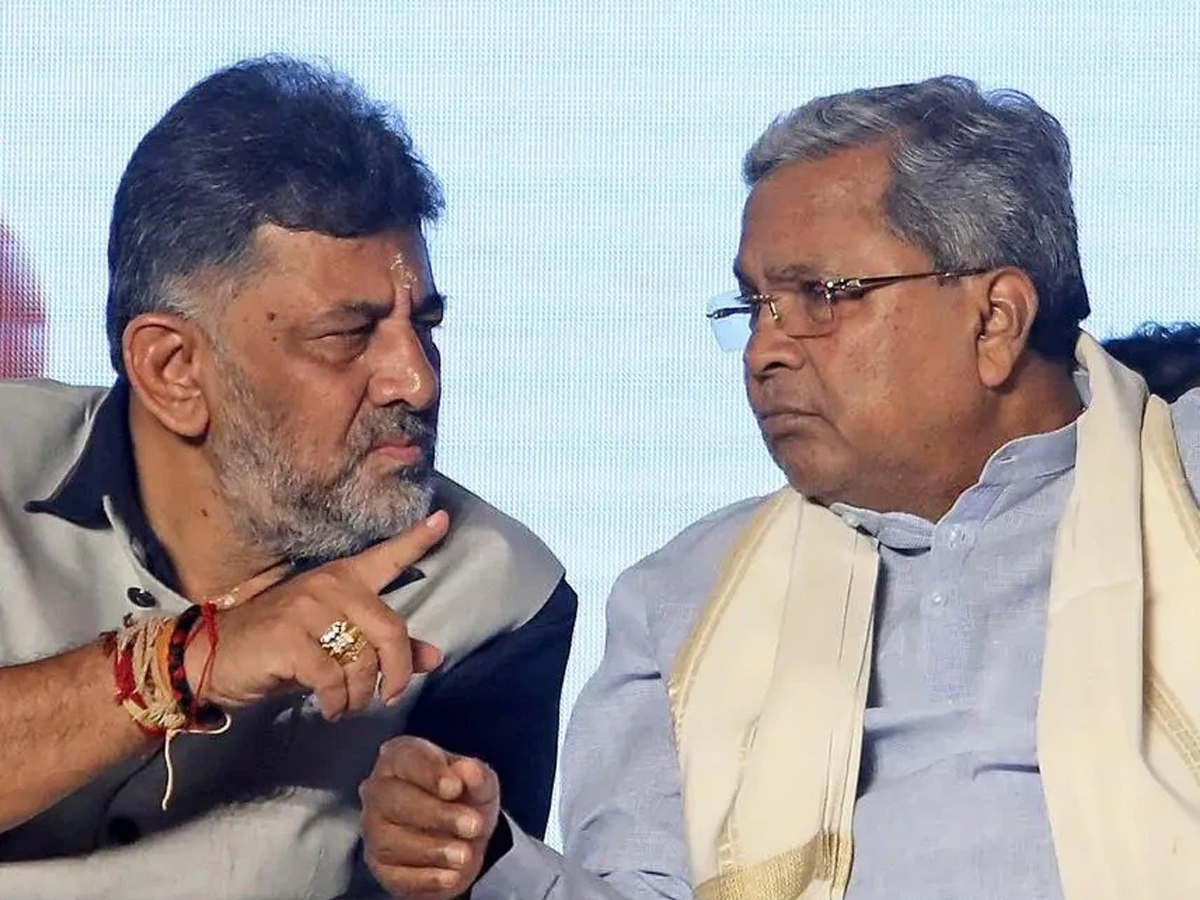
The ruling Indian National Congress high command stepped in after months of speculation about a possible change in leadership in Karnataka. To settle the tension, the state’s Chief Minister Siddaramaiah invited his Deputy Chief Minister DK Shivakumar for a breakfast meeting. The goal was to clear the air and show unity.
Breakfast Meeting in Karnataka
After breakfast, Siddaramaiah told reporters, “There are no differences between us, and there will be no differences in the future.” He added that the meeting was constructive and focused on upcoming elections. He emphasised, “Our agenda is the 2028 elections. Local body elections are important. We discussed them. We also discussed bringing back Congress in the 2028 elections.”
On his part, Shivakumar reassured supporters, “Whatever the high command says, we will follow that, and there is no group. Even now, we are working together.” He echoed that the unity remains strong and they aim to win future polls together.
What sparked the leadership row in Karnataka
The debate over power sharing resurfaced after the Congress government completed two-and-a-half years in office. Supporters of Shivakumar claimed there was a prior arrangement — a “rotational CM deal” — under which he would take over after the halfway mark. On the other side, Siddaramaiah maintained that he had a full-term mandate from voters. The conflicting claims stirred unrest within party ranks.
How does this meeting change the narrative in Karnataka Politics?
The breakfast meeting and public press conference appear designed to calm nerves. By putting up a united front and repeatedly stating that there are no differences, the two senior leaders hope to neutralise speculation. They left no room for ambiguity — both said they will follow directions from party high command and reaffirmed joint focus on future elections.
What remains unclear — and what to watch
Despite the show of unity, political watchers remain cautious. The core issue — whether any rotation deal truly existed — remains unresolved in public view. Several senior party leaders and MLAs reportedly plan discussions with the central leadership soon. Observers now await those talks to see whether the arrangement continues as is, or whether any leadership reshuffle follows.