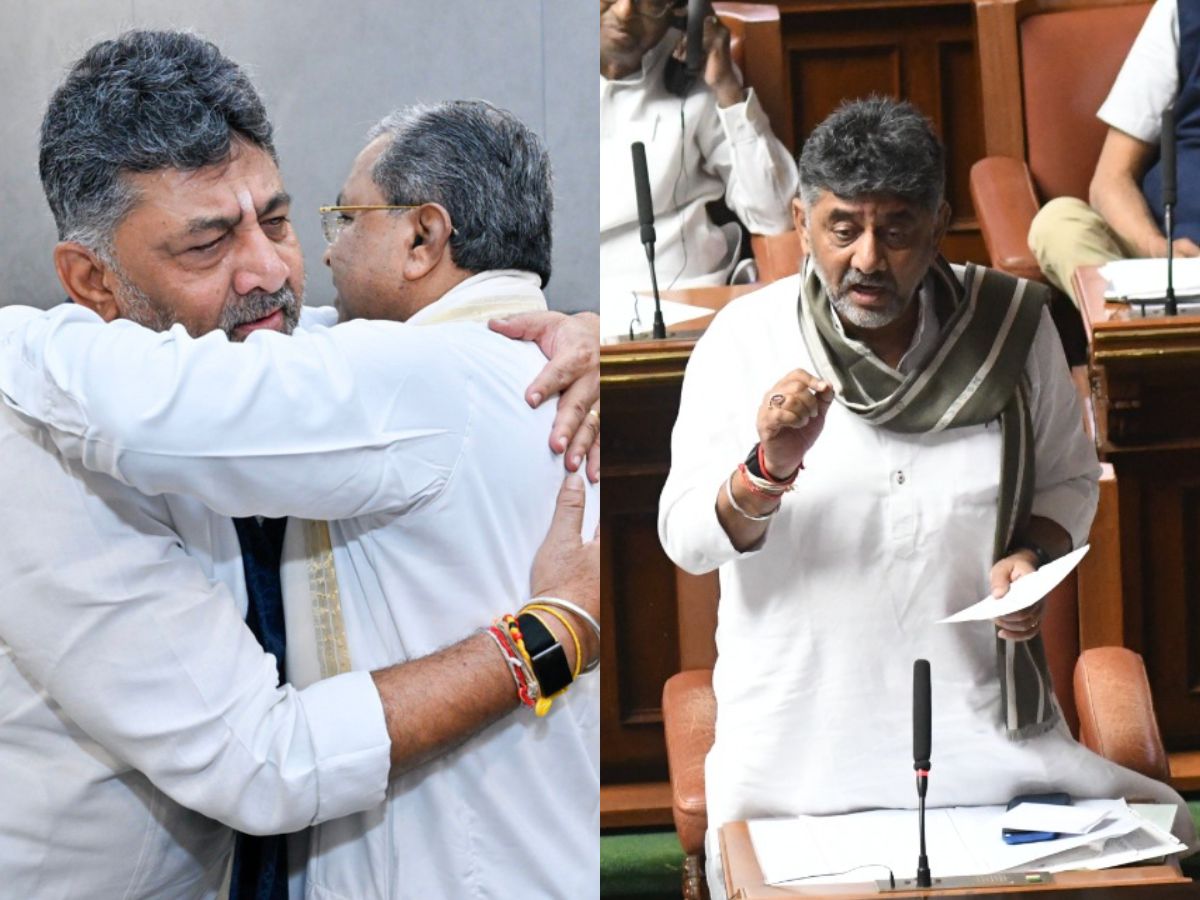
The Long Political Journey of Karnataka’s Relentless Power Broker
Few political careers in contemporary Karnataka illustrate the complexities of Indian democracy as vividly as that of Doddaalahalli Kempegowda Shivakumar, popularly known as D.K. Shivakumar. Rising from a modest political background in rural Karnataka to become one of the most influential leaders in the state, Shivakumar’s journey has been marked by resilience, ambition, controversy, and an uncanny ability to survive political adversity.
His ascent to the pinnacle of Karnataka politics is not merely the story of an individual leader. It mirrors the transformation of Karnataka’s political landscape over four decades—from the dominance of the Congress party to the rise of regional forces and the Bharatiya Janata Party (BJP), and finally to the era of coalition politics and intense electoral competition.
As Shivakumar prepares to occupy the chief minister’s office in Vidhana Soudha, Karnataka’s iconic seat of power, his political odyssey offers a fascinating lens through which to understand the state’s recent history.
An Unlikely Beginning
Born on May 15, 1962, in Kanakapura taluk of Ramanagara district, Shivakumar grew up in a family engaged in agriculture and local business. Unlike many Congress leaders of his generation, his early political influences did not emerge exclusively from Congress circles.
As a young boy, Shivakumar attended RSS shakhas in Bengaluru’s Rajajinagar area. During the 1970s, RSS shakhas served as important platforms for discipline, social engagement, and ideological training for thousands of youngsters across India. While Shivakumar would eventually become one of the Congress party’s strongest leaders, this early exposure reflected the fluid political environment of Karnataka, where ideological affiliations often evolved with changing circumstances.
His student years coincided with a period of profound political upheaval in India. The Emergency (1975–77), the Janata Party movement, and the subsequent fragmentation of political loyalties reshaped national and state politics.
A defining moment came in 1979 when Karnataka’s powerful Chief Minister Devaraj Urs split from the Congress following disagreements with Indira Gandhi. The division disrupted the party’s organizational structure across the state. Many senior Youth Congress leaders followed Urs into the breakaway faction, creating a vacuum within the original Congress organization.
It was in this environment that a young Shivakumar found an opportunity. As the Congress sought fresh faces to rebuild its grassroots network, he quickly rose through the ranks of the Youth Congress.
The Young Challenger
The first major chapter of Shivakumar’s political life unfolded in 1985.
At just 23 years old, he took on one of Karnataka’s tallest political figures—H.D. Deve Gowda—in the Sathanur Assembly constituency. The challenge appeared impossible. Deve Gowda was already a seasoned politician with a strong regional base and an established reputation.
Shivakumar lost the election, but the defeat proved politically valuable.
The contest demonstrated his courage and willingness to take risks, qualities that attracted the attention of senior Congress leaders. In a state where politics was often shaped by caste arithmetic and established power structures, Shivakumar’s willingness to confront a political giant made him stand out.
The election also marked the beginning of a rivalry that would define much of Karnataka’s politics for the next two decades.
The Vokkaliga Battle
Karnataka’s politics has long been influenced by powerful caste communities, among which the Vokkaligas occupy a central position in the Old Mysuru region.
For decades, the Deve Gowda family represented the dominant political voice of the community. The Congress, however, sought to cultivate alternative Vokkaliga leadership to challenge the Janata Dal’s influence.
Shivakumar emerged as a key part of this strategy.
After winning his first Assembly election in 1989, he steadily expanded his influence in the Bengaluru Rural and Kanakapura regions. His organizational abilities, aggressive campaigning style, and ability to mobilize resources made him one of the Congress party’s most effective field leaders.
The rivalry with the Deve Gowda family intensified in 1999 when Shivakumar defeated H.D. Kumaraswamy in Sathanur. The victory significantly enhanced his stature within the Congress and signaled that the Gowda family’s hold over the region could be challenged.
His rise coincided with the leadership of S.M. Krishna, who sought to modernize Karnataka and strengthen the Congress’s urban and rural appeal. Shivakumar became one of Krishna’s trusted lieutenants and was inducted into the state cabinet.
Building a Political Empire
The late 1990s and early 2000s witnessed Shivakumar’s transformation from a regional legislator into a major political force.
His influence expanded beyond electoral politics into education, business, infrastructure, and organizational management. Educational institutions linked to trusts under his leadership emerged as important centers of influence.
By this period, he had also acquired a reputation as a formidable strategist capable of handling difficult political situations.
Supporters admired his ability to deliver results. Critics viewed his methods as overly transactional and power-centric. Yet few doubted his effectiveness.
It was during these years that Shivakumar earned the nickname “Kanakapurada Bande”—the Rock of Kanakapura.
The title reflected both his political durability and his image as a leader who refused to retreat under pressure.
Wealth, Power, and Controversy
Like many influential regional leaders in India, Shivakumar’s rise was accompanied by persistent controversies.
His growing wealth attracted scrutiny from political opponents and investigative agencies. Public declarations showed a dramatic increase in family assets over the years, making him one of Karnataka’s wealthiest politicians.
Allegations relating to mining, quarrying, real estate, and financial irregularities repeatedly surfaced. Investigations into granite quarrying operations in southern Karnataka added to his image as a controversial but powerful political figure.
Yet controversy rarely weakened his political standing.
Instead, each challenge seemed to reinforce his reputation as a survivor capable of weathering storms that might have ended other political careers.
Congress Troubleshooter
If there is one role that defines Shivakumar’s national significance within the Congress party, it is that of “troubleshooter.”
His reputation was built on a unique political skill: safeguarding legislators during moments of political instability.
The first major instance occurred in 2002 when Maharashtra Chief Minister Vilasrao Deshmukh sought assistance in protecting Congress legislators from potential poaching efforts. Shivakumar played a central role in arranging secure accommodation for the MLAs in Karnataka.
This operation established a template that would later become his political trademark.
In 2017, he was entrusted with one of the Congress party’s most sensitive assignments. Ahead of a Rajya Sabha election in Gujarat, Congress leaders feared attempts to lure away their legislators.
Forty-four Gujarat MLAs were flown to Karnataka and housed in a Bengaluru resort under Shivakumar’s supervision.
The operation succeeded. Congress veteran Ahmed Patel retained his Rajya Sabha seat.
The episode elevated Shivakumar’s standing within the national leadership and demonstrated the trust placed in him by the Gandhi family.
Guardian of the Gandhi Family’s Political Interests
Over time, Shivakumar developed close relations with the Congress high command.
Unlike many regional leaders who periodically challenged central authority, he consistently positioned himself as a loyal soldier of the Gandhi family.
His relationship with Sonia Gandhi became particularly significant.
That loyalty was tested during one of the most difficult periods of his life.
In 2019, the Enforcement Directorate arrested Shivakumar in connection with a money laundering investigation. He spent approximately 50 days in Delhi’s Tihar Jail.
For many politicians, imprisonment can mark the beginning of political decline.
For Shivakumar, it became a moment of political consolidation.
Congress leaders publicly rallied behind him, portraying the case as an example of political vendetta. Sonia Gandhi’s visit and expressions of support left a deep impression on him.
Following his release, he emerged politically stronger rather than weakened.
Karnataka Congress President
In March 2020, Shivakumar was appointed president of the Karnataka Pradesh Congress Committee.
The appointment came at a crucial moment.
The Congress had suffered repeated electoral setbacks. The BJP had emerged as the dominant force in Karnataka, while internal factionalism threatened party unity.
As state president, Shivakumar embarked on an aggressive campaign to rebuild the organization.
His leadership style emphasized booth-level mobilization, resource generation, and direct engagement with workers.
Observers noted that he brought corporate-style management practices into party organization. District committees were restructured, grassroots outreach expanded, and electoral preparedness intensified.
These efforts laid the groundwork for the Congress’s remarkable comeback in 2023.
The Turning Point
The Karnataka Assembly election of 2023 proved to be the defining moment of Shivakumar’s career.
The Congress secured a sweeping victory against the BJP, winning a comfortable majority.
Throughout the campaign, Shivakumar played a central role in candidate selection, fundraising, strategy, and voter mobilization.
After the victory, he publicly expressed his desire to become chief minister.
Many supporters believed he had earned the position through years of organizational work and political sacrifice.
Yet the Congress leadership ultimately chose Siddaramaiah as chief minister, while Shivakumar accepted the post of deputy chief minister.
The compromise reflected both political pragmatism and party discipline.
Though disappointed, Shivakumar maintained public unity and continued to strengthen the government’s political machinery.
Alternative Vokkaliga Leadership
Perhaps Shivakumar’s most enduring contribution to Karnataka politics has been his emergence as an alternative center of Vokkaliga leadership.
For decades, the community’s political aspirations were closely associated with the Deve Gowda family.
Through consistent electoral success, organizational strength, and strategic alliances, Shivakumar gradually challenged that monopoly.
The Congress’s improved performance in the Old Mysuru region demonstrated his ability to consolidate support among Vokkaliga voters while simultaneously appealing to broader social coalitions.
This transformation reshaped Karnataka’s political equations and reduced the Janata Dal (Secular)’s traditional dominance in the region.
Faith and Personal Beliefs
Despite his image as a hard-nosed political operator, Shivakumar is also known for his deep religious faith.
He frequently visits temples and spiritual centers across Karnataka and has often spoken about the influence of saints and spiritual leaders on his life.
Among these influences, Ajjayya occupies a special place. Shivakumar has repeatedly described the spiritual figure as a source of strength during difficult periods.
This combination of political pragmatism and religious devotion resonates strongly with many voters in Karnataka, where spirituality remains an important aspect of public life.
From Shakha to State Leadership
The journey from attending RSS shakhas as a young boy to becoming one of the most powerful Congress leaders in southern India encapsulates the fluidity of Indian politics.
Shivakumar’s story is neither linear nor uncomplicated.
It includes ideological evolution, electoral victories, political rivalries, corruption allegations, imprisonment, organizational success, and extraordinary resilience.
He has been praised as a master strategist and criticized as a symbol of money power in politics. Admirers view him as a loyal Congress soldier who never abandoned the party during difficult times. Critics argue that his rise reflects the increasing influence of wealth and political patronage in Indian democracy.
Yet even his opponents acknowledge one fact: few politicians have demonstrated the same ability to survive and reinvent themselves repeatedly.
As D.K. Shivakumar moves closer to occupying the chief minister’s office in Vidhana Soudha, his rise represents more than personal ambition fulfilled.
It is the culmination of nearly five decades of political struggle, organizational work, strategic maneuvering, and relentless persistence.
From the shakhas of Rajajinagar to the corridors of Vidhana Soudha, from youthful challenger to Congress power broker, Shivakumar’s journey mirrors the changing face of Karnataka politics itself.
Whether history ultimately remembers him as a transformative administrator, an astute political manager, or a controversial strongman will depend on what he achieves in the years ahead. What is beyond dispute, however, is that D.K. Shivakumar has already secured a significant place in the political history of Karnataka.