
The Bharatiya Janata Party will be reshaped in line with Prime Minister Narendra Modi’s vision, with a significantly larger role for young leaders. These signals were evident on Tuesday during Nitin Nabin’s assumption of office as national president. The Prime Minister’s speech and body language offered several indications of a major organisational churn within the BJP. Whenever the Prime Minister gives the green signal to the organisation, the RSS extends full support. Tuesday’s address also made it clear that the BJP will further sharpen its politics centred on Hindutva and opposition to dynastic politics.
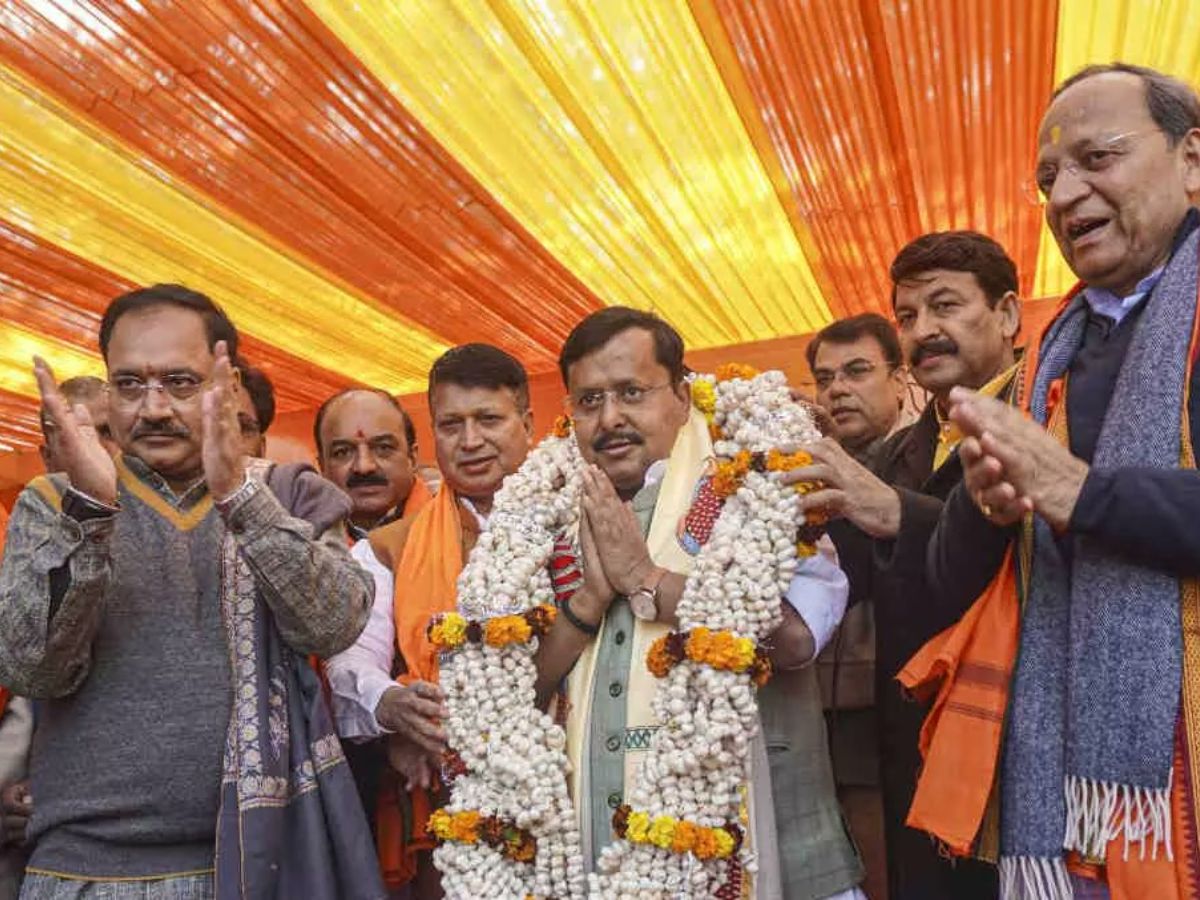
A third key message was the preparation of a new generation of political workers who will emerge as the BJP’s future leadership. From the ramparts of the Red Fort on August 15, 2024, after assuming his third term, Prime Minister Modi had announced his intention to bring one lakh young people into politics with no links to political families. He reiterated the same point on Tuesday as 45-year-old Nitin Nabin—the youngest national president to date—took charge.
Nitin Nabin is young, does not come from a prominent political family, and is known as a grassroots worker. Through his speech, the Prime Minister conveyed a clear message that the future belongs to the youth. His public declaration of Nitin as his “boss” suggested that major changes lie ahead, with existing leaders expected to adapt. A large number of young faces may be given opportunities, and if this happens within the organisation, it is likely to have a direct impact on the Prime Minister’s team as well. As with a youth-oriented BJP, the Union Cabinet could also see a younger profile.
Speculation has intensified within the party about what comes next. The Prime Minister’s mood and body language also conveyed that several figures in both the government and the organisation could be eased out. It remains to be seen whether he opts for immediate, sweeping changes or waits before taking a call. His working style is distinctive—decisions are revealed only after they are made.
Two possibilities are being discussed. The first is to maintain the status quo until elections in five states, scheduled for April. By May, the Prime Minister’s third term will complete two years, after which appointments or changes could follow—particularly as only six months would then remain for elections in states such as Uttar Pradesh, Uttarakhand and Punjab. By April, several new faces are also expected to enter the Rajya Sabha.
The second possibility is an early formation of a new BJP team to ready the organisation first, followed by a Cabinet reshuffle.
Overall, the Prime Minister’s speech has generated multiple interpretations. His sustained attack on the Congress, which remained central to his address, underscored that dynastic politics will continue to be a key issue in national politics. The Prime Minister conveyed that the Congress is heading towards decline because of its dynastic structure and failure to learn from repeated defeats. His assessment—that the party does not adequately review its losses and that decision-making remains concentrated within the Gandhi family—was forcefully articulated.
By referring to urban Naxals and infiltration, the Prime Minister also signalled that these issues will remain prominent. Following him, Nitin Nabin, in his first speech as party president, praised his predecessors while reinforcing the Prime Minister’s key themes. The message was clear: the new BJP will be shaped firmly according to Prime Minister Modi’s vision.