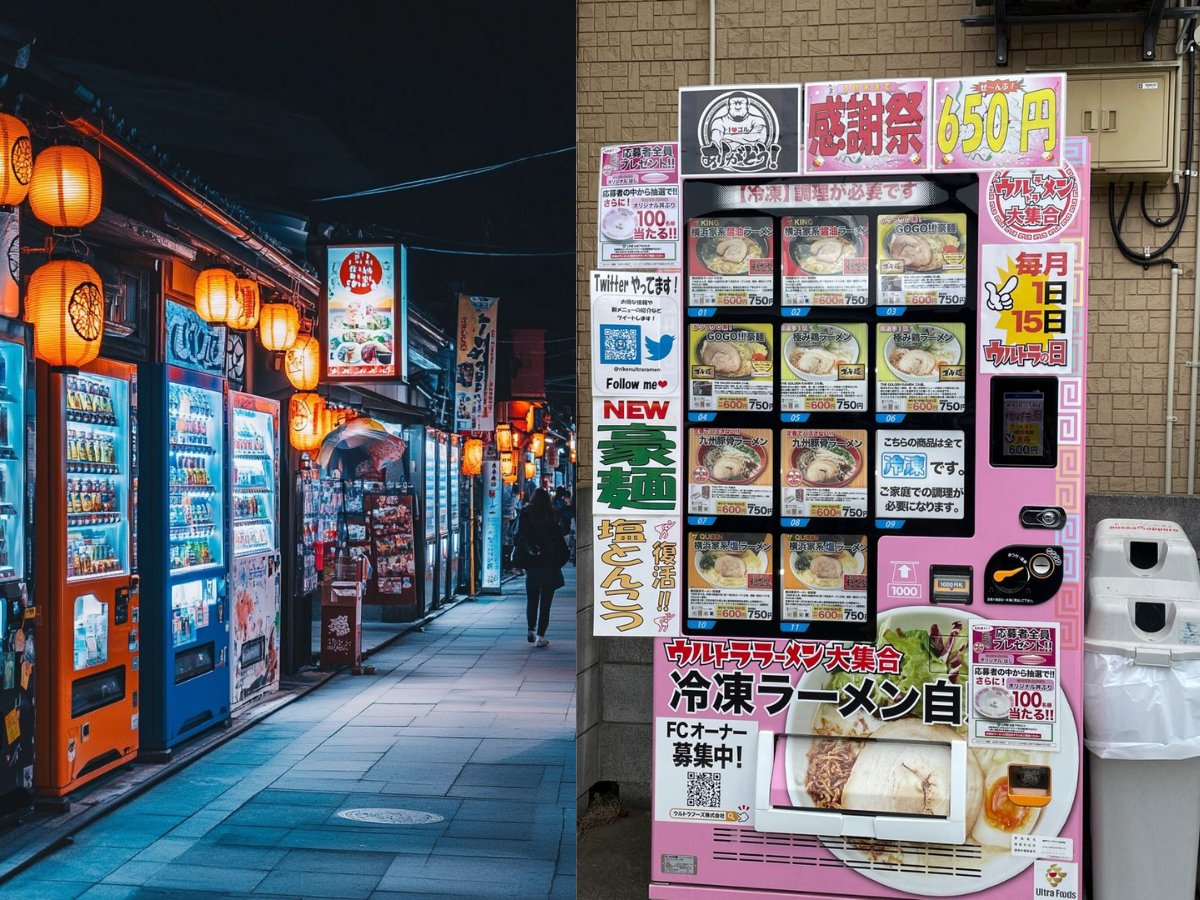
The first thing people think of when they think of Japan is sushi, blossoms, and technology. But one unexpected fact will catch many a visitor by surprise: Japan has a whopping number of vending machines, so many that in villages it is not uncommon for there to be more vending machines than villagers. From hot meals to umbrellas and fresh flowers, Japan’s vending machines are not just a convenience but a lifestyle.
Why Vending Machines Everywhere in Japan?
Japan has a dense concentration of vending machines. With around 4 million machines across the country, that’s one for every 30 or so individuals. In the smaller rural communities with their limited numbers, this can be reversed and find more machines than people in some villages.
- It’s no surprise why they are so widespread:
- High City Population Density: Convenience is required with close city living.
- Low Rate of Crime: Japan’s safety allows machines to sell goods without a high risk of theft or vandalism.
- Efficiency Culture: Japanese culture values speed and convenience, and vending machines offer both 24/7.
What Do Japanese Vending Machines Sell
The rest of the world thinks vending machines only dispense soda or snacks, but Japanese machines are much more sophisticated. Some of the strangest things you can buy are:
- Hot and Cold Drinks: Coffee, tea, and even canned soup.
- Food: Ramen, curry, and burgers in an instant.
- Normal Things: Batteries, face masks, and umbrellas.
- Weird Things: Fortune slips, collectible figures, and toys.
- Fresh Produce: Eggs, fruits and vegetables for the residents of rural agricultural towns.
- This lineup shows how vending machines adapt to the local residents’ demands.
Rural Towns: More Machines Than Residents
In big metropolitan towns like Tokyo or Osaka, vending machines fit quite well into the busy lifestyle. However, in rural communities with shrinking populations, the machines serve a different reason, they basically become a means to survive.
The majority of Japanese villages are experiencing depopulation, with the young migrating to the cities and the elderly staying behind. Convenience stores and food stalls typically shut down because of a lack of business. In such a situation, vending machines could act as a replacement by providing food, drinks, and everyday essentials without having a man-staffed shop.
In many of them, they outnumber the natives. For example, in a town with 200 people, there may be 250 vending machines for the natives, visitors, and travelers who pass by.
A Cultural Symbol of Japan
Apart from being convenient, vending machines are a symbol of Japan’s dynamism and creativity. They blend tradition and technology: offering canned green tea, miso soup, or seasonal drinks that reflect the country’s cultural tastes.
Visitors are also fond of them because every machine is like a little adventure. You never know whether you’ll discover a fresh limited-edition soda pop or a local favorite that’s available only in the area.
More Than a Gadget
Japan’s love affair with vending machines is more than a quirky fact, it’s a reflection of the nation’s lifestyle, values, and challenges. From satisfying harried Tokyo office workers to helping elderly villagers in rural towns, the machines represent convenience, cleverness, and cultural uniqueness.
ALSO READ: What is Red Light Therapy & Exosome Treatments?