
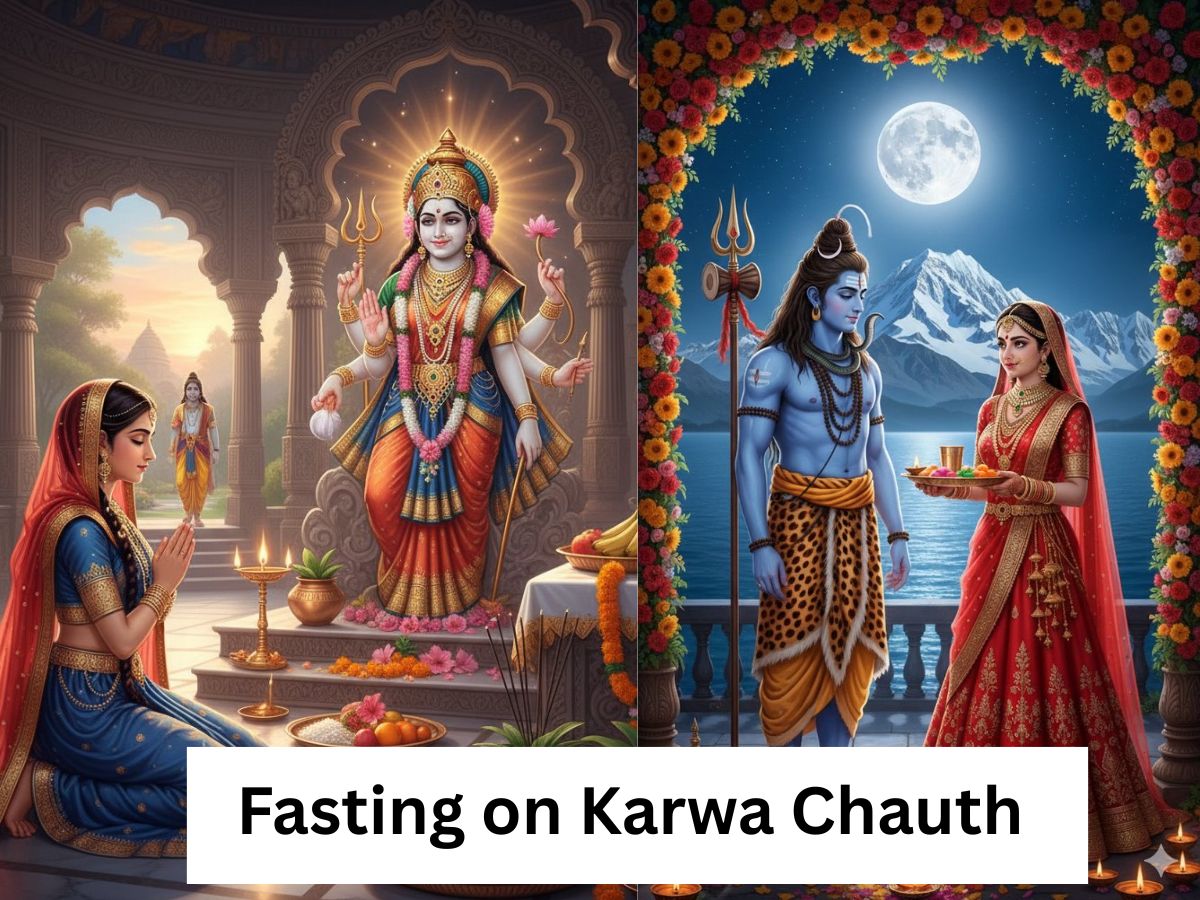
Karwa Chauth is a traditional Hindu festival usually celebrated in Northern India, symbolising the deep love and devotion of married women towards their husbands. It involves a day-long dry fast (nirjal vrat) from sunrise to moonrise, dedicated to the safety, long life, and prosperity of their life partners. The festival’s rituals, stories, and significance weave together love, faith, and cultural heritage, making it an emotionally rich occasion.
Karwa Chauth: Meaning and Origin
The name “Karwa Chauth” is derived from two Hindi words: “Karwa,” meaning an earthen pot, and “Chauth,” meaning the fourth day. The festival falls on the fourth day of the Krishna Paksha (dark fortnight) in the Hindu month of Kartik. The earthen pot plays a crucial role in the rituals where it is used to offer water to the moon during the puja. Historically, the festival’s roots trace back to ancient Northern India, where women prayed for their husbands’ safe return from long military campaigns or wars, reflecting the social circumstances of Rajput warriors and their families. Some scholars also link the ritual to the wheat sowing season, as it coincides with the beginning of the Rabi crop cycle, where offering water in pots symbolised prayers for a good harvest.
Karwa Chauth: The Significance of Fasting
On Karwa Chauth, married women observe a nirjala fast, which means neither food nor water is consumed from sunrise until the moon is sighted. This fast is a mark of devotion, sacrifice, and enduring love for the husband’s health and long life. Women dress in beautiful traditional attire, adorn themselves with jewellery and mehndi (henna), and participate in religious prayers, including the worship of Goddess Maa Gauri, an incarnation of Goddess Maa Parvati, who symbolises marital bliss and fertility. The act of fasting is not just a physical discipline but an emotional commitment, strengthening the bond between husband and wife as a beautiful but strong one.
Popular Legends and Cultural Practices
One popular legend associated with Karwa Chauth is the story of Queen Veeravati, who steadfastly fasted to save her husband’s life after being misled by her brothers. Her devotion impressed Yama, the god of death, who revived her husband. This story illustrates the festival’s themes of faith and dedication. Additionally, the festival enrishes a unique social bond among women, who gift and celebrate each other as “kangan-saheli” (sisters) and share joy amidst their fasting.
In modern times, the festival has evolved to celebrate mutual love, sometimes with husbands choosing to fast alongside their wives, emphasising equality and shared devotion. Karwa Chauth continues to be a profound expression of love, sacrifice, and cultural tradition, celebrated with enthusiasm and heartfelt commitment across many households in India.