
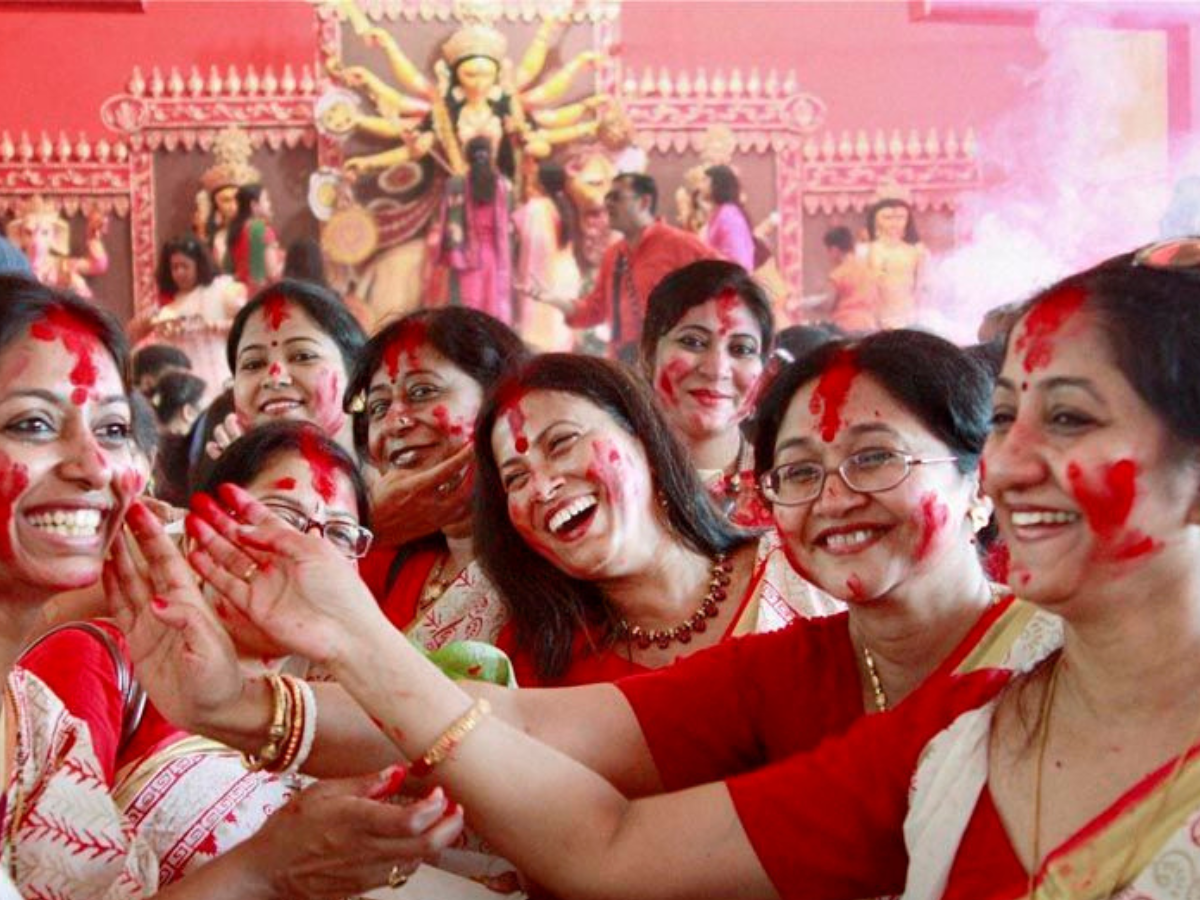
The colorful, spirited celebration of Durga Puja the festival of Goddess Durga’s victory over demon Mahishasura reaches its emotional peak on the last day, Vijayadashami. The air is heavy with the melancholy of goodbye, but for a fleeting moment, it is turned into a sheet of red joy by the special and stunning ritual called Sindoor Khela, or “the vermillion play.”
What is Sindoor Khela?
Sindoor Khela is a Bengali Hindu ritual performed only by married women on the day of Vijayadashami, which falls on October 2, 2025, this year. It’s a happy, playful, and very meaningful ritual performed just before the grand ritual of Durga Visarjan (immersion of the idol).
Sindoor Khela Dress Code
The ritual is a visual splendor: women, dressed in traditional saffron-colored sarees with red borders (laal paar sada saree), congregate in the pandals (temporary places of worship) to say a sentimental, tearful farewell to the Goddess.
Meaning of Sindoor Khela
The term literally translates to “game of vermillion.” The vision of scores of women applying vivid red sindoor (vermillion powder) onto one another’s faces and foreheads, with their laughter and the cacophonous thumping of the dhak (traditionally used drums), is the quintessential picture of Durga Puja’s end.
Where is this ritual celebrated?
The practice of Sindoor Khela is mostly and most prominently identified with the Bengali people. It is an essential component of the Durga Puja festival in the state of West Bengal and elsewhere with a large Bengali population, such as Assam, Tripura, Odisha, Bihar, and parts of Bangladesh. As Durga Puja has evolved as a pan-Indian event with trans-cultural appeal, the ritual is practiced by Bengali diaspora communities worldwide.
Sindoor Khela: The Ritual and Its Meaning
The whole ritual is a lovely combination of profound religious respect and sparkling feminine revelry.
1. The Farewell to the Goddess
The ceremony starts with Devi Baran (the ritual of farewell). Married women go up to the idol of Goddess Durga for the last time before immersing her. They worship her with sweets, betel leaves, and arati (light worship). Above all, they put sindoor on the forehead and feet of the goddess.
2. The Play of Vermillion
After the idol is bid goodbye, the women turn towards one another. They put sindoor on each other’s foreheads and cheeks and also on the shankha, pala, and noa (traditional conch shell, coral, and iron bangles) that married Bengali women wear. They also exchange and feed sweets. This is the “Khela,” or “play,” phase of the ritual, steeped in happiness and enthusiasm.
3. A Prayer for Sisterhood and Marital Happiness
In Hindu culture, sindoor is the most powerful sign of a woman’s marital status, symbolizing auspiciousness, fertility, and her husband’s long life. With sindoor applied to each other, the women are praying for all of them to get happiness in marriage, long lives for their husbands, and general prosperity for their families together. It is an affirmation of sisterhood and collective bonding, in which all the small things are forgotten in a moment of joy.
When Did the Ritual Begin? (Origin and History)
The Sindoor Khela tradition is very old, tracing its origin some centuries back. But no decisive date and location of its origin are documented. There are, in general, two prevailing theories regarding its origin:Around 400 Years Ago (As Old as the Puja Itself) Most historians and cultural watchers are of the opinion that the tradition is as old as Durga Puja itself, about 400 years back.
Also Read: Must-Visit Spots in Delhi-NCR to Witness Spectacular Ravan Dahan Today | Check the List