
Your morning coffee may be more than a caffeine boost. For others, it’s also an instrument to seek out thoughts, emotions, and even destiny. Welcome to Turkish coffee readings, also referred to as tasseography or ‘Fal bakma’ in Turkish.
This symbolic activity was practiced as far back as the Ottoman Empire in the 1500s, and even before that, tea leaf reading was prevalent in ancient China around the Tang Dynasty (618–907 C.E.). Tasseography is a practice of interpreting the coffee grounds remaining in the cup in order to derive information about an individual’s future or past.
How It’s Made and Why It Matters
Turkish coffee is unique, it’s not merely about consumption, but slowing down. Filter-less, ultra-tiny coffee grounds are heated in water (occasionally over searing sand) and served unfiltered. As you take your time drinking, the grounds settle at the bottom.
There’s an art to brewing the cup to perfection, including the correct water-to-coffee ratio. But as soon as you’re done drinking, the magic starts.
Reading the Grounds
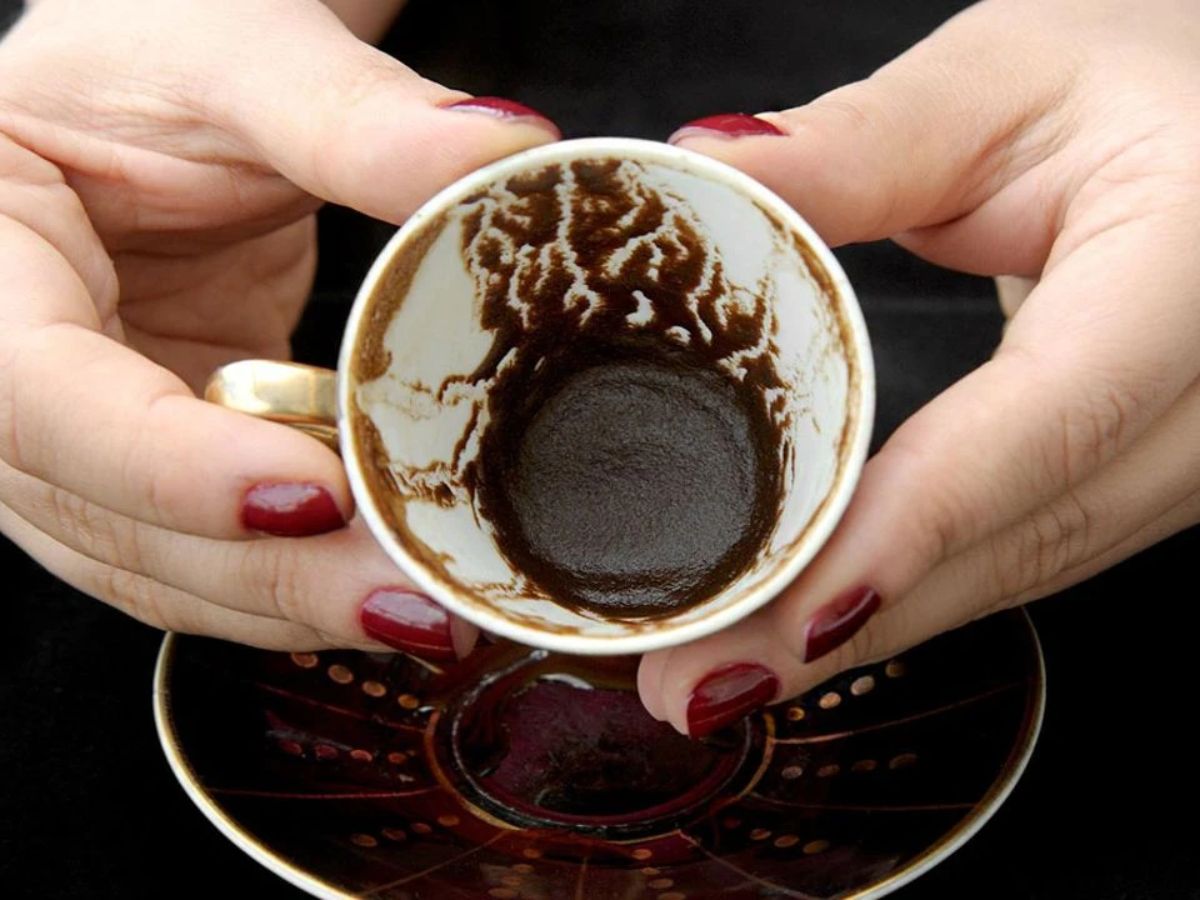
The individual who consumed the coffee keeps the cup in their dominant hand and wishes, this creates a purpose for the reading. They place a saucer on top, turn the cup over, and allow it to sit for 5–10 minutes so the grounds can settle and cool down.
After being flipped over, the grounds create patterns on the sides and bottom of the cup. The sides show the immediate future, whereas the bottom indicates the past.
Symbols and Their Significance
It is an art as well as a skill to interpret these patterns. Some of the common symbols are:
- Birds: Either good news or travel in the offing
- Flowers: A rose indicates love; a sunflower indicates joy
- Numbers: Three is indicative of growth; seven indicates awakening
- Elements: Fire signifies new passion; mountains signify obstacles
- Shapes: Triangles indicate change; circles sign the end of a cycle
The viewer examines the cup intently, at times spinning it around for further viewing. Having knowledge of symbol interpretation is essential to deciphering the message.
More Than Fortune-Telling
Though tasseography has its mystical origins, others play it merely as an entertaining social activity. It reunites people and stimulates productive conversation.
As the article states, “It’s a tradition steeped in mysticism, but also a fun social ritual that brings people closer together.” For others, it’s not even about predictions, they use the grounds to create imaginative tales together, stimulating creativity and connection.
In the end, whether seriously considered or simply enjoyed, Turkish coffee readings ask us to slow down, consider, and connect with others and ourselves.