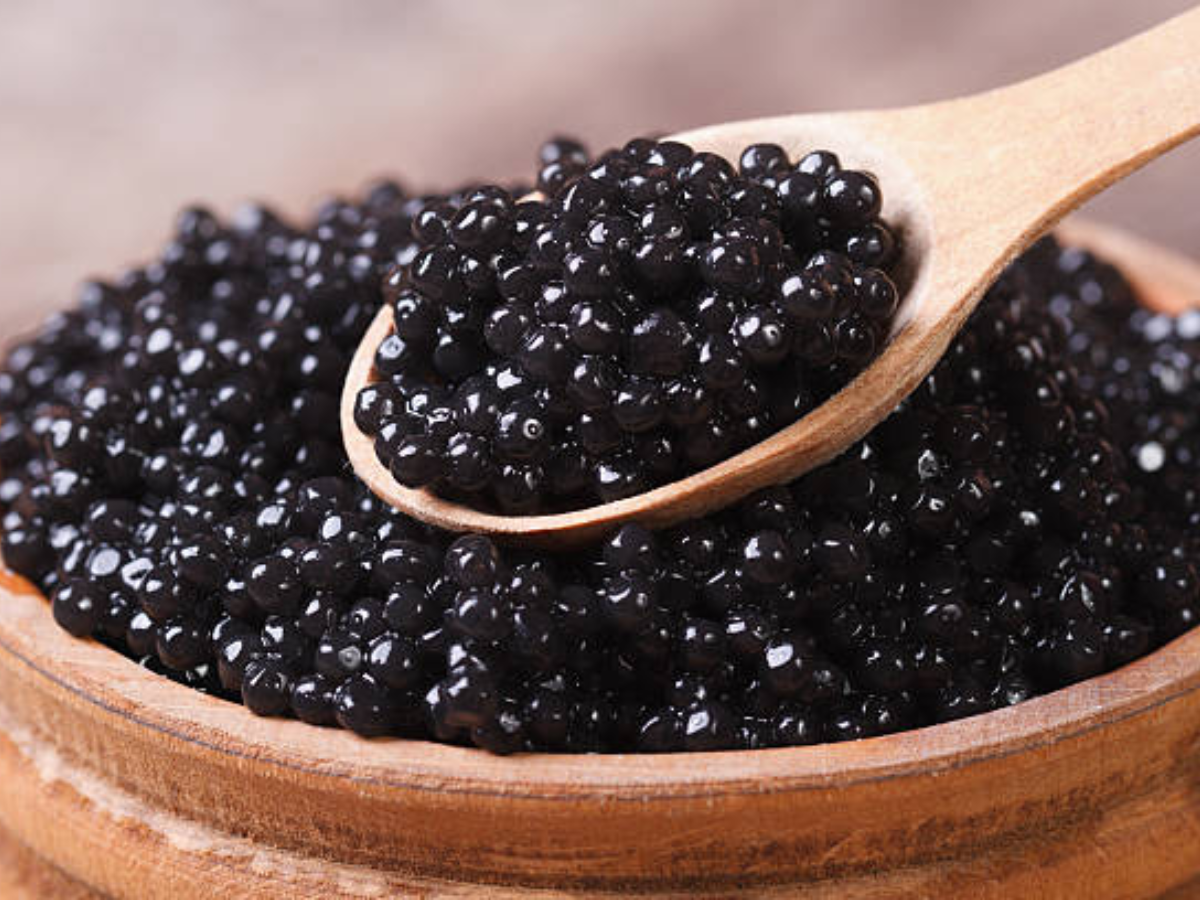
Caviar, one of the world’s richest delicacies for centuries, has a rich history, varied kinds, and a special culture of consumption. Although it can be daunting to novices, learning where it came from and its cultural practices can make the experience of consuming these precious “fish eggs” an unforgettable luxury.
What Is Caviar?
Caviar is salt-cured sturgeon roe, a fish formerly plentiful in the Black and Caspian Seas. The sizeable Persians, who referred to it as “khavyar,” were some of the first people to dine on it as early as the 1200s. By the 1500s, European monarchs had claimed it as a symbol of status, which bestowed on sturgeon the designation of “Royal Fish.”
Astonishingly, during the 19th century in America, caviar was so ubiquitous that it was served gratis in bars as an incentive to drink. Supplies fell as a result of overfishing in the centuries that passed, and production migrated worldwide, with sustainable aquaculture now maintaining the tradition.
What Is the Caviar Nutrition?
Apart from the luxury value, caviar has significant nutritional value. It contains omega-3 fatty acids, which are important for heart and brain function. One serving is also a source of protein, selenium, and vitamins A, D, and B12.
Yet, being rich in sodium as a result of curing, it is not advisable to take it except in moderation. Nutritionists usually point out that though caviar may be a luxury, it is also a nutrient-rich food with considerable health benefits.
What Does Caviar Taste Like?
Caviar is renowned for its distinctive, layered taste. The eggs burst at first bite with a salty, oceanic freshness. Depending on the type, the flavor varies from buttery and refined (Beluga) to nutty and salty (Ossetra), or salty and strong (Sevruga).
Its texture is also crucial: the eggs must be firm but tender, with delicate, lingering notes that are released when they melt on the tongue. The flavor is likened by many connoisseurs to raw oysters but has a richer, creamier finish.
Knowing the Varying Types
The following are some of the finest varieties of caviar:
- Beluga – Large, silver to dark-coloured eggs with a buttery taste.
- Ossetra – Medium gold to brown roe, nutty with a complex taste.
- Sevruga – Darker, smaller eggs with a strong, salty bite.
- Siberian – Dark, mild caviar, frequently farmed sustainably.
- White Sturgeon – Jet black, earthy and nutty, fashionable in North America.
How to Serve and Pair Caviar
Caviar experts advise the chilled serving of caviar, never having been frozen, from a bowl set over crushed ice. Avoid any metal utensils like mother-of-pearl or glass spoons so that flavour won’t be changed. For any guests, half an ounce to an ounce per person is perfect.
Pairings are important too: traditional accompaniments would be blinis, buttered toast points, or brioche. Vodka and Champagne are still classic drinks, and dry white wine or even a dirty martini can add to the experience.
From its origins in royalty to its intricate taste and nutritional profile, caviar is a great deal more than mere “fish eggs.” Having an understanding of its history, taste, and proper protocol gives you the confidence and appreciation to next enjoy this indulgence with knowledge.