
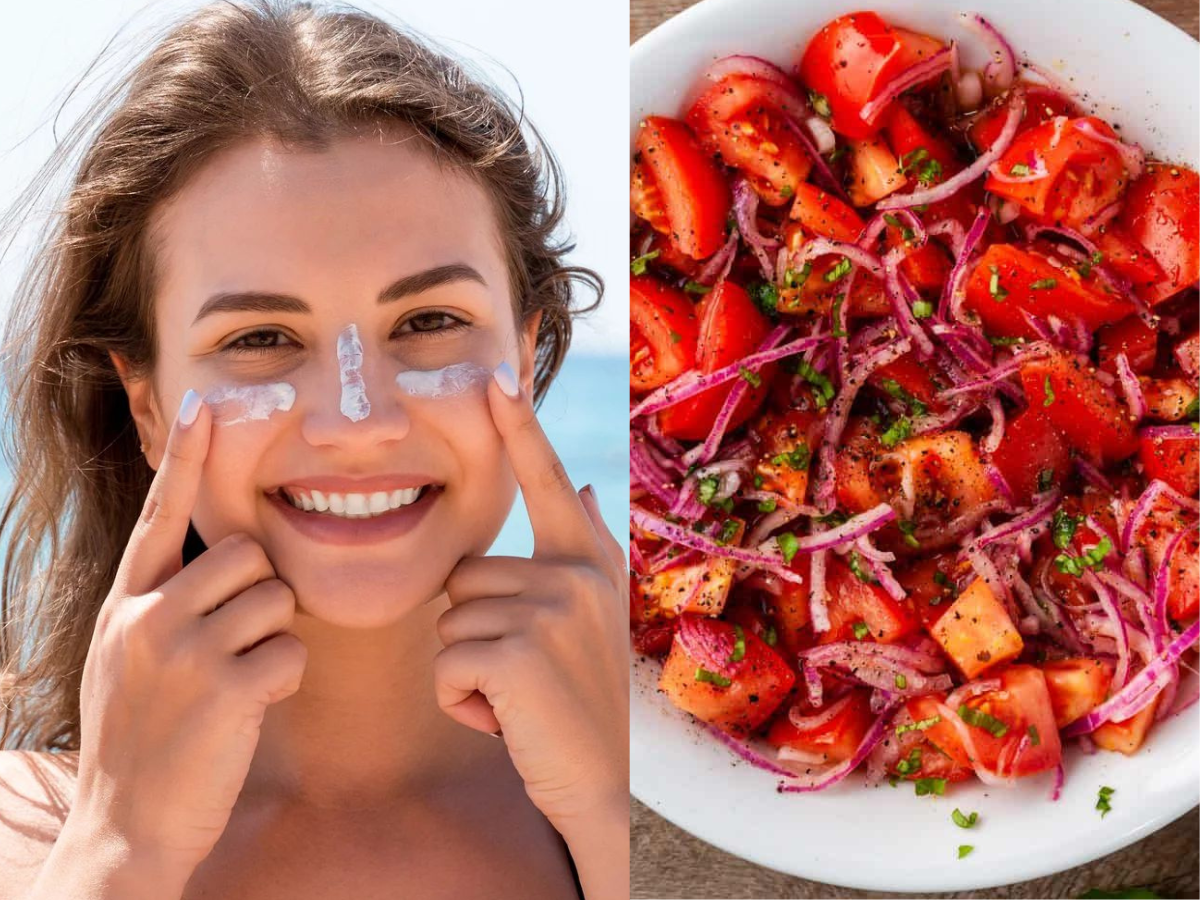
Sunscreen is usually the first line of defense against sun-damaging UV rays, In skincare. But did you know that there are foods that can defend your skin from sun damage and sometimes even better than sunscreen? One such unexpected food has been making waves for its incredible skin-boosting and sun-protecting abilities. Let’s find out what it is, how it works, and why you should be putting it in your diet as soon as possible.
What Foods Naturally Protect Your Skin from the Sun?
People always seek out natural protection of skin from UV rays in addition to sunscreen use. Certain foods are rich in antioxidants, carotenoids, and vitamins that protect skin cells against oxidative stress. Tomatoes, carrots, green tea, and nuts appear on most lists, but there is one food that stands out.
The Food That Performs Like Natural Sunscreen: Tomatoes
Tomatoes are rich in lycopene, an antioxidant with the capability to reduce skin damage caused by UV radiation. Research suggests that people who consume tomatoes daily develop a natural protective shield against sunburn. Unlike topically applied sunscreen, which needs to be reapplied, lycopene builds up in the skin over a period of time to offer long-lasting protection.
Why Lycopene is a Game-Changer for Skin Health
- Lycopene is not just an internal sunscreen. It also:
- Decreases oxidative stress that leads to aging of the skin.
- Softens and hydrates skin.
- Blocks breakdown of collagen, preventing your skin from sagging.
- Decreases redness from UV exposure.
This renders tomatoes and other lycopene-rich foods (like watermelon, pink grapefruit, and red peppers) the secret to sun protection in nature.
How Much Tomato Should You Eat for Skin Protection
One of the most searched terms is “how many tomatoes per day for skin health?” Studies show that eating 2–3 servings of tomato every day or taking tomato juice daily can significantly reduce UV sensitivity in 10–12 weeks. Olive oil cooking tomatoes also increases lycopene absorption.
Other Foods that Boost Natural Sun Protection
Tomatoes are the hero, but combined with other skin-fortifying foods the result is doubled:
- Carrots (beta-carotene content is high)
- Green Tea (contains catechins that prevent sunburn)
- Dark Chocolate (flavonoids improve skin elasticity)
- Walnuts & Almonds (rich in Vitamin E to mend)
Can Food Replace Sunscreen Completely?
One of the more burning questions is whether food can replace sunscreen completely. No, tomatoes and other protective foods reduce damage but won’t stop UV rays from penetrating altogether. Think of them as an added layer of protection to your skin, used alongside sunscreen, hats, and shade.
Simple Methods of Incorporating Tomatoes in Your Diet
- Olive oil salads made from fresh tomatoes.
- Tomato smoothies or juices.
- Tomato soups or cooked tomato sauces.
- Roasted tomatoes as side dishes.
If you incorporate them in your regular routine, not only do you protect your skin but also overall well-being.
ALSO READ: Your Kitchen Sponge Holds More Germs Than a Toilet Seat — Here’s Why