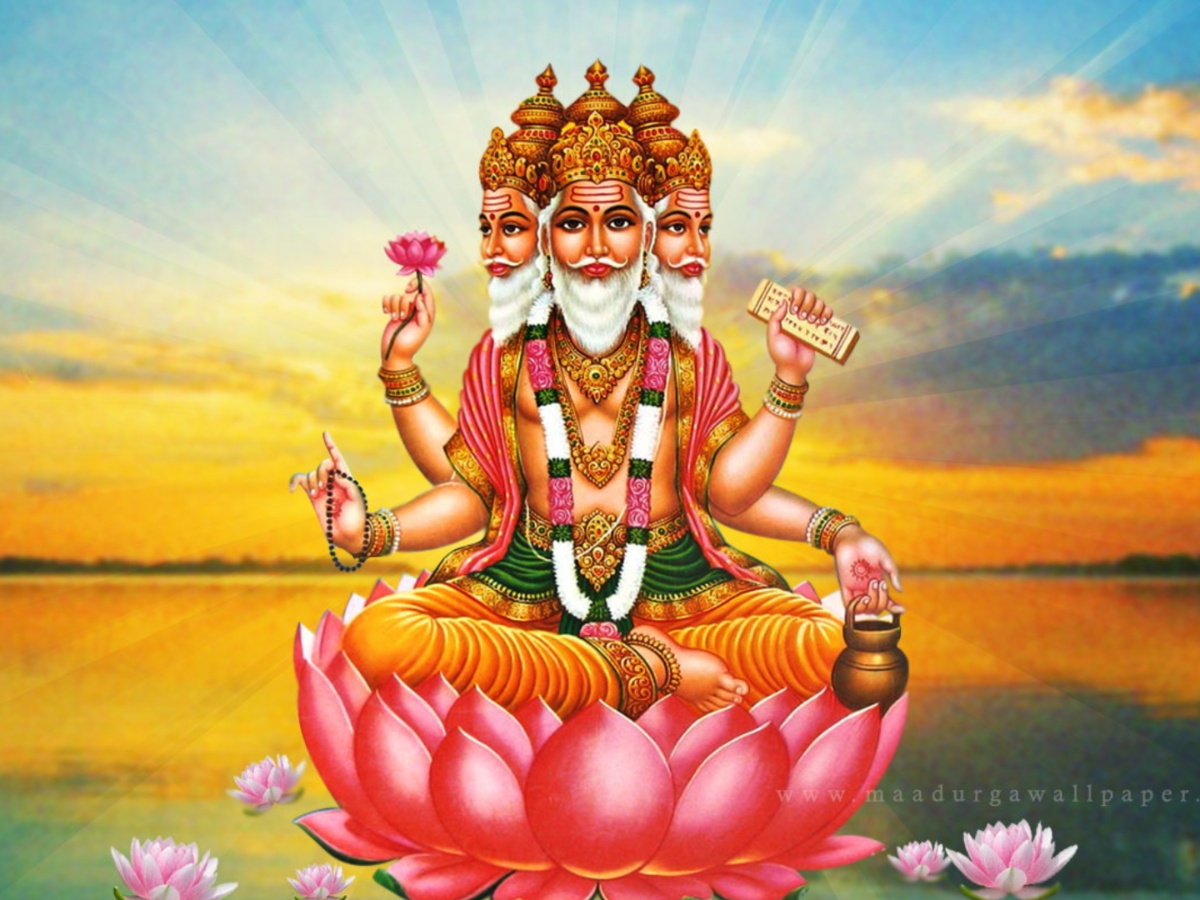
There is only one famous Brahma temple in the world, and it stands in Pushkar, Rajasthan. Yet, despite being the creator in the Hindu Trimurti, Lord Brahma is hardly worshipped. This has always surprised both devotees and scholars. Vishnu and Shiva receive devotion everywhere, but Brahma remains absent from most temples and rituals and the reason lies in old legends, curses, and symbolic lessons. Let’s explore why Brahma is not widely worshipped and why the Pushkar temple still holds so much importance.
The Only Brahma Temple in Pushkar
Pushkar in Rajasthan is home to the most sacred Brahma temple. Built in the 14th century, it stands near the holy Pushkar Lake and pilgrims believe a dip in the lake and prayers at the temple wash away sins. People travel from across India and even abroad to visit this site. Despite Brahma’s cosmic role as the creator of the universe, this remains one of the very few temples where he is worshipped.
Why Brahma is Not Worshipped
The Mythological Curse
According to stories, Brahma and Vishnu once argued over who was greater. Lord Shiva appeared as a huge pillar of light to test them. Vishnu admitted he could not find its end, but Brahma lied and said he did, using a Ketaki flower as proof. Angry with Brahma’s dishonesty, Shiva cursed him, saying he would not be worshipped on Earth.
The Role of Creation
Brahma’s role as the creator is believed to be complete. He created the universe and all living beings. After creation, his work ended. Worship then shifted towards Vishnu, who protects, and Shiva, who transforms. Brahma became less important in everyday devotion.
The Association with Desire
Another legend tells that Brahma became attracted to his daughter Saraswati. Because of this, he was cursed either by Shiva or Saraswati herself. This curse limited his temples and his worship. The story made people distance themselves from him in rituals.
The Philosophical Aspect
In Hindu thought, Brahma often stands for knowledge and the mind. Knowledge is not worshipped through idols but through learning and practice and this belief also explains why Brahma has fewer temples and his worship is seen more as a search for wisdom rather than ritual prayers.
Symbolism and Philosophy
Brahma’s story reflects deeper philosophy while worshipping knowledge requires practice, not temples also Brahma represents wisdom, thought, and creation and his limited worship reminds Hindus to seek knowledge and balance desire and thus, the Pushkar temple stands not just as a shrine but as a reminder of these teachings.
Read More: Is Lord Jagannath About to Leave Jagannath Puri? The Shocking Bhavishya Malika Predictions
From Creation to Symbol
Brahma’s story shows a clear paradox. He created the world, yet people rarely worship him. The Pushkar temple is a rare reminder of his role in Hindu belief. His tales teach values of truth, discipline, and self-control and more than rituals, Brahma represents wisdom and the importance of living knowledge. That is why his name continues to guide believers even without widespread worship.