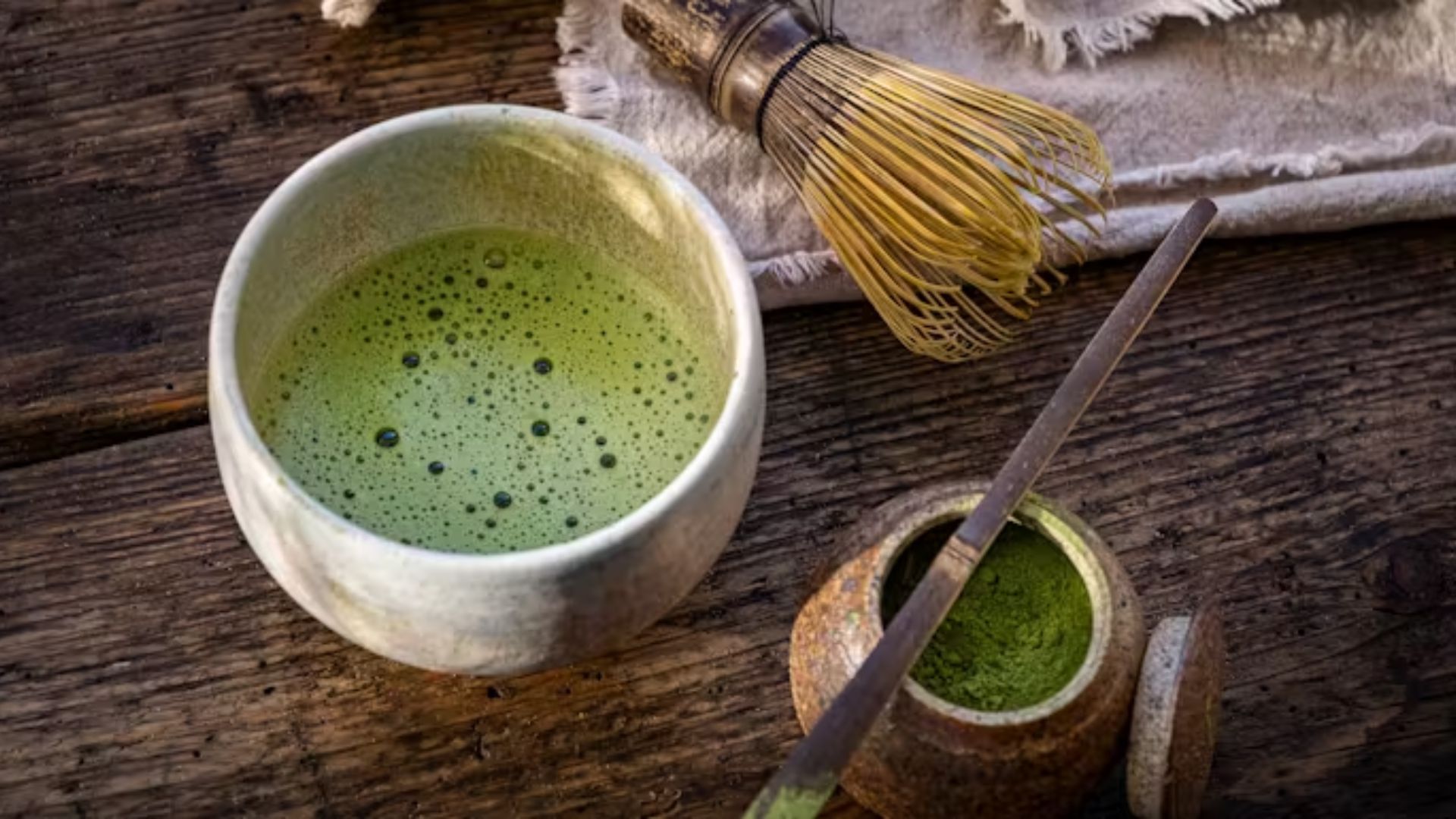
A very famous item in Japan’s traditional tea ceremonies has taken the social media by a storm. We are talking about the green-coloured ‘Matcha’ drink that the whole world has been obsessing over for quite some time now. Well, the tea’s bright green colour and antioxidants have immense health benefits, it turns out that people drank a little too much of it!
Japan’s indigenous powdered green tea experienced an out-of-this-world boom in foreign demand. The UK sales of Matcha increased by over 200% in 2023, as per the Orion Market Research.
From social media personalities showcasing frothy lattes to health companies endorsing detox programs, matcha is today inextricably linked with beauty and wellness.
Matcha’s social media fixation made it a staple even for those who have never heard of its strong, slightly bitter, ‘acquired taste’. The resumption of Japan’s borders from international visitors following the COVID-19 pandemic further fueled the fascination, with travelers looking for the drink in its origin.
Climate Change Threatens Japan’s Tea Regions
Yet, as demand keeps climbing, matcha farming is threatened by extreme weather conditions. The Kyoto area which accounts for close to 25% of Japan’s tencha crop (the covered leaf used for producing matcha), experienced record-breaking heatwaves in 2023.
As Japan experienced its hottest year on record. These extreme weather conditions caused extensive tea plant damage, with major effects felt on the spring 2024 harvest.
Among those hit is Masahiro Yoshida, a sixth-generation Uji tea grower south of Kyoto. His yield fell 25%, from the typical two tons of tencha to a mere 1.5 tons. “The bushes were wilted by the prolonged summer heat, and we just couldn’t pick so many leaves,” he said to Reuters.
Fragile Tradition Under Strain
To make superior matcha, precise, weather-intensive techniques must be used. Tencha leaves must be shaded for a number of weeks to develop their distinctive umami flavor before being gently hand-harvested, dried, and stone-ground into powder. The process is not only time-consuming but also at the mercy of the weather, including extended heat and drought.
While increasing numbers of Japanese tea growers are turning to tencha production to meet global demand, climatic disruptions continue to impact supplies. As cited by the Japanese Tea Production Association, 5,336 tons were produced in 2024, nearly three times as much as a decade prior. Nevertheless, they warn that matcha production can fall this year as a result of weather extremes.
Soaring Demand, Supply Challenges
Café proprietors and tea importers globally are scrambling to catch up. In the United States, Lauren Purvis of Mizuba Tea Co. reported, “Some cafes are desperate. They’re running out in days,” adding that what was previously lasting weeks is now being consumed in a day.
Similarly, Yuki Ishii, founder of Japanese supplier Tealife, described the mounting pressure. “I’m basically always out of stock,” he shared with Reuters, adding that demand has jumped tenfold.
Adding insult to injury, emerging trade policies are imposing monetary burdens. A new trade agreement between the U.S. and Japan will place a 15% import duty on Japanese products, including matcha. This tariff will increase prices for American consumers, further straining the already strained supply chain.
Sustainability Issues for the Future
While the shift toward tencha production is helping farmers economically due to the matcha boom, experts are concerned about long-term effects. Producers under pressure to increase output may cut corners on quality as well as sustainability.
As climate extremes persist and demand increases, the market could be saturated with lower-quality or fake matcha products.
The matcha craze does not seem to be letting up but whether tradition and quality can stay ahead of the demands of climate stress and demand remains to be seen.