
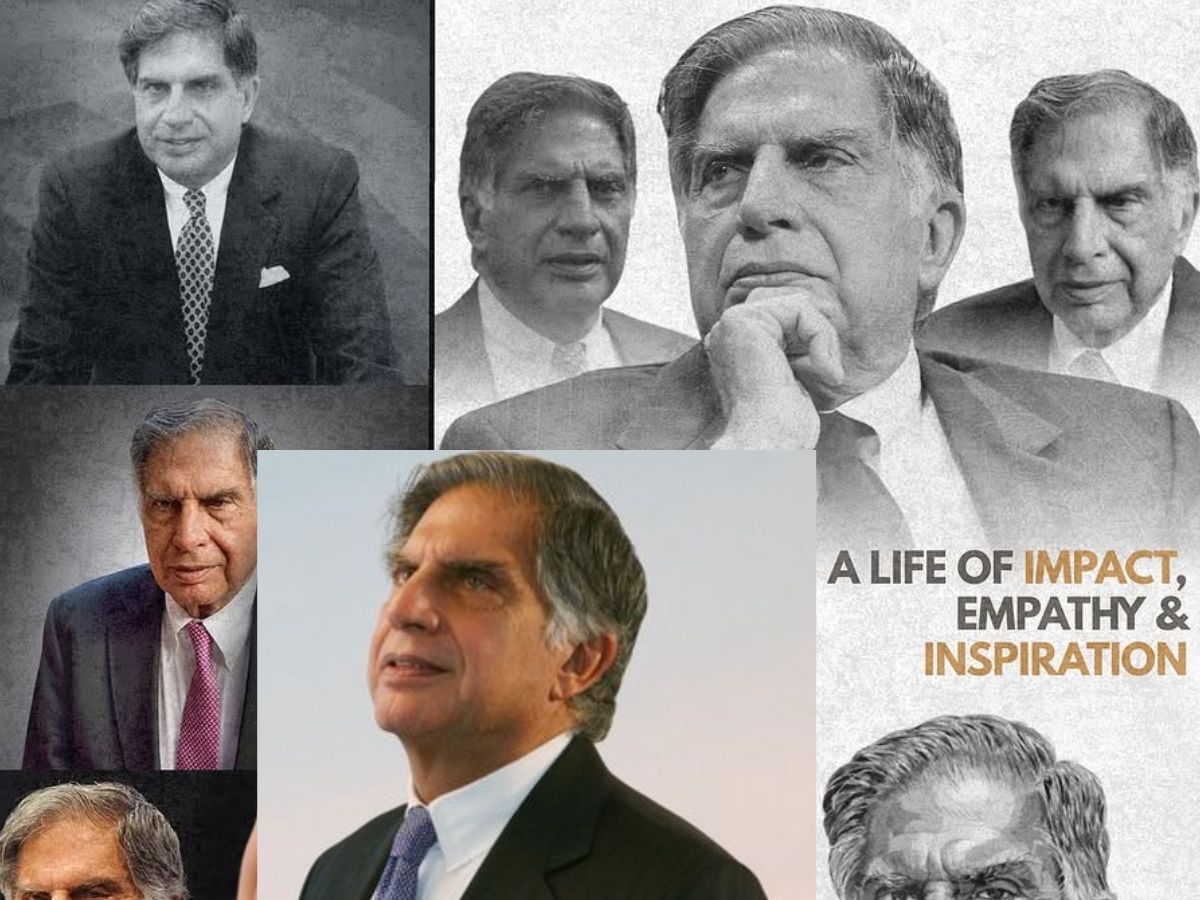
India lost one of its most iconic industrialists and philanthropists, Ratan Tata, on October 9, 2024, who passed away at the age of 86. On the eve of his first death anniversary, we look back on his extraordinary life, his legacy, and the division of his wealth.
Ratan Tata Early Life & Age
Born in Bombay (now Mumbai) on December 28, 1937, Ratan Tata was the son of Sooni Commissariat and Naval Tata. He was passed away on October 9, 2024, at the age of 86. His parents divorced, and he and his younger brother, Jimmy, were brought up by their grandmother, Lady Navajbai Tata. He received a Bachelor of Architecture degree from Cornell University in 1962 and also attended the Advanced Management Program at Harvard Business School.
Ratan Tata Career & Achievement
Ratan Tata began his career in 1962, working on the shop floor at Tata Steel. Over the years, he held various positions within the Tata Group, eventually succeeding J.R.D. Tata as Chairman of Tata Sons in 1991. During his tenure, he expanded the conglomerate’s global footprint through landmark acquisitions such as Tetley Tea and Corus Steel, and launched the affordable Tata Nano car. Tata also transformed the company into a diversified international enterprise, drove significant revenue growth, and earned recognition as a visionary leader and philanthropist in India.
Restructuring the Tata Group
During his tenure as CEO from 1991 to 2012, the Tata Group diversified its global presence. Some key acquisitions made by him during this period include:
Tetley Tea (2000)
Jaguar Land Rover (2008)
Corus Steel (2007)
These strategic initiatives converted the Tata Group into a global giant.
Ratan Tata Net Worth in Rupees
As of his death, Ratan Tata’s individual net worth was put at ₹3,800 crore. However, never did he feature on the billionaire rankings, since most of the Tata Group fortunes are vested in Tata Trusts, which are shareholders in Tata Sons to the tune of around 66%. This arrangement ensured that returns were ploughed back into philanthropic causes in education, healthcare, and other spheres.
In his will, Tata left another ₹10,000 crore to charities, cementing his philanthropic reputation further.
Ratan Tata Family, Wife & Who Inherited His Wealth
Ratan Tata remained unmarried and had no offspring. His will, which was released after his passing, specified the sharing of his property among family members, close friends, and charities. Some major beneficiaries were:
Jimmy Tata: His younger brother was left with silver items, jewelry, and half of the family’s Juhu estate.
Noel Tata and Simone Tata: His stepmother and half-brother were also given a portion of the Juhu property.
Shireen and Deanna Jejeebhoy: His half-sisters were bequeathed an equal portion of one-third of his residual estate.
Mohini Mohan Dutta: An old colleague was given a large part of the residual estate.
Shantanu Naidu: His executive assistant had his education loan cancelled.
Household staff: Long-serving staff were given personal bequests, including loan cancellations.
Other legacies: His will provided money for looking after his pets and bequeathed his Alibaug bungalow to his friend Mehli Mistry. Probate of his will, in which there is a “no-contest” condition to forestall legal challenges, is being managed by the Bombay High Court. His half-brother Noel Tata succeeded him as the chairman of the Tata Trusts.
Ratan Tata Legacy Remembered
Ratan Tata’s demise was the end of an era for the Tata Group and for India. His leadership, vision, and ideals of responsible business practices left an unmatched stamp on the nation’s industrial heritage. As we remember him on the first anniversary of his untimely demise, his legacy continues to motivate subsequent generations.
Also Read: Shantanu Naidu, Ratan Tata’s Aide, Honoured as ‘Social Impact Leader’ at Google