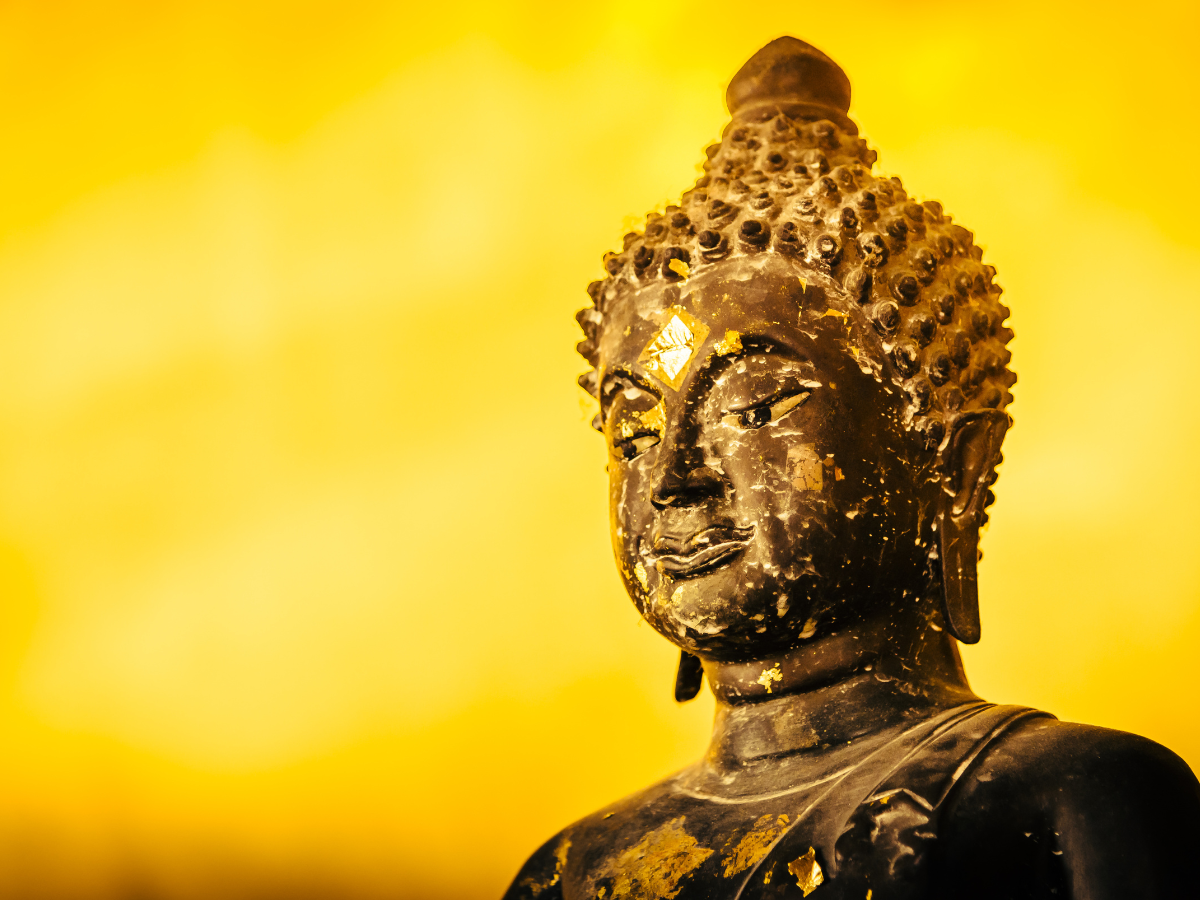
A significant archaeological discovery has been reported from the Pudukottai district of Tamil Nadu, which is 114 km away from the main city: a headless Buddha idol, artistically datable to the 10th century CE, was unearthed along the banks of the Periya Kumari irrigation reservoir at Avudaiyarkovil. The finding was made during a field survey conducted by members of the Pudukkottai Archeological Research Forum as a part of their long-standing initiative to document and preserve the historical and cultural monuments of India.
Read More: Who is CP Radhakrishnan? From Tamil Nadu BJP Chief to NDA’s Vice President Nominee
According to A. Manikandan, founder of the forum, and researchers at the Department of Ancient Science, Tamil University, Thanjavur, the idol was discovered on the elevated mounds of the Perumadai canal. The sculpture, carved from black stone, has been locally revered as Thalai Illa sammi (the headless deity), a title derived from its present state of preservation.
Stylistic and Iconographic Characteristics
Initial examination of the Buddha ideal suggests that the sculpture is 48 cm in height and 38 cm in width and belongs to the ancient Chola period, with stylistic features characteristic of late Buddhist art in Southern India. The ideal looks like wearing a monastic robe draped across the right shoulder and a lowered garment tied at the waist. Some notable iconographic elements include a broad chest, modeled shoulders, three distinct folds at the neck, and the right hand raised in a unique gesture above the left palm.
Read More: MK Stalin Set to Launch Tamil Nadu’s Exclusive State Education Policy Tomorrow
Historical Significance and Cultural Context
Local testimony claims that the idol’s missing head was once seen in a nearby canal but has since vanished. The Archeological Researchers Forum of Tamil Nadu has announced that they will continue their field investigation and recover the fragment and further frame the site
Historical and literary references situate Avudaiyarkovil within a vibrant Buddhist milieu during the Chola dynasty. As per the records, it indicates that the Buddhist grammarian Buddhamitra, credited with composing the Vīra Chozhiyam under the patronage of King Vira Rajendra Chola, hailed from Ponpathi (identified with present-day Ponpatri), a settlement proximate to Avudaiyarkovil. Archeologists have also traced a moat and fortification in that area, which further suggests its importance as a Buddhist center.
Implications for Regional Buddhist Studies
The discovery of this type of archeological ideal continues to contribute to the expanding corpus of Buddhist archeological material from Pudukottai and reinforces the region’s historical role as a hub of Buddhist intellectual and cultural activities during the Chola period. In response, Manikandan said that these types of researchers not only highlight the Buddhist artistary but also stress the necessity of sustained efforts.
Read More: PM Modi Pays Tribute to Chola Legacy at Aadi Thiruvathirai Festival in Tamil Nadu