Pitru Paksha 2025 is a 16-day period observed by Hindus to honor and remember their ancestors. The ritual begins with the full moon of Bhadrapad and continues into the Ashwin month. It ends on Sarva Pitru Amavasya or Mahalaya Amavasya. During this time, devotees perform Shraddha, Pind Daan, and Tarpan to offer gratitude. Offerings are made to cows, dogs, and crows, symbolising the presence of departed souls on earth also the rituals ensure peace for ancestors and blessings for their descendants.
Pitru Paksha 2025 Dates
Pitru Paksha in 2025 will be observed from September 7 to September 21. The daily Shraddha schedule is as follows:
- September 7, 2025 (Sunday): Purnima Shraddha
- September 8, 2025 (Monday): Pratipada Shraddha
- September 9, 2025 (Tuesday): Dwitiya Shraddha
- September 10, 2025 (Wednesday): Tritiya & Chaturthi Shraddha
- September 11, 2025 (Thursday): Panchami Shraddha & Maha Bharani
- September 12, 2025 (Friday): Shashthi Shraddha
- September 13, 2025 (Saturday): Saptami Shraddha
- September 14, 2025 (Sunday): Ashtami Shraddha
- September 15, 2025 (Monday): Navami Shraddha
- September 16, 2025 (Tuesday): Dashami Shraddha
- September 17, 2025 (Wednesday): Ekadashi Shraddha
- September 18, 2025 (Thursday): Dwadashi Shraddha
- September 19, 2025 (Friday): Trayodashi Shraddha & Magha Shraddha
- September 20, 2025 (Saturday): Chaturdashi Shraddha
- September 21, 2025 (Sunday): Sarva Pitru Amavasya (Mahalaya Amavasya)
Read More: Bhavishya Malika Predictions 2025: Will Kaliyuga Destroy Family, Faith, and Nature?
Significance of Pitru Paksha
Hindu scriptures describe Pitru Paksha as the most sacred period for ancestor worship. During Shraddha, devotees perform Pind Daan to fulfill the unfulfilled wishes of their ancestors while Hindus believe that Pind Daan helps departed souls attain peace and ensures their entry into heaven while this practice also strengthens the bond between generations and reminds people of their family roots.
Rituals of Pitru Paksha
- The rituals of Pitru Paksha are detailed and symbolic while every step represents respect and gratitude towards ancestors.
- The eldest son wakes up early and takes a holy bath.
- He wears fresh and clean clothes before beginning the rituals.
- Special garments made of Kush grass are worn. Kush is considered sacred and symbolic of compassion.
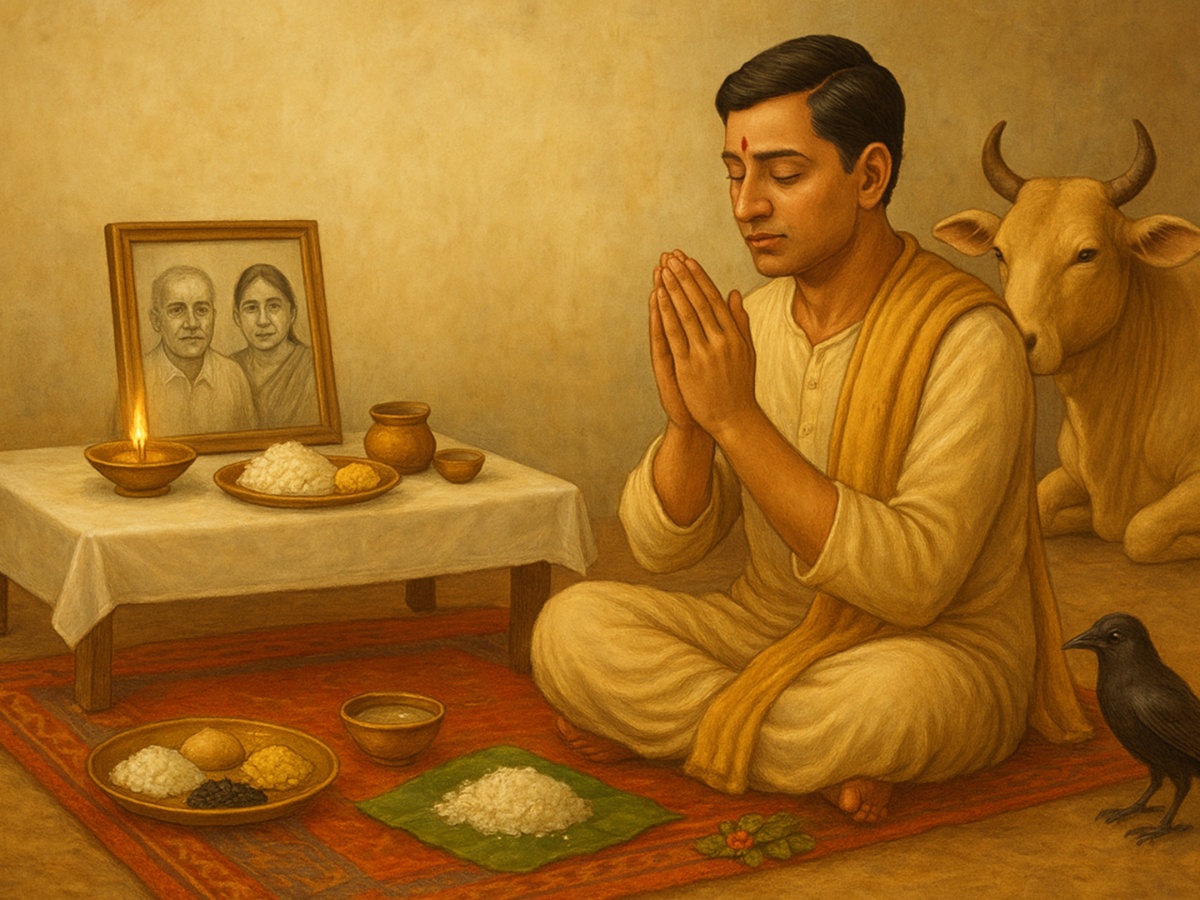
- A wooden table is placed facing south and covered with a white cloth while photos of ancestors are placed on the table with black sesame seeds and barley.
- Devotees prepare pinda using ghee, honey, rice, goat milk, sugar, and rice balls made of barley.
- The offering is performed with flour, barley, kush, black sesame seeds, and water.
- After rituals, pind daan and tarpan are offered to needy and poor people, symbolising selfless service.