
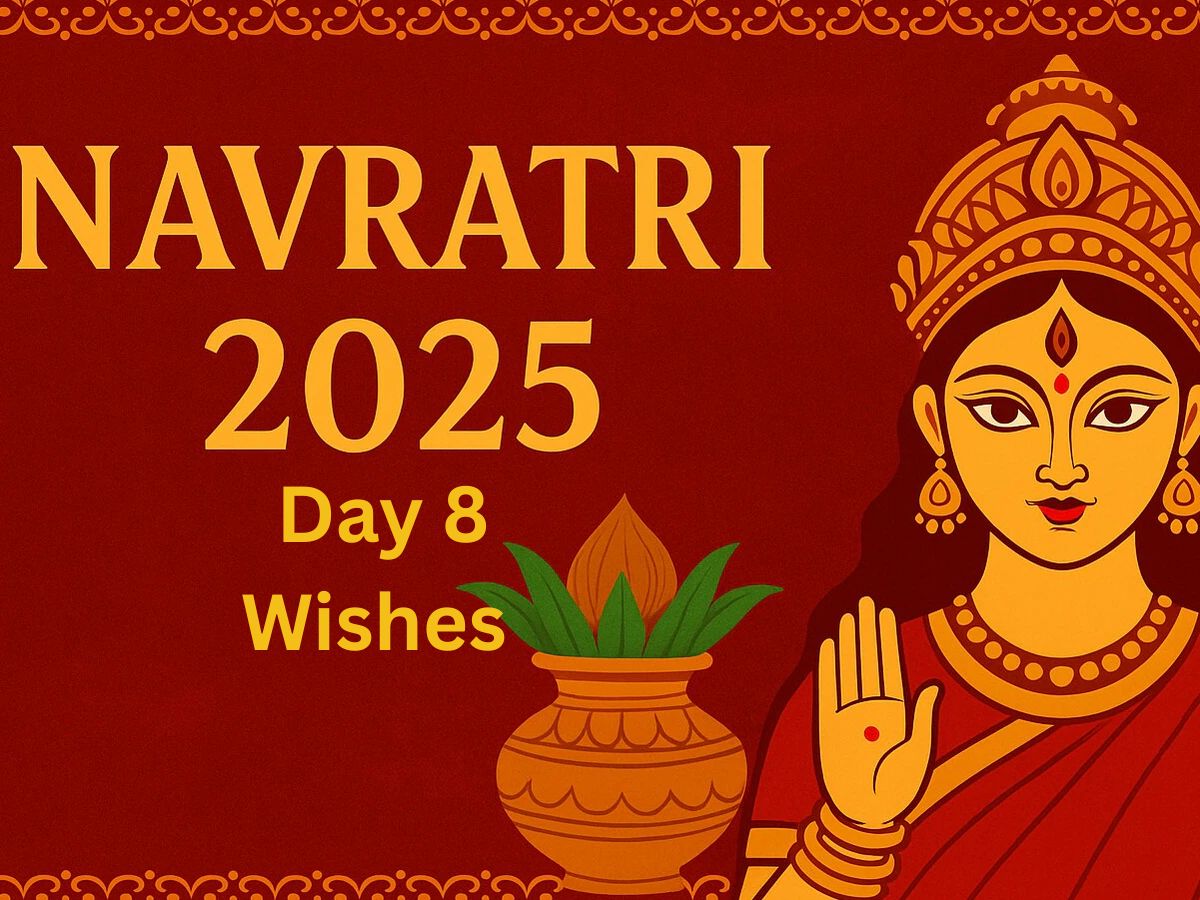
The eighth day of Navratri is also referred to as Durga Ashtami or Maha Ashtami. It is dedicated to Goddess Maa Mahagauri, the shining deity of purity, beauty, and peace. Devotees throughout India observe this day with prayer, rituals, and genuine wishes, praying for peace, prosperity, and the elimination of all barriers and obstacles.
Navratri Day 8: Significance
Maa Mahagauri, Durga’s eighth incarnation, is worshiped for her purity and white, radiant figure, symbolising inner and outer negativity’s purification. According to legend, she obtained this shining figure when Lord Shiva washed her with sacred Ganga water, eradicating the darkness of deep penance, to become the very picture of purity and peace. Believers feel that worshipping Maa Mahagauri releases them from past wrongdoings, creates domestic bliss, and attains inner peace.
Day 8 is celebrated with special ceremonies like Ghatasthapana, auspicious pujas, and in-house adornments with white flowers and lights to reflect the goddess’s sacred purity. Kanya Pujan, the puja of nine young girls as representations of the divine feminine, is a standout ritual, exhibiting respect for Shakti in every form.
Navratri Day 8 Wishes & Messages
- “May you have peace, purity, and divine grace this Durga Ashtami. May Maa Mahagauri grant all your wishes and purify your life with sacred light.”
- “May the goddess bring peace, harmony, and prosperity into your home on Maha Ashtami. Happy Navratri Day 8!”
- “May the invigorating blessings of Maa Mahagauri wipe out all the hurdles and give wisdom, good health, and bliss. Jai Maa Mahagauri!”
These messages are posted for inspiring positivity, dedication, and spiritual elevation during this sacred festival.
Sanskrit Mantras of Ashtami
Listening to mantras that are dedicated to Mahagauri is thought to be very auspicious. Some essential mantras for worship on Navratri’s eighth day are:
- “ॐ देवी महागौर्यै नमः॥” (“Om Devi Mahagauryai Namah”) – It calls for purity and calmness.
- “या देवी सर्वभूतेषु महागौरी रूपेण संस्थिता। नमस्तस्यै नमस्तस्यै नमस्तस्यै नमो नमः॥” (“Ya Devi Sarvabhuteshu Mahagauri Rupena Samsthita, Namastasyai Namastasyai Namastasyai Namo Namah”) – A strong salutation acknowledging the goddess’s presence in all living beings.
Kanya Pujan is also observed on Ashtami, and food, gifts, and blessings are given to girls indicating the nine incarnations of Durga, rededicating worship to feminine energy in society.
On this sacred day, may Maa Mahagauri’s divine light shine brightly, guiding every heart toward purity, joy, and fulfilment.