
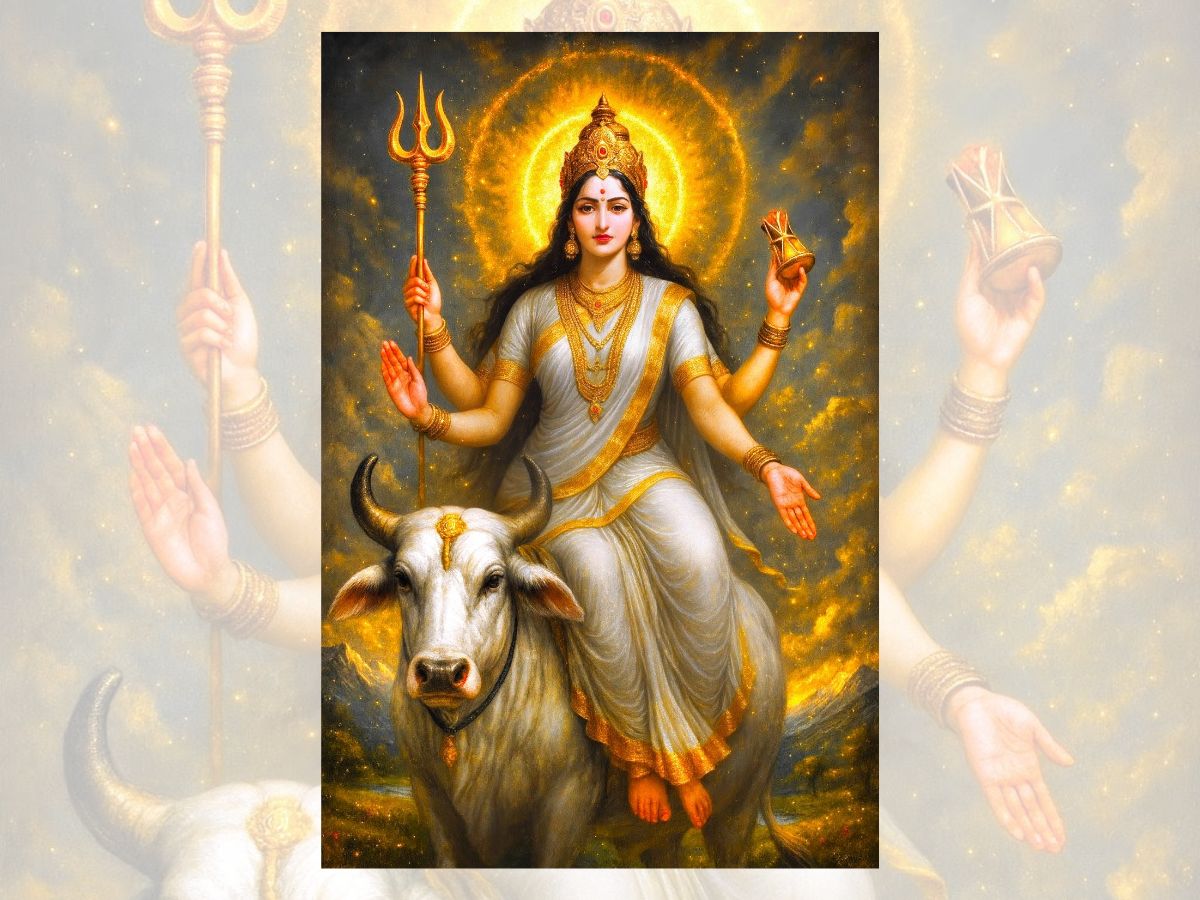
Navratri’s eighth day, celebrated as Durga Ashtami or Maha Ashtami, is the day dedicated to Maa Mahagauri, the radiant goddess symbolising purity, serenity, and spiritual awakening. The day marks a crescendo in the nine-day festival, blending ritual devotion and profound spiritual significance for millions of devotees across India.
The Deity of the 8th Day of Navratri: Maa Mahagauri
Maa Mahagauri is worshipped on the eighth day of Navratri. She is the eighth form of Goddess Durga, who is identified with her radiating white complexion and calm demeanor. Legend has it that Maa Mahagauri was formed from Goddess Parvati after she performed years of severe penance. Parvati, willing to reach Lord Shiva, performed severe tapasya, which tanned her colour. Subsequently, after destroying demons Shumbha and Nishumbha and taking a dip in the holy Ganga river, Parvati recovered her radiant form and was given the name Mahagauri.
Shown riding a bull, Maa Mahagauri possesses four arms grasping a trident, a damaru (small drum), a rosary, and blessing devotees with the Abhaya mudra. Her name derives from the combination of “Maha,” great, and “Gauri,” fair, referring to her effulgent beauty and spiritual purity.
Relevance and Significance
The day is of great religious significance. The worship of Maa Mahagauri is believed to wash away past karmic dues and rid one of inner negative vibrations, bringing peace, prosperity, and harmony. She signifies peacefulness, gentleness, and the triumph of goodness over evil. To women, she is a bringer of family happiness and conjugal bliss. The qualities of Maa Mahagauri bring to the minds of devotees the strength of determination, innocence of heart, and success through unflinching faith.
The eighth day is also important for starting Saraswati Avahan, starting the invocation of the goddess of knowledge and wisdom, the shift from physical purification to mental and spiritual illumination during the festival.
Related Rituals
Devotees rise early and perform Ghatasthapana rituals, followed by traditional worship. The puja vidhi for Mahagauri involves offering white flowers, coconut-based desserts, and chanting sacred mantras like “ॐ देवी महागौर्यै नमः॥ Om Devi Mahagauryai Namah॥,” believed to purify the soul and attract divine grace.
An important ritual is Kanya Pujan or Kumari Puja, where nine little girls are considered to be incarnations of the Goddess are worshiped. They are washed with water on their feet and offered gifts and food, celebrating feminine divinity and innocence. Followers also adorn themselves with Peacock Green, the lucky colour representing prosperity and rebirth for Ashtami in 2025.
These rituals create the feeling of purity, faith, and celebration leading to mutual spiritual elevation as Navratri moves on to the last day.