
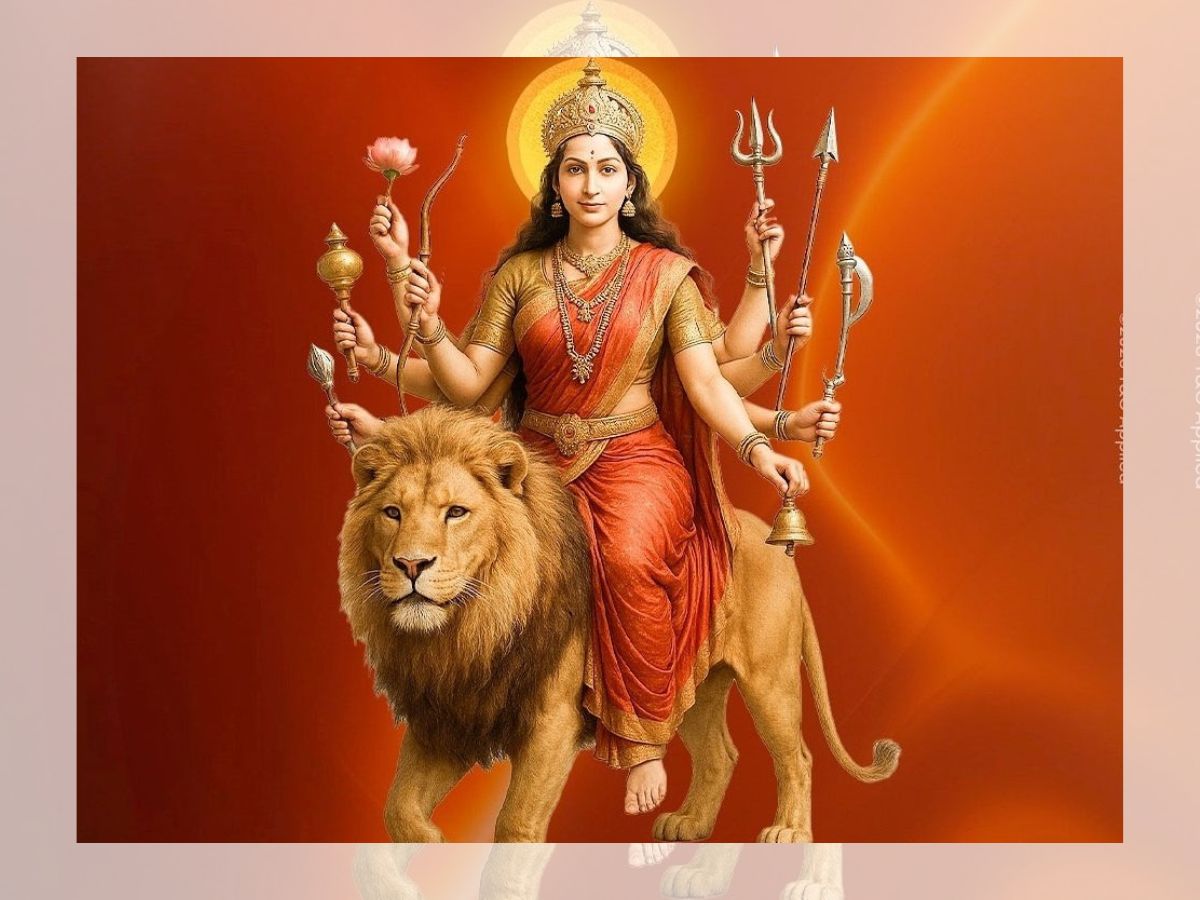
The fourth day of Navratri is a day of puja devoted to the worship of Maa Kushmanda, the effulgent form of Goddess Durga who is thought to be the creator of the cosmos. Her omnipotent energy is sought on this sacred day by devotees, begging her to bless them with dynamism, prosperity, and the eradication of darkness both physical and metaphysical.
Deity: Maa Kushmanda
Maa Kushmanda gets her name from three Sanskrit words- ‘Ku’ (small), ‘Ushma’ (energy/warmth), and ‘Anda’ (cosmic egg) – which collectively represent the evolution of the universe from a small cosmic egg via her warm and radiant smile. She sits upon a lioness and is visualised with eight hands, carrying symbols such as the lotus, bow, arrow, kamandal, chakra, gada, japmala, and an amrit kalash (pot of nectar). Also referred to as Ashtabhuja Devi, she is also said to govern the Anahata (Heart) Chakra. According to Hindu mythology, when the world was struggling darkness, it was the creation of Maa Kushmanda that brought about light and cosmic order, making her the supreme source of energy.
Relevance and Significance
Worship of Goddess Kushmanda is said to provide health, strength, positivity, and removal of disorders such as anxiety, depression, and negative thoughts. Her blessings are called upon for achievement, spiritual growth, and peace in life as well as work. She is worshiped for bestowing the eight siddhis (extraordinary spiritual abilities) and nine types of richness on worshippers. Invocation of her generates optimism, eliminates obstacles, and aligns one’s heart with divine love and creation.
Maa Kushmanda also symbolises the creative energy and is revered for her motherly, nurturing nature and helps with new beginnings, conception, and abundance. Her power is said to radiate throughout the sun, blessing everything with heat and nourishment.
Associated Rituals
During this fourth day of Navratri, followers conduct a series of ancient rituals to worship Maa Kushmanda:
- Color of the Day: Yellow is worn by followers and utilized in offerings, reflecting joy, energy, and success.
- Offerings: Yellow flowers, bangles, attire, and particularly pumpkin (kushmanda phala), which is her favourite.
- Puja Vidhi: Followers make their homes and altars clean, provide kumkum, rice, incense, and ghee lamps, and sing special aartis and mantras. Bhog (sacred food) is usually Malpua or pumpkin dish.
- Mantra Chanting: Reading of सुरासंपूर्णकलशं रुधिराप्लुतमेव च। दधाना हस्तपद्माभ्यां कूष्माण्डा शुभदास्तु मे॥ and ॐ देवी कूष्माण्डायै नमः are said to awaken her protection and nourishing energy.
This fourth day of Navratri symbolises the development of inner light, positivity, and imagination among devotees through invoking the blessings of Maa Kushmanda. With prayers, rituals, yellow offerings, and pure devotion, devotees resonate with the goddess’s nourishing energy, infusing prosperity, good health, and happiness into their lives on this special day.