
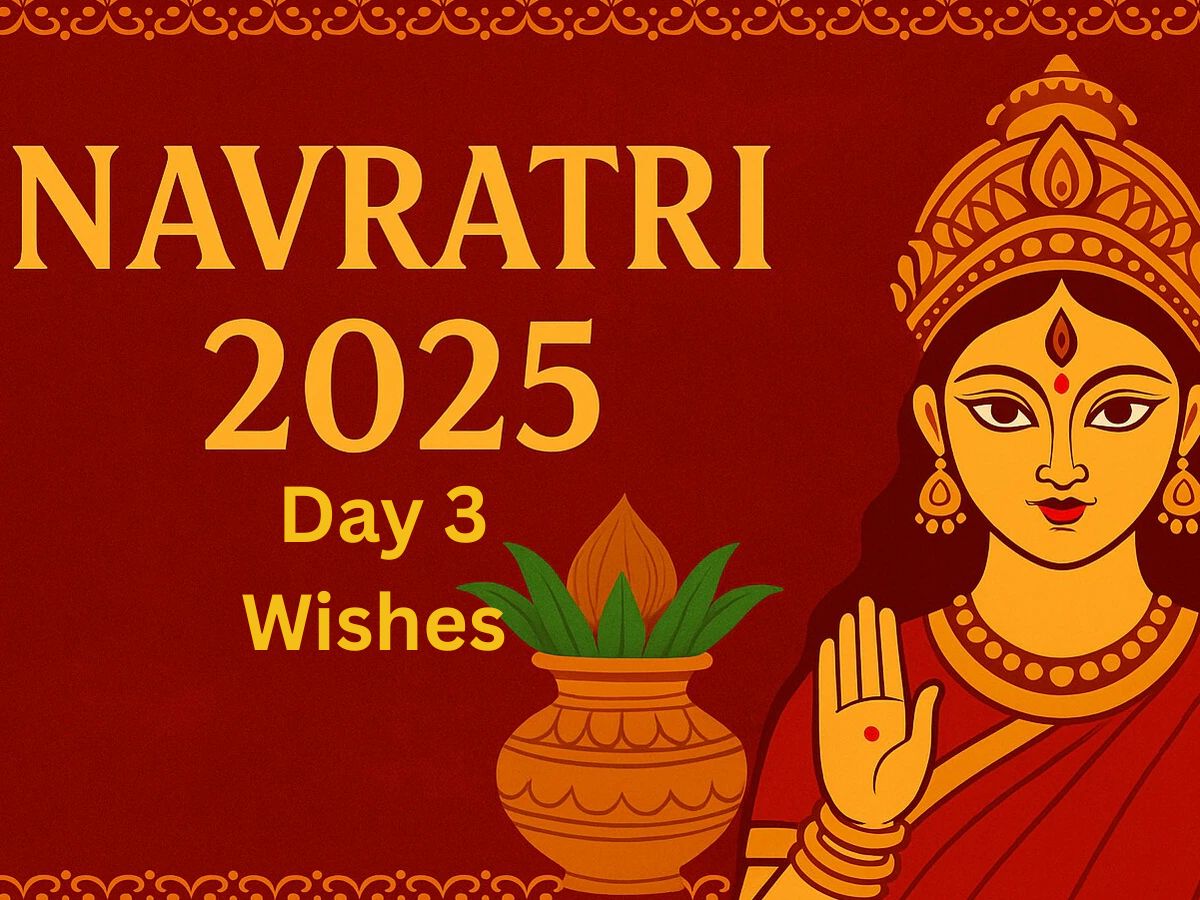
Navratri, the nine-day Hindu festival in honour of Goddess Maa Durga, is of high cultural and religious importance in India. Every day of this celebration is linked with a specific avatar of the Goddess and a special symbolism associated. On this third day of Navratri, people pray to Goddess Maa Chandraghanta, symbolising courage, calmness, and emotional stability. She is shown wearing a crescent moon mark on her forehead, representing inner understanding and divine power.
This day is considered for awakening inner power and erasing negativities from life. Prayers to Goddess Maa Chandraghanta are said to drive away troubles, safeguard against evil, and grant devotees peace, prosperity, and righteousness. In addition to conventional puja ceremonies, individuals send warm wishes to loved ones, exchanging positive energies and spiritual happiness. Complimenting these wishes with Sanskrit mantras dedicated to Goddess Maa Chandraghanta enhances the greetings and turns them more spiritual and devotional.
Navratri Day 3 Wishes
- “May Goddess Maa Chandraghanta bestow on you the strength, intellect and peace on this sacred day of Navratri. Happy Day 3 of Navratri!”
- “On the third day of Navratri, may Maa Chandraghanta remove fear from your life and fill it with positivity and prosperity.”
- “Wishing you the divine favours of Maa Chandraghanta. Let this Navratri usher in peace, good fortune, and new beginnings in your life.”
- “Best wishes for Navratri Day 3! May Goddess Maa Chandraghanta’s serene form encourage you to tread the path of virtues and power.”
- “May Maa Chandraghanta bless her compassion and bravery on you and your family members on this auspicious day.”
These Navratri wishes not only express festive joy but also the eagerly seeking divine feminine power for empowerment and peace in life.
Sanskrit Mantras for Navratri Day 3
To give spiritual enrichment to Navratri wishes, devotees usually chant and share mantras of Goddess Maa Chandraghanta. One of the widely recited mantras is:
- “Om Devi Chandraghantayai Namah” – an easy, efficacious chant calling upon her mercy and blessings.
- Another significant shloka associated with her is: “Pindaj Pravarudha Chandkopastrakairyuta, Prasadam Tanute Mahyam Chandraghanteti Vishruta.”
This mantra is said to safeguard devotees from adversities and lead them to inner peace. Recitation of this mantra during the puja or even at the time of sending wishes enhances the spiritual bond.
Navratri Day 3 is another day in this festive time of honour for strength, courage, and serenity by the grace of Maa Chandraghanta. Greetings with her holy mantras give not only festive greetings but also sacred prayers. As the people observe this day with piety, prayer, and harmony, the positive energy of Sanskrit mantras adds richness to the tradition, enriching it with hopes of peace, strength, and happiness for everyone.