
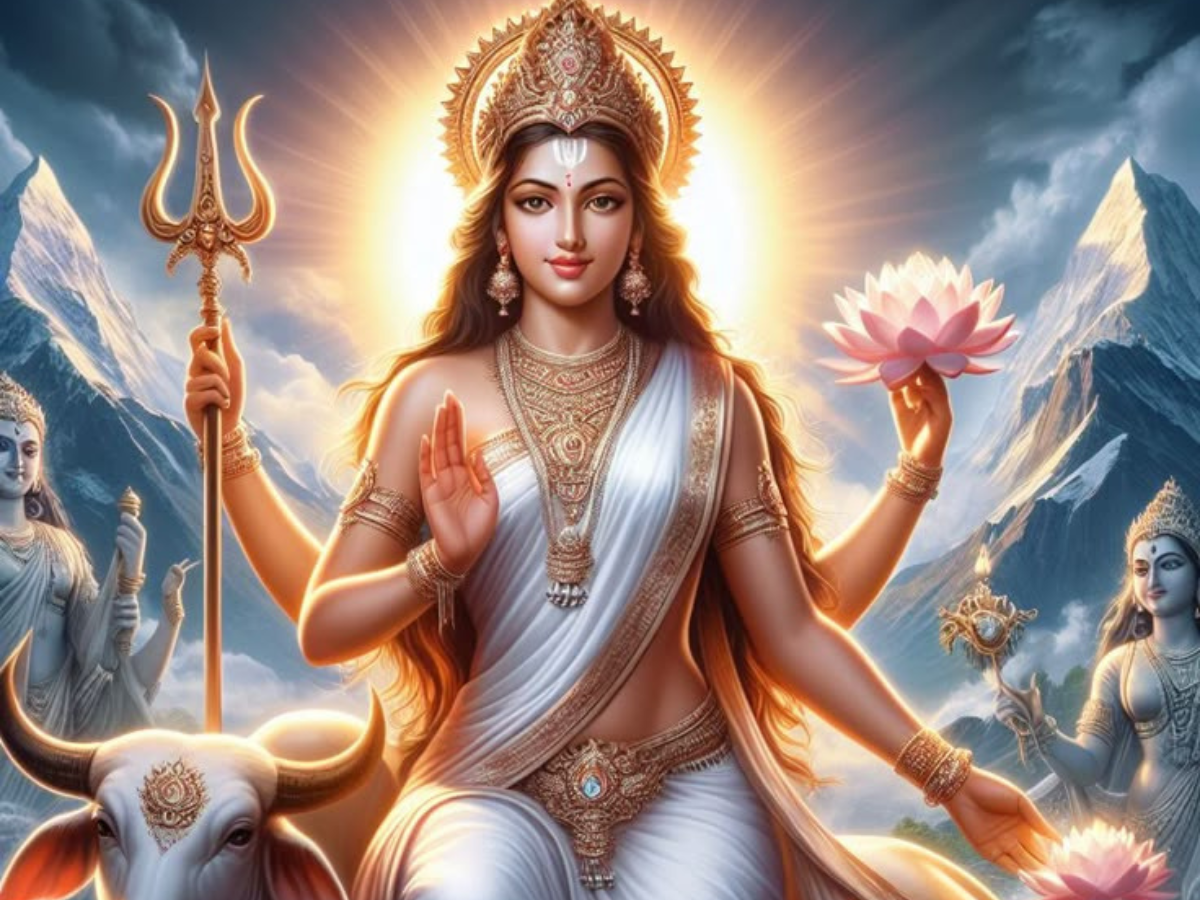
One of India’s most popular and spiritually enriched festivals, Navratri starts all over again on September 22, 2025, representing a divine nine-night pilgrimage to offer prayers to Goddess Durga in her nine avatars. On the first day of Navratri, known as Pratipada, Maa Shailputri, the “Mountain Daughter,” is worshiped. She represents purity, courage, and freshness.
Who is Maa Shailputri?
Maa Shailputri is the first form of Goddess Durga and is worshipped as Mother Nature personified on the first day of holy Navratri. She is the Himalayan princess (Shail is mountain, Putri is daughter). Symbolically, Shailputri symbolises spiritual awakening, the premise for the nine-day festival’s deeper messages of triumph over evil and inner transformation. She is most often depicted riding a bull, holding a trishool (trident) in her right hand and a lotus flower in her left, exuding divine power and peace.
Day 1: Rituals and Traditions
The first day begins with the ceremony of Ghatasthapana (or Kalash Sthapana), a symbolic installing of a holy vessel (kalash-pot) embodying the goddess’s presence during the festival. Nine varieties of grains (Navadhanya) are placed in the pot by devotees and worships (puja), offering white flowers, desi ghee (clarified butter), and lightening oil lamps. White is the lucky color of Day 1, representing calmness, purity, and peace. White clothing is usually put on by devotees aligning them with the spiritual energy of Maa Shailputri, bringing positivity and inner peace.
Mantra chanting of “Om Devi Shailputri Namah” is an essential part, which is said to call upon the goddess’s blessings for prosperity, safeguarding, and clear thinking.
Spiritual and Cultural Significance
Day 1 of Navratri reflects ritualistic devotion. It is a symbolic of new beginnings and purity of intention. People worship Maa Shailputri for her blessings to wash away the negativity and get their minds and souls ready to face what lies ahead. The festival itself symbolises victory of good over evil, and on this day, praying to Maa Shailputri signifies the beginning of this cleansing journey.
Navratri creates a tight sense of cultural bonding and spiritual training. It unites families and societies in shared devotion, dances such as Garba and Dandiya, and festivities based on centuries-old customs. The nine colours that people wear during Navratri create an extra sense of symbolic meaning associated with each manifestation of the goddess, white on the first day emphasising simplicity and spiritual realisation.
Modern Day Significance
In today’s fast-paced world, Navratri Day 1 encourages a mindful pause, a moment to reconnect with nature, acknowledge the divine feminine energy, and instil a sense of peace and renewal. It invites individuals to start afresh with hope, determination, and purity of intention, setting the tone for the festival’s nine days of devotion.
Finally, the first day of Navratri is a deeply symbolic event that poises worship, culture, and personal development against each other, making it a holy tradition adopted across India and the international community.