
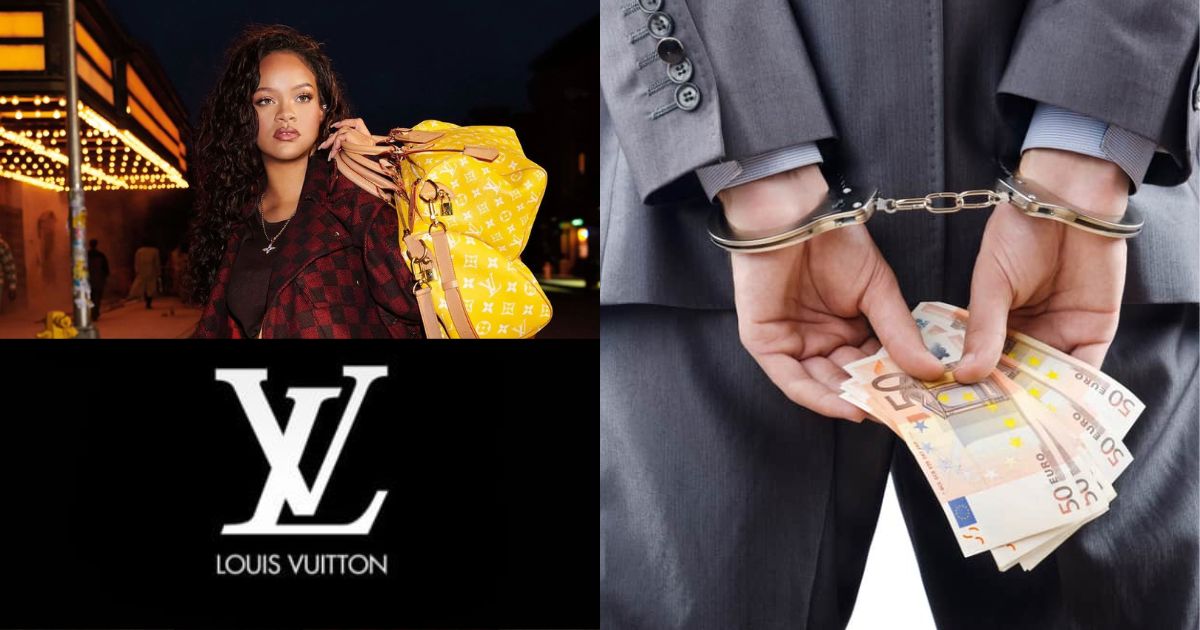
Louis Vuitton, the French luxury fashion brand, has come under investigation for a big money laundering case in the Netherlands. This followed when a Chinese citizen publicly named as Bei W, who spent about $3.5million (€3million) in cash on designer handbags and accessories within 18 months. The high-profile investigation, which was made public in July 2025, is one of the biggest law enforcement operations so far aimed at the nexus of luxury commodities and illegal financial flows.
Repeated Cash purchases, Detection avoided
Between February 2021 and September 2023, Bei W. visited Louis Vuitton stores in the Netherlands multiple times, making repeated cash buys that were just below the €10,000 transaction level—above which Dutch law mandates compulsory reporting to the financial authorities. This organized strategy, commonly known as “smurfing,” enabled her to circumvent regulatory reporting requirements and escape detection, exchanging purported criminal profits for easily exportable luxury items. In all, the purchases amounted to hundreds of expensive handbags, each averaging about €2,500. They were professionally packed into moving boxes and exported to Hong Kong and China, where they were to be resold or used to launder money across borders.
Insiders accused of coordinated act
The investigators discovered that money spent on these purchases had come from an underground banker who had managed to be convicted for a similar offense. Transaction analysis and surveillance discovered that Bei W. had been in contact with a Louis Vuitton sales staff member, named in court documents as “V.,” who not only informed her of available inventory but also allegedly cautioned her about the reporting threshold. Two others have been accused of helping to coordinate logistics, record-keeping, and allow the shopping binges.
Dutch Authorities stringent on the Case
The Dutch Public Prosecution Service accuses Louis Vuitton Netherlands of not adhering to its anti-money laundering requirements. Retailers under Dutch and EU law must not only report cash transactions above certain objective levels but also report patterns of suspicious behavior even if individual transactions are below objective thresholds. Prosecutors contend that the extent, frequency, and mode of purchase should have prompted closer inspection and internal escalation because there were obvious red flags of potential trade-based money laundering.
Possible consequences, Big trouble?
The consequences for Louis Vuitton may be serious : in addition to reputational harm, the firm may also be subjected to heavy financial penalties as well as increased regulatory scrutiny should it be held negligent. The case also poses wider questions relating to the susceptibility of the high-end retail industry to manipulation by criminal organizations, the effectiveness of compliance frameworks among luxury brands, and the global transfer of illegal funds via legitimate business routes.
As the Dutch prosecution proceeds, international authorities and high-end retailers are paying attention—seeing that this case could be a watershed for anti-money laundering enforcement among the non-financial sector, particularly in the context of ever more complex, cross-border financial crime.