
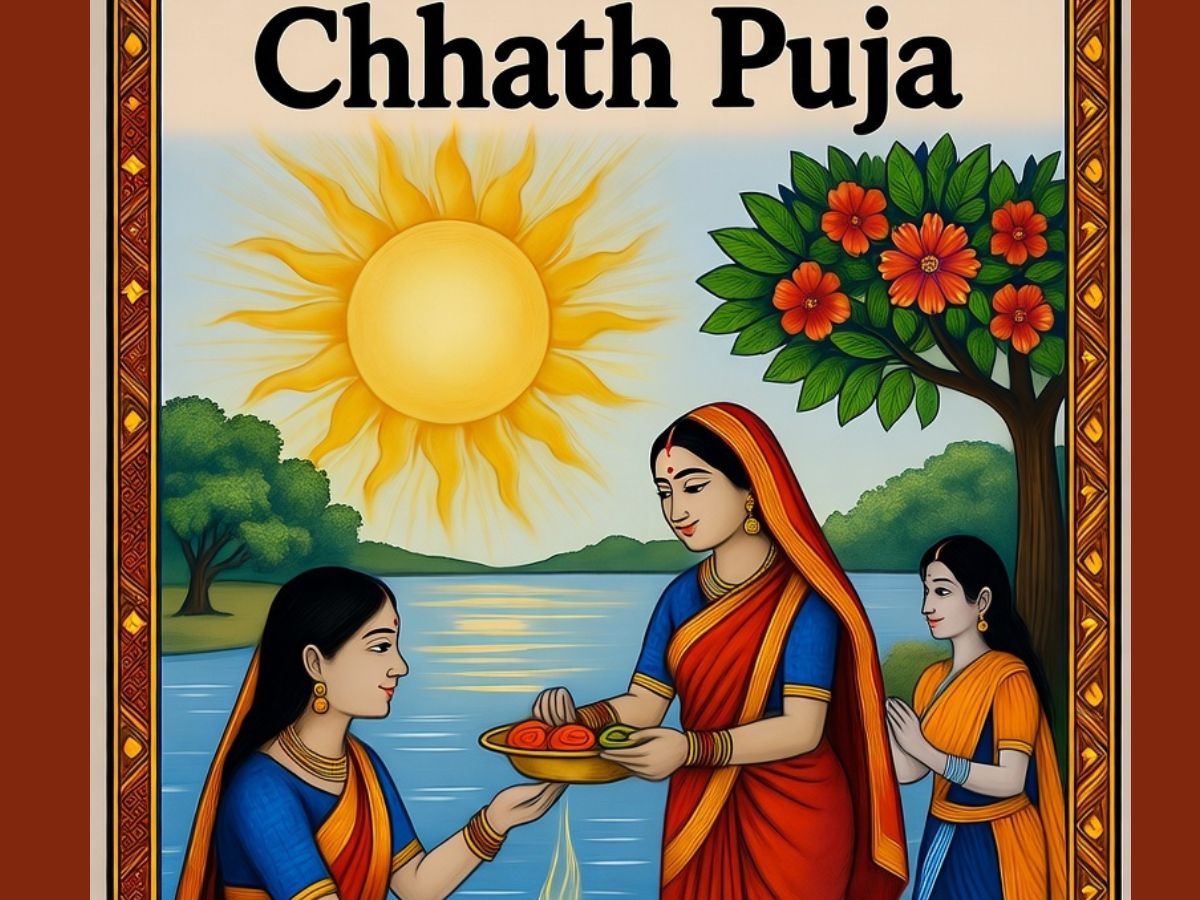
Chhath is a very old Indo-Nepalese Hindu ritual, indigenous to eastern India and southern Nepal. It is observed particularly in the Indian states of Bihar, Jharkhand, and Eastern Uttar Pradesh and Koshi, Gandaki, Bagmati, Lumbini, and Madhesh provinces of Nepal. On Chhath Puja, the solar deity, Surya, is offered prayers to thank Him for the blessings of life on Earth and to seek personal wishes to be fulfilled
Chhath Puja 2025 Date and Time in Madhubani, Bihar
As per the Drik Panchang, the favorable festival of Chhath Puja is being celebrated from October 25 to October 28 this year. The important timings are as follows:
- Nahay Khay: 06:11 AM to 05:56 PM, October 25
- Lohanda and Kharna: 06:12 AM to 05:55 PM, October 26
Chhath Puja 2025 Usha Arghya Sunrise Time in Madhubani, Bihar (Chhath puja Surya Uday time)
Usha Arghya Sunrise Time in Madhubani, Bihar is 05:45 AM to 06:12 AM
Chhath Puja 2025 Muhurat in Madhubani, Bihar
Shubh Muhurat for Sandhya Arghya is between 04:45 PM to 05:55 PM
Chhath Puja 2025 Rituals in Madhubani, Bihar
Chhath puja is a four day ritual. It is celebrated with lots of purification of mind and surroundings.
Day 1 – Nahay Khay (Saturday, October 25, 2025)
The festival starts with Nahay Khay, which is a purification and preparation day. Believers take a sacred bath in rivers or ponds and whitewash homes to start the ritual with purity. They eat a sattvic lunch of lauki (bottle gourd), chana dal, and rice, and food is prepared using the water fetched from the river as a symbol of purity.
Day 2 – Kharna or Lohanda (Sunday, October 26, 2025)
The second day, which is Kharna, consists of a day-long fast that is undertaken by the devotees without water. The fast is subsequently broken after sunset with offerings to Goddess Chhathi Maiya. The prasad consists of rasiya (jaggery kheer) and chapati, and these are distributed among family and neighbors. Post this, the devotees start the 36-hour nirjala fast (without water) that continues up to the last day.
Day 3 – Sandhya Arghya (Monday, October 27, 2025)
The third day is the most important section of Chhath Puja. Evening, the devotees come to water bodies to worship Sandhya Arghya (evening offerings) to the western sun. Treats like thekua, fruits, sugarcane, coconut, and other conventional materials are put in bamboo baskets (soop or daura) and offered while standing knee-deep in the water. Sunset is the time for the Arghya.
Day 4 –Usha Arghya (Tuesday, October 28, 2025)
The festival ends with Usha Arghya, the sunrise offering to the dawn Sun. People gather again at ghats early in the morning to do the ritual, seeking good health, bliss, and prosperity for family. After performing Arghya, the pilgrims break their 36-hour fast and share prasad with family and neighborhood members. The ritual also reflects thanks to Usha, the first light of dawn and wife of Lord Surya.
Chhath Puja 2025 Puja Vidhi in Madhubani, Bihar
For Chhath Puja, devotees use two bamboo baskets Pathiya and Soop along with other things like Daghri, Ponia, Dhakan, Kalash, Pukhar, and Sarwa. These baskets hold Bhog (prasad) such as Thekua, Makhana, rice grains, betel nut, sprouted grains, sugarcane, and five fruits custard apple, coconut, banana, pear, and Daabh along with Panchmeva (five-colored sweets). Before placing offerings, sindoor and pithar are applied to the baskets. On the first day, devotees offer Sandhya Arghya to the setting Sun using bamboo or brass baskets filled with prasad and holy water.
What is Paran in Chhath Puja?
The rising Sun is worshiped by devotees with arghya, expressing hope and gratitude. On completion of the prayers, paran (breaking fast) is done at home. Chhath Puja purifies sins, advances health, and brings prosperity. Sun God worship guarantees life energy and positivity.
Chhath Puja 2025 Paran Date
The Paran day for Chhath Puja in 2025 will be observed on Tuesday, October 28, after sunrise.