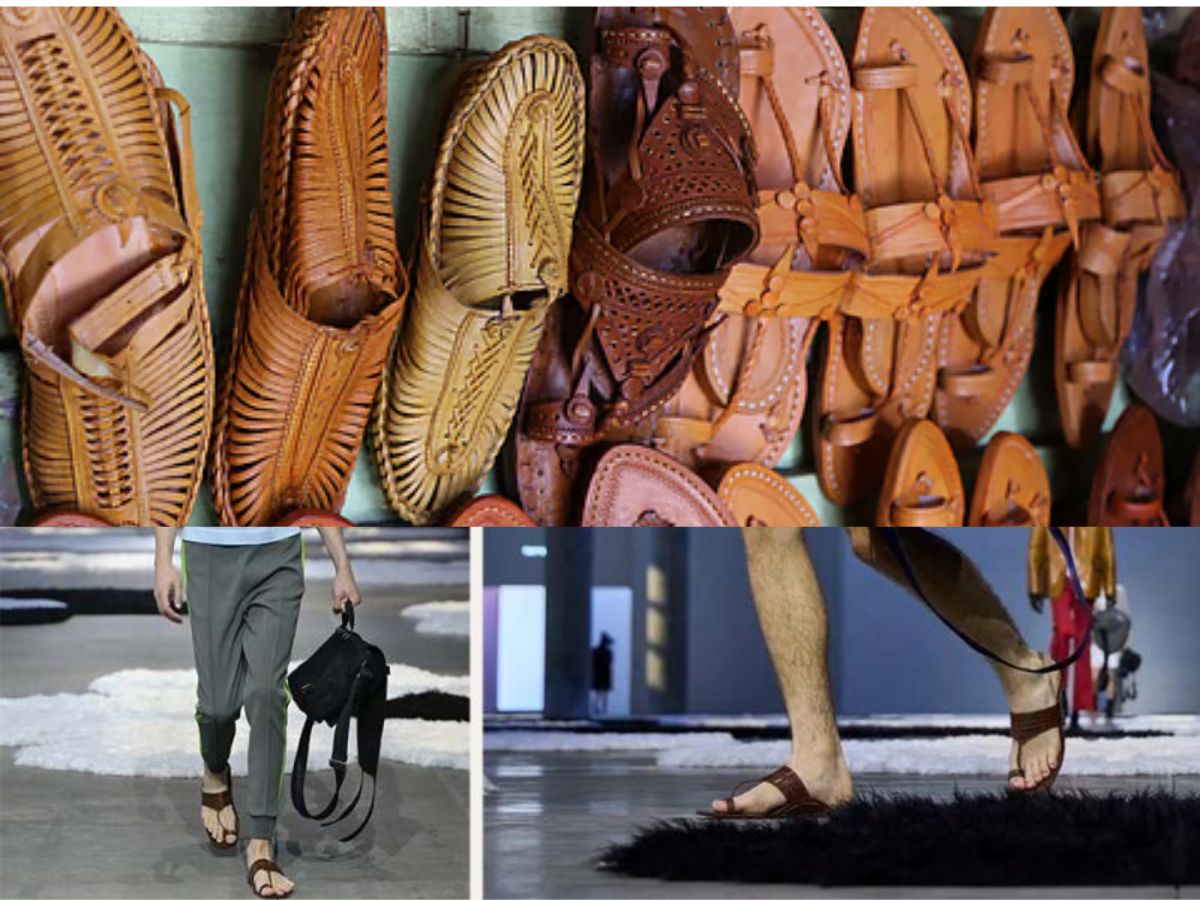
Earlier this year, Italian luxury giant Prada found itself in hot water with Indian audiences. Why? Its Spring 2026 menswear show included T-strap sandals that strongly resembled India’s traditional GI-tagged Kolhapuri chappals. Social media exploded, calling it cultural appropriation and a clear copy of a centuries-old craft. Now, Prada has announced a surprising pivot: a formal collaboration with Indian artisans to produce a luxury version of the same design.
What Exactly Is Prada Doing?
Moving from criticism to collaboration, Prada has signed an agreement with two Indian government leather development corporations: LIDCOM and LIDKAR. The project is titled “PRADA Made in India x Inspired by Kolhapuri Chappals.” This limited-edition collection will be manufactured in India by skilled artisans from Maharashtra and Karnataka—the very regions where authentic Kolhapuris are made. The brand states the project aims to “celebrate Indian craftsmanship” by combining traditional techniques with Prada’s design and materials.
Also Read: Who Is Do Kwon? Sentenced for $40 Billion TerraUSD Crypto Collapse
What Will These Luxury Kolhapuris Cost?
Here’s the figure causing the buzz: each pair is set to cost around $930, or about ₹84,000. Prada will make only 2,000 pairs. This is far higher than traditional Kolhapuri chappals, which are prized for being affordable, often just a few thousand rupees.
What Makes Traditional Kolhapuris Special?
The authentic GI-tagged Kolhapuri chappal comes from eight districts in Maharashtra and Karnataka. Made for generations by artisan families, they are fully handcrafted from vegetable-tanned leather, featuring braided toe loops and traditional designs. The GI tag legally protects their origin and authentic production methods.
Is This a Win for Indian Artisans?
The central question now is about benefit and recognition. On one hand, the collaboration directly involves the artisans and promises to place their skills on a prestigious global luxury platform. The official deal talks about creating a “unique dialogue between Indian heritage and modern luxury.” However, the huge markup raises questions about whether the profits benefit the artisan communities or just serve luxury branding.
The project is a high-stakes experiment. It tests whether a controversial moment can be transformed into a respectful partnership and whether the global luxury market will pay a super-premium for artisan collaboration.For the craft itself, it brings unprecedented international attention.
Also Read: OpenAI Sued Over ChatGPT’s Role in Connecticut Murder-Suicide, Compares Life to ‘The Matrix’