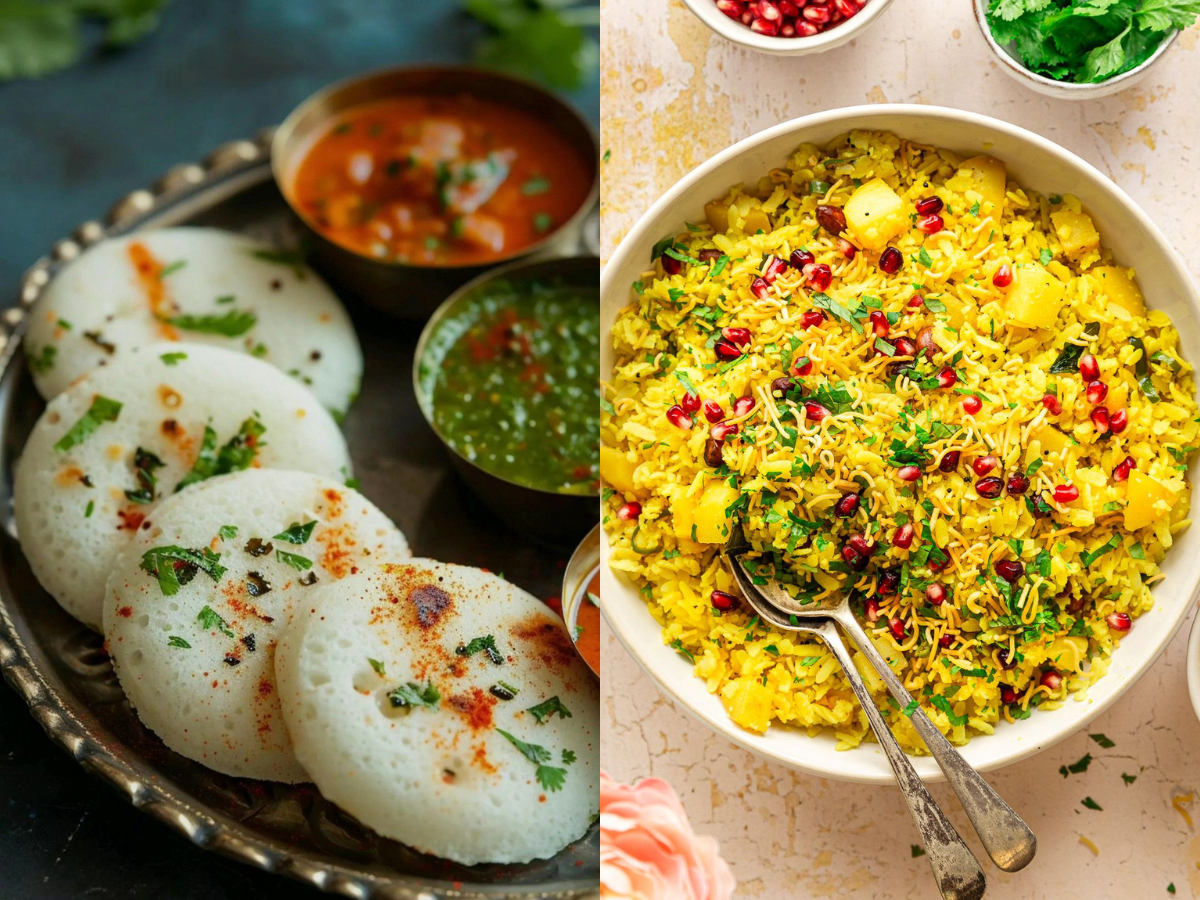
Breakfast is officially termed the most important meal of the day because it gives us the energy to start fresh. For India, two of its favorite breakfast items are idli and poha. Both are light, tasty, and easy to prepare, but when health is concerned, individuals find themselves wondering—what’s the healthier option? Let’s compare idli and poha nutrition, value, benefits, and differences in order to determine which one has a place on your plate more often.
What is Idli?
Idli is a light and soft South Indian breakfast prepared from a fermented batter of rice and urad dal (black gram). It is cooked in small moulds and idlis are therefore easy to digest. Idli is normally served with chutney and sambar, thus constituting a healthy food loaded with carbohydrates, protein, fiber, and essential vitamins.
What is Poha?
Poha, on the other hand, is a popular breakfast item in North and West India made with flattened rice. It is cooked with onions, peanuts, curry leaves, and light spices and is both filling and delicious. Poha is not fermented but is easy to digest and light on the stomach. Vegetables like peas, carrots, and beans are added by most people for adding nutritional content.
Nutritional Value: Idli vs. Poha
Idli and poha, when compared on nutritional value, is:
- Calories: An idli has about 40 calories, while one 100g serving of poha consists of about 120–130 calories. Idli, therefore, is slightly light.
- Protein: Idli has protein from urad dal, while poha has negligible protein unless peanuts or sprouts are added.
- Fiber: Poha is more fibrous, especially if vegetables are added. This keeps you satiated for longer.
- Fermentation Benefits: Fermentation in idli increases the health of the digestive system and makes nutrients like B vitamins more bioavailable.
- Iron Value: Poha contains a higher iron value, which benefits in improving hemoglobin levels, especially in women.
Which one is Best for Weight Loss?
If you are monitoring your weight, idli might be the more intelligent option. Low-calorie and steamed, it satiates you without adding much fat. Poha, however, can also aid in weight management if made with minimal oil and a wide variety of vegetables. The trick is portion control and how the food is cooked.
Digestive Health Benefits
Idli is more easily digestible because it is steamed and fermented. The process of fermentation breaks down the nutrients so that they are less hard on the stomach. Poha is light as well but can sometimes feel heavy if too much oil is used to cook. With sensitive digestion, idli would be more effective.
Which is More Nutritious Overall?
- Go for Idli: if you want something with low calorie consumption, high protein, and gentle on the digestive system.
- Go for Poha: if you want more fiber, iron, and a food where you can add plenty of vegetables to get extra vitamins and minerals.
The two dishes are healthy but in different respects, the idli being extremely fermented and the poha being a winner in terms of fiber and iron content.
There is no direct “winner” between poha and idli. Both are excellent breakfast foods in India, and the healthier choice is up to your own health goals. If you feel like having a light, protein-filled, gut-friendly food, have an idli. If you feel like having something with a bit more fiber and iron, poha is for you. For best results, you can even keep both as a component of your weekly diet to feel the balance of nutrition and taste.
ALSO READ: