
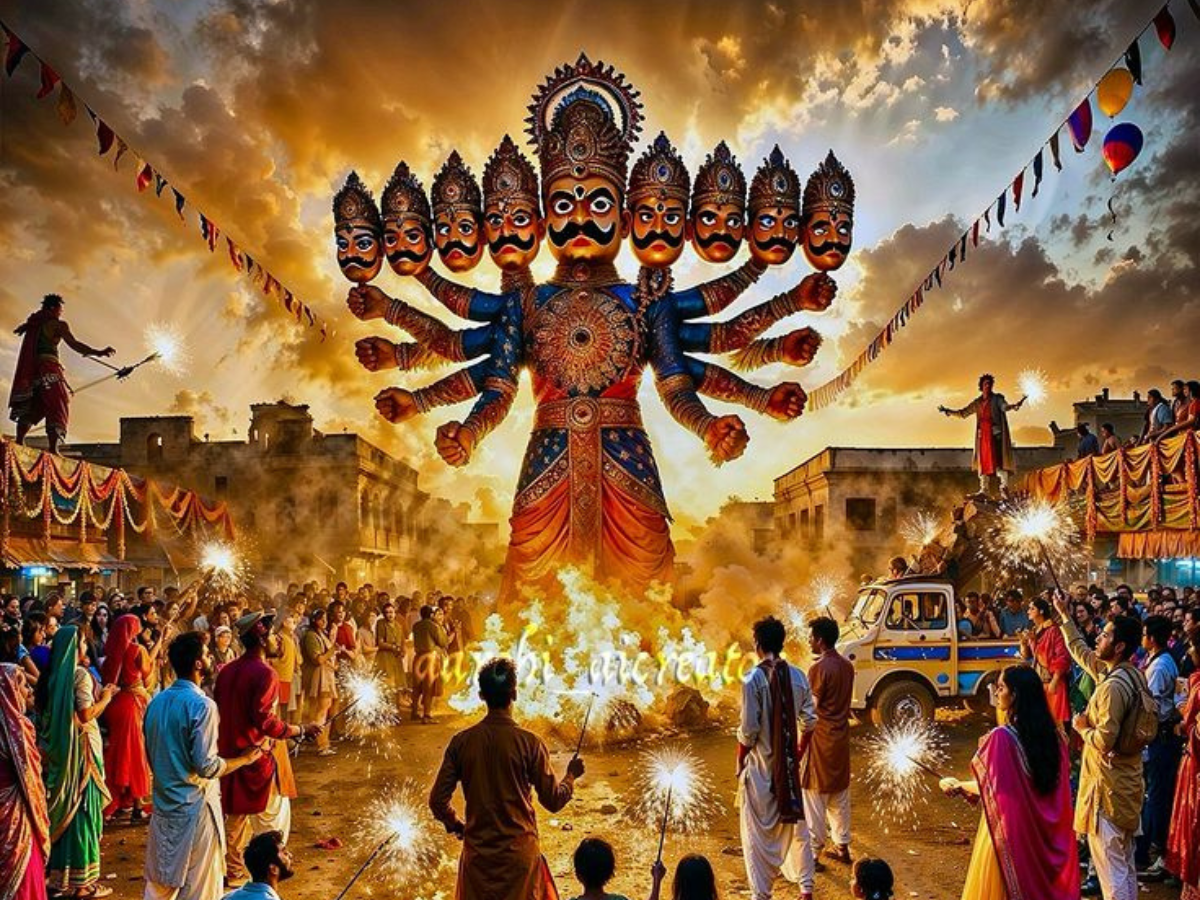
Every year at Dussehra is to signify that good has triumphed over evil, effigies of Ravana, Meghnad and Kumbhkaran are burnt. In some parts of India, Ravana is not condemned but instead revered as a scholar, Lord Shiva’s devotee or even an ancestor. Here are the peculiar practices honoring Ravana rather than celebrating his defeat.
What is Dussehra?
Vijayadashami means a victory on the tenth day as Dussehra is celebrated just after the nine nights of Navratri and Durga Puja, recognizing the divine feminine power. Dussehra holds a double significance. In North India, it marks the victory of Lord Rama in the Ramayana, whereas in Eastern India, it has the grand immersion of Goddess Durga idols after days of worship. The day stands out as a potent reminder of valor, devotion and the might of righteousness.
Ravangram, Madhya Pradesh
There exists a 10-foot reclining statue of Ravana named with affection as Ravana Baba in Vidisha district, in the village of Ravangram where the villagers believe descending from him, imploring his blessings at every wedding as first invited during ceremonies.
ALSO READ: Gandhi Jayanti 2025: Celebrating the 156th Birth Anniversary of Mahatma Gandhi
Bisrakh, Uttar Pradesh
Bisrakh village claims to be the birthplace of Ravana, near Greater Noida and he is even known here as Maha Brahman. Villagers do not burn effigies, but perform yajnas and prayers during Navratri because burning an effigy is said to be similar to committing a Brahm Hatya.
Dashanan Temple, Kanpur
The idol of Ravana in the Dashanan Mandir of the Shivala locality in Kanpur where the temple opens only during Dussehra when devotees chant Jai Lankesh, worshipping him as a devout follower of Shiva and Goddess Chinmastika.
ALSO READ: 2nd October 2025: When Gandhi Jayanti & Dussehra Last Fell on the Same Day
Mandsaur, Madhya Pradesh
Mandsaur is the homeland of Mandodari, the wife of Ravana. It also has a 35-foot statue of Ravana and on Dussehra people are said to lament his death instead of celebrating his victory.
Kakinada, Andhra Pradesh
The Kumbhabhishekam Temple honors the Ravana in his spiritual devotion to Lord Shiva rather than his roles as the antagonist in the epic Ramayana.
Jodhpur & Mandore, Rajasthan
The Dave-Godha Shrimali Brahmin community in Jodhpur treat Ravana as their ancestor and they avoid Ravana Dahan at all costs and conduct tarpan and pind daan on the tenth day of Shraddha Paksha.
Mandore is near Jodhpur are many locals like Maudgil Brahmins, who treat Ravana as their son-in-law due to marriage with Mandodari and burning of effigies is thus avoided.
ALSO READ: How Lakes Differ from Lagoons: From Depth to Location | A Comparative Guide
Baijnath & Kullu, Himachal Pradesh
Ravana in Baijnath, Kangra district is known for offering love to Shiva and thus burning his effigy is considered disrespect. Ravana effigies are not burned during the week-long Kullu Dussehra festival and it focuses more on sacrifices and offerings to the deities than celebrating his destruction.
Paraswadi, Maharashtra
In the Gond tribal community, Ravana is considered their king, and they call themselves Ravanvanshis and worship him as a deity dishonoring his negative portrayal in Tulsidas Ramcharitmanas.
Kolar & Mandya, Karnataka
In Karnataka, there are many such celebrations like the Lankeshwar Mahotsav which showcase Ravana’s devotion to Shiva where villagers avoid burning Ravana effigies as it could jeopardize their yield.
Across India, these traditions reflect a nuanced view of Ravana, wherein some areas remember him for reverence of demonization which is the case in most parts of India. They reflect India’s diversity of cultural narratives.
ALSO READ: How do High Sugar & Blood Pressure Affect Your Kidneys: What You Should Know
Disclaimer: This article is for informational purposes. Readers should verify details independently; content is not an official endorsement of any tradition or festival.