
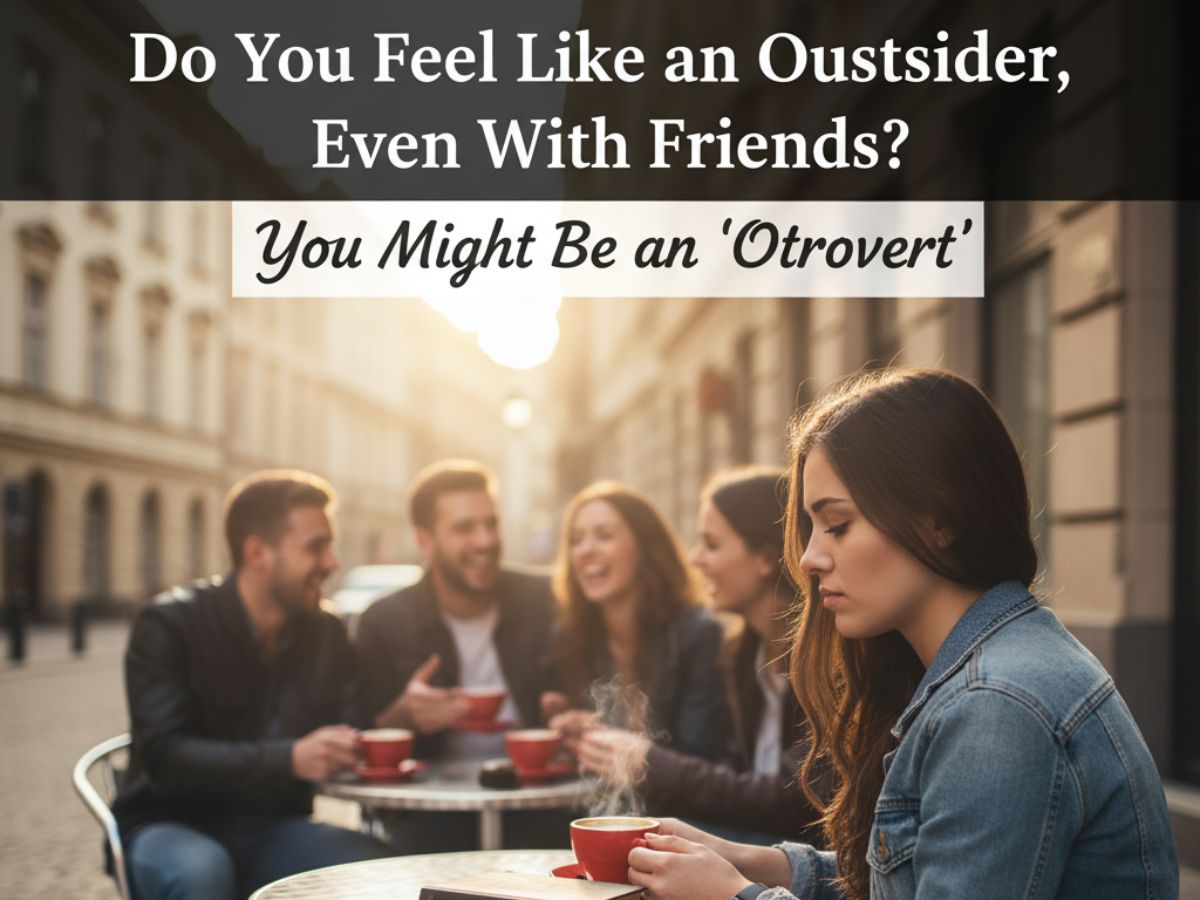
The social world has long been neatly split into two groups: extroverts, who get their energy from crowds, and introverts, who refuel alone. But what if you don’t fit either category? What if you’re friendly, crave deep connection, yet feel a profound sense of isolation the moment you step into a group? An American psychiatrist has put a name to that exact experience: the “otrovert.”
What Exactly Is an Otrovert?
Coined by psychiatrist Dr. Rami Kaminski, the term “otrovert” describes a person who is capable of forming deep, meaningful one-on-one bonds but feels absolutely no sense of connection or belonging to a group as a whole. They are the person having an intense conversation on the balcony at a party while feeling completely detached from the festivities inside.
How Is an Otrovert Different from an Introvert?
This is the most common point of confusion. Whether in a group or one-on-one, social interaction itself frequently drains an introvert, who needs time alone to refuel. It’s not always the case that an otrovert is socially drained. In fact, Dr. Kaminski asserts that otroverts are often very friendly and popular individuals. The disconnect isn’t with socializing—it’s specifically with the concept of a collective. They can love people individually but feel nothing for the group those individuals form.
What Are the Key Traits of an Otrovert?
So, how do you know if you are one? The source lists a number of important traits:
- Aversion to Group Rituals: Feeling nothing during team cheers, communal vows, or shared traditions.
- Dislike for Team Sports: Preferring individual activities over group-based ones.
- The Deep Connector: Excelling in one-on-one conversations but fading into the background during group mingling.
- Immunity to Emotional Contagion: Most people unconsciously align their emotions with the mood of a crowd, a phenomena known as the “Bluetooth phenomenon,” yet they are impervious to it.
What Are the Challenges and Strengths of Being an Otrovert?
The primary challenge is a persistent feeling of being an outsider, which can lead to discomfort and a pressure to conform to group norms they don’t genuinely feel. However, this same trait is also their greatest superpower.
“The problem lies in the relationship with the group as an entity, rather than with its individual members,” says Dr. Kaminski.
Incredible strengths are fostered by this detachment:
- Independent Thinking: Freedom from the “herd mentality.”
- Creativity: The ability to see solutions and perspectives others bound by groupthink cannot.
- Resilience: Being less fearful of social rejection from a collective.
“Otroverts might struggle to fit in,” says Kaminski, “but that gives them freedom. They’re untethered, less fearful of rejection, and able to see solutions others can’t.”
Also Read: ‘I Would Rather Kill Myself’: Tyler’s Denial to Surrender Even After Father’s Confrontation
Other Examples of Otroverts?
Dr. Kaminski points to historical figures known for their brilliant, unconventional minds who operated outside the established circles of their time. He asserts that influential writers like Franz Kafka, pioneering intellectuals like Albert Einstein, and visionary painters like Virginia Woolf and Frida Kahlo may have had otroverted traits, strongly attached to their work and personal confidants, but never really a part of a “community.”
Note: It’s crucial to note that “otrovert” is not a recognized clinical term in mainstream psychology but rather a new conceptual label for a specific social experience. Also this article includes inputs from external sources.