
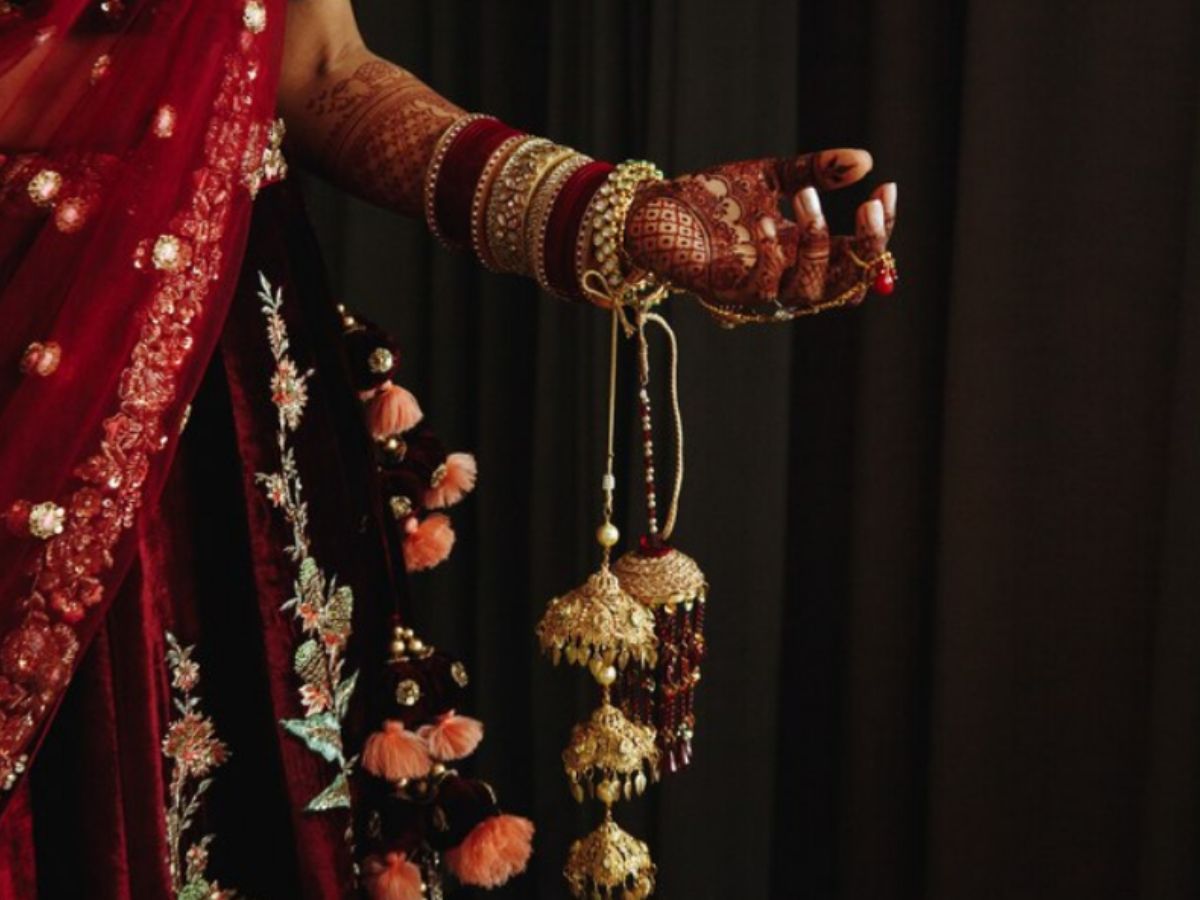
In North Indian wedding ceremonies, kaleerein, dangling ornaments hung from a bride’s bangles, take centre stage. Made traditionally of gold, silver, pearls, beads, or even flowers, brides nowadays tend to customize them to match their own fashion and wedding theme.
Bride’s Secret Lunchbox
A recent viral Instagram video uncovered an interesting tidbit: kaleerein weren’t so decorative after all. In the past, when the brides had gone to their in-laws’ place in a doli, there weren’t any restaurants on the way.
The brides, too shy to say they were hungry, were looked after differently. The mothers used to pack the kaleerein with coconuts, fox nuts (makhana), and dry fruits, foods that wouldn’t get spoiled. These small morsels turned into boons for the new life ahead.
ALSO READ: Turmeric for Glowing Skin: The Ancient Secret Behind Today’s Glass Skin Trend
Famous Throughout Punjab and Himachal
This tradition was most prevalent in Punjab and Himachal Pradesh, where brides had long distances to cover away from known faces. Their kaleerein had small amounts of dry fruits and coconut bits, so that they could pick food quietly when hungry.
“That way she could quietly pluck out food when hungry, without breaking the gentle shyness of a bride in her new home,” read the caption.
From Survival Kit to Symbol of Joy
Kaleerein evolved over the period of time. Now, they are being prepared in beautiful patterns in gold, pearls, flowers, and even chocolates have become an alternative to the functional snacks. However, the blessings and love of a mother to their daughter still reside in every bead of the ornament.
“But remember the real story, a mother’s love and a society where a girl didn’t even express her hunger,” the post emphasized. The designs inspired by coconuts available today still resonate with those initial versions.
Today, kaleerein represent joy, blessings, prosperity, and sisterhood. From humble beginnings as a bride’s secret survival arsenal, the kaleerein have grown into a shimmering symbol of tradition and pride.