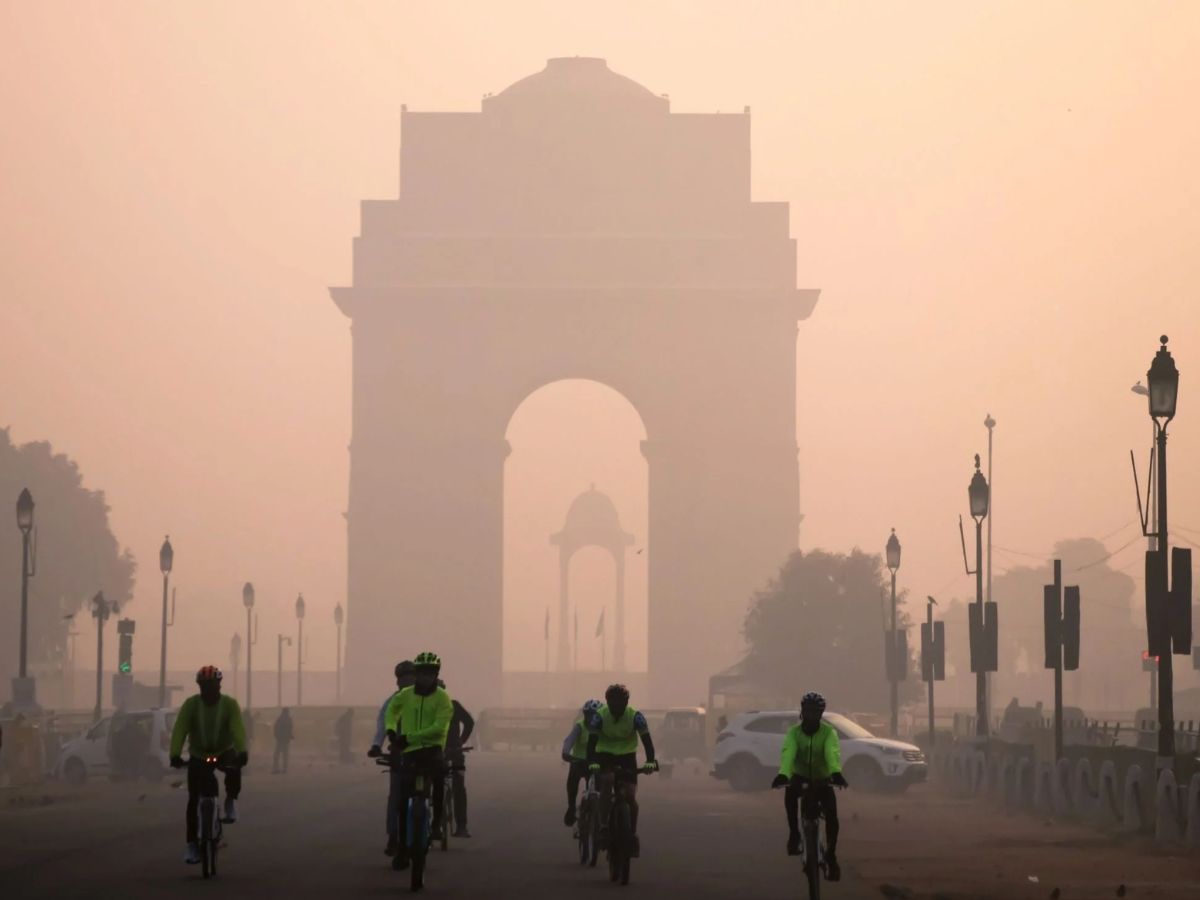
A recent in-depth study has revealed a shocking environmental issue in Delhi: the air in India’s national capital is highly contaminated with mercury, a toxic metal that can seriously harm human health. The research, conducted over six years, shows that Delhi now has the highest concentration of mercury in the air among major Indian cities, far above natural levels. Mercury exposure is linked to serious health problems such as kidney damage, heart disease, and nervous system disorders.
Study Uncovers the Scale of Pollution
The study analyzed data collected between 2018 and 2024, focusing specifically on gaseous elemental mercury, a dangerous form of this pollutant present in the atmosphere. On average, Delhi’s air was found to contain 6.9 ng/m³ of mercury. In comparison, other cities recorded much lower levels, with Ahmedabad at 2.1 ng/m³ and Pune at 1.5 ng/m³. This means that every cubic meter of air in Delhi contains roughly seven billionths of a gram of mercury about three to four times more than what’s seen in the other two cities.
Although the study noticed a slight decline in mercury levels compared to previous years, it remains at extremely unsafe levels, making Delhi one of the worst polluted cities in South Asia when it comes to mercury.
The Role of Human Activity
The study made it clear that the primary reason for such high mercury levels is human activity. Between 72% and 92% of the mercury pollution in the air comes from coal burning, vehicle emissions, and industrial operations. Particularly during the winter months, nighttime spikes in pollution were especially severe, driven by coal use, the burning of crop stubble in nearby regions, and stable atmospheric conditions that trap pollutants close to the ground.
An expert in the field explained, “Seasonal and nighttime spikes were especially prominent in Delhi and Ahmedabad during winter, linked to coal use, stubble burning, and stable atmospheric conditions.”
Health Dangers of Mercury Exposure
Even small amounts of mercury in the air can be extremely dangerous when inhaled over long periods. The study warned, “If exposure to Mercury continues for 5-10 years (even in small quantities), it can be really dangerous.” Prolonged exposure may lead to severe damage to the nervous system, digestive system, immune system, kidneys, and lungs. This emphasizes the urgent need to address the issue before it causes widespread health problems among the population.
Also Read: How DNA 3D Printing Becomes the Blueprint for the Future of Nanotechnology
Efforts and Measures to Improve Air Quality
In an attempt to tackle this growing environmental and health concern, several measures have been introduced by local authorities. These include banning older commercial vehicles running on petrol and diesel, restricting fuel supplies to vehicles over 15 years old, and promoting cleaner energy solutions. Additionally, efforts such as installing air purifiers in public spaces and raising awareness about sustainable practices are underway.
This study makes it clear that without decisive action, mercury pollution will continue to pose serious health risks. The problem is not only about Delhi reflects a wider challenge of balancing development with environmental responsibility. Transitioning to cleaner energy, enforcing strict industrial emission norms, and reducing coal dependency are essential steps for securing public health and the environment.
While small improvements have been observed, Delhi’s mercury pollution remains alarmingly high, mostly driven by human activities. The findings serve as a call to action for policymakers, industries, and citizens to work together and take immediate steps toward cleaner, safer air.
Disclaimer: This Article is based on a recent study by the Indian Institute of Tropical Meteorology (IITM), for informational purposes only.