The Republic Day celebrations 2026 are set to showcase a grand and distinctive blend of the 150-year legacy of the national song Vande Mataram, India’s formidable military strength, and the nation’s rich cultural diversity. As part of the parade, at least 30 vibrant and creatively designed tableaux will roll along Kartavya Path, offering a colourful, detailed, and engaging depiction of India’s cultural heritage, freedom struggle, and remarkable journey of development.
This year’s celebrations will be further distinguished by the presence of President of the European Council Antonio Costa and President of the European Commission Ursula von der Leyen as the Chief Guests, underlining India’s expanding global engagement and strengthening diplomatic and strategic partnerships.
The tableaux will revolve around the themes “Svatantrata Ka Mantr – Vande Maataram” and “Samrddhi Ka Mantr – Aatmanirbhar Bhaarat”, commemorating 150 years of Vande Mataram. Collectively, these presentations aim to capture the enduring spirit of India’s freedom movement, its unity in diversity, and its commitment to self-reliant, inclusive, and sustainable growth.
Of the total tableaux, 17 will be presented by various States and Union Territories, while 13 will be showcased by different Ministries, Departments, and Services of the Union government. These displays will highlight each state’s distinct cultural identity while narrating stories of development, innovation, and progress in contemporary India.
Assam’s tableau will feature Ashirakandi, the famed craft village known for its terracotta traditions. Gujarat and Chhattisgarh will interpret the Vande Mataram theme, while Maharashtra will present Ganeshotsav as a symbol of unity, community strength, and Atmanirbharta. West Bengal will highlight its historic contributions to India’s freedom struggle and national awakening.
Several tableaux will blend tradition with innovation. Odisha’s “Soil to Silicon” will depict growth rooted in heritage and technology, Tamil Nadu will showcase India’s emergence as a key electric vehicle manufacturing hub, and Kerala will feature its Water Metro project and 100 per cent digital governance. Nagaland will present the Hornbill Festival, symbolising cultural richness, tourism, and self-reliance.
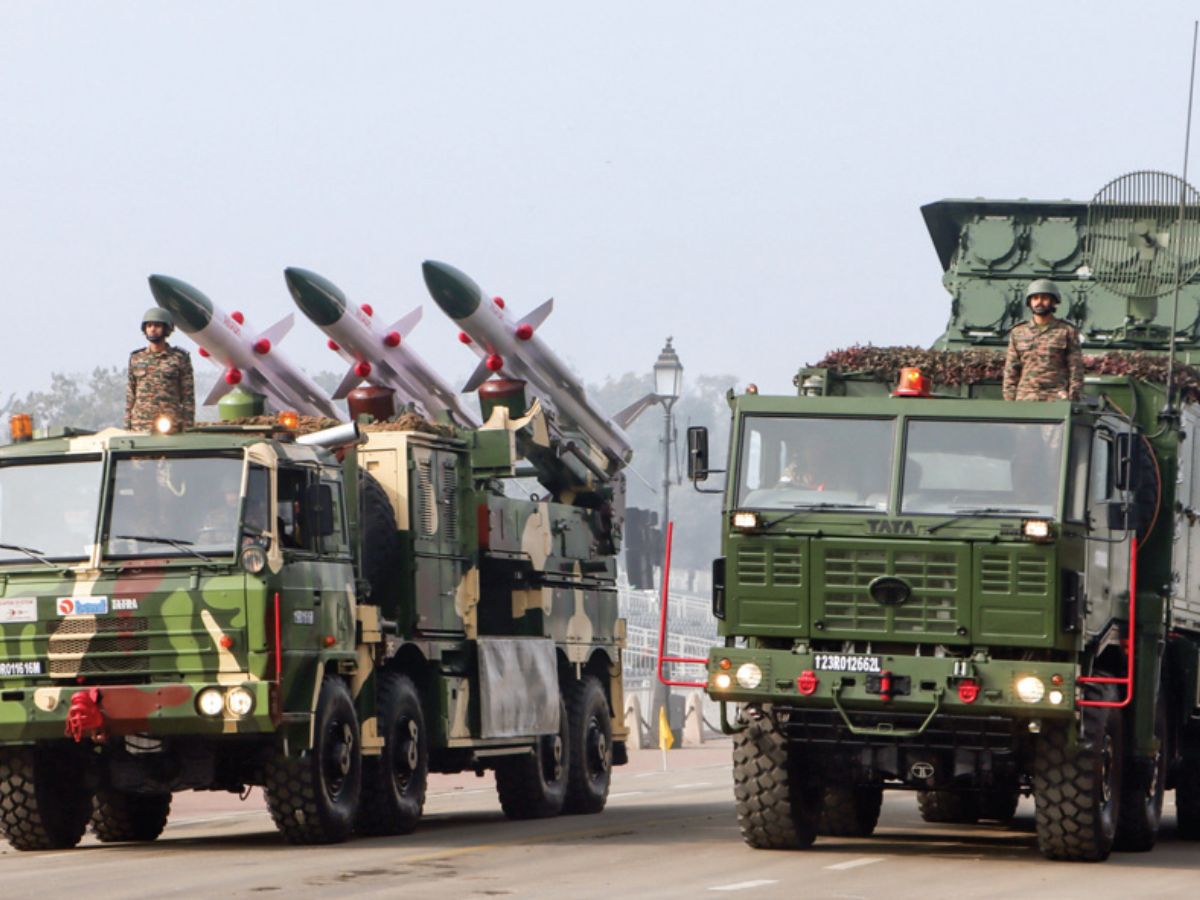
India’s military strength will be on full display during the parade. For the first time, the Indian Army will feature a Mounted Column of the 61 Cavalry and Battle Array Formation, alongside seven marching contingents. Mechanised columns will include advanced platforms such as the HMRV, Dhruv helicopter, T-90 and Arjun tanks, BMP-II, NAMIS-II Nag missile system, UGVs, ATVs, Light Strike Vehicles with robotic mules, ATAGS and Dhanush artillery, BrahMos, Akash and MRSAM missiles, Drone Shakti, and Glacier ATVs, making them a major highlight of the parade.
Seven Army marching contingents will participate, including an animal contingent of Zanskar ponies, Bactrian camels, and dogs with handlers, alongside the Scouts, Rajput, Assam, JAK LI, Artillery, Bhairav (in ‘Uncha Kadam Taal’), and Ladakh Scouts contingents, all marching past the saluting dais in a display of precision and tradition.
In total, 18 marching contingents and 13 military bands will take part. The flypast will feature Rafale, Su-30, P-8I, C-295, MiG-29, Apache, LCH, ALH, and Mi-17 aircraft and helicopters in impressive formations. Another highlight will be the Indian Air Force veterans’ tableau, paying tribute to the invaluable service and lasting legacy of veterans.
Among the central ministries, the Ministry of Culture will present the tableau “Vande Mataram: The Soul-Cry of a Nation”, reinforcing the parade’s core theme, while a floral tableau by the Ministry of Housing and Urban Affairs will commemorate 150 years of Vande Mataram.
Enhancing the grandeur, cultural performances by nearly 2,500 artists from across India will enrich the visual spectacle of the parade, vividly conveying the nation’s spirit of unity in diversity.