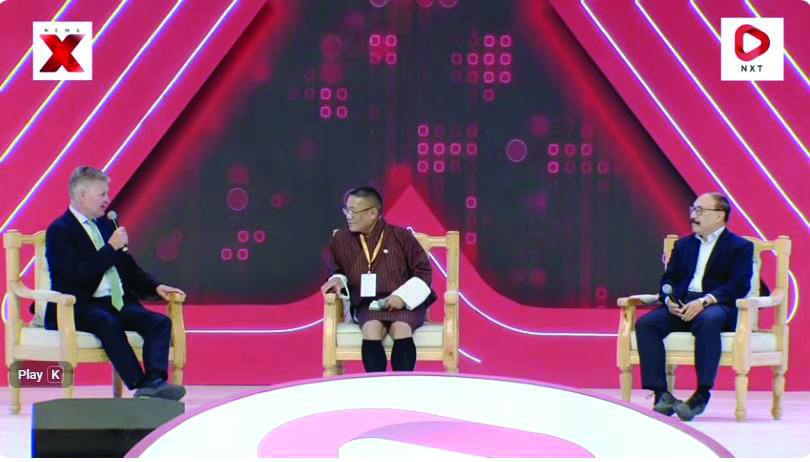
NEW DELHI: Global leaders on Thursday discussed the intersection of climate action, energy security and geopolitics during a panel titled “Sustainable Choices Amidst Geopolitics” on Day 1 of the NXT Summit 2026 at Bharat Mandapam.
The discussion was moderated by former Norwegian Minister of Climate and Environment Erik Solheim and featured Harsh Vardhan Shringla and Sangay Khandu.
Opening the session, Solheim emphasised the growing link between geopolitical tensions and the global shift towards renewable energy. Referring to ongoing conflicts in the Middle East, he noted that volatility in oil markets is pushing countries to seek greater energy independence through renewables such as solar, wind and hydropower.
Shringla said geopolitical disruptions have become a persistent reality and increasingly shape global economic and environmental policies. He warned that conflicts across the world can directly affect everyday life, citing potential impacts on LPG supply chains, fertiliser availability and agricultural production.
He highlighted India’s rapid progress towards green energy, noting that the country has already achieved over 51 per cent of its installed electricity capacity from non-fossil sources and currently produces more than 200 gigawatts of renewable energy. India, he added, is on track to meet its goal of generating 500 gigawatts of green energy. Shringla also pointed to India’s role in international climate initiatives, including the International Solar Alliance and the Global Biofuels Alliance, stressing that New Delhi continues to work with partners across the West, BRICS and the Global South under the philosophy of “Vasudhaiva Kutumbakam” — the world is one family.