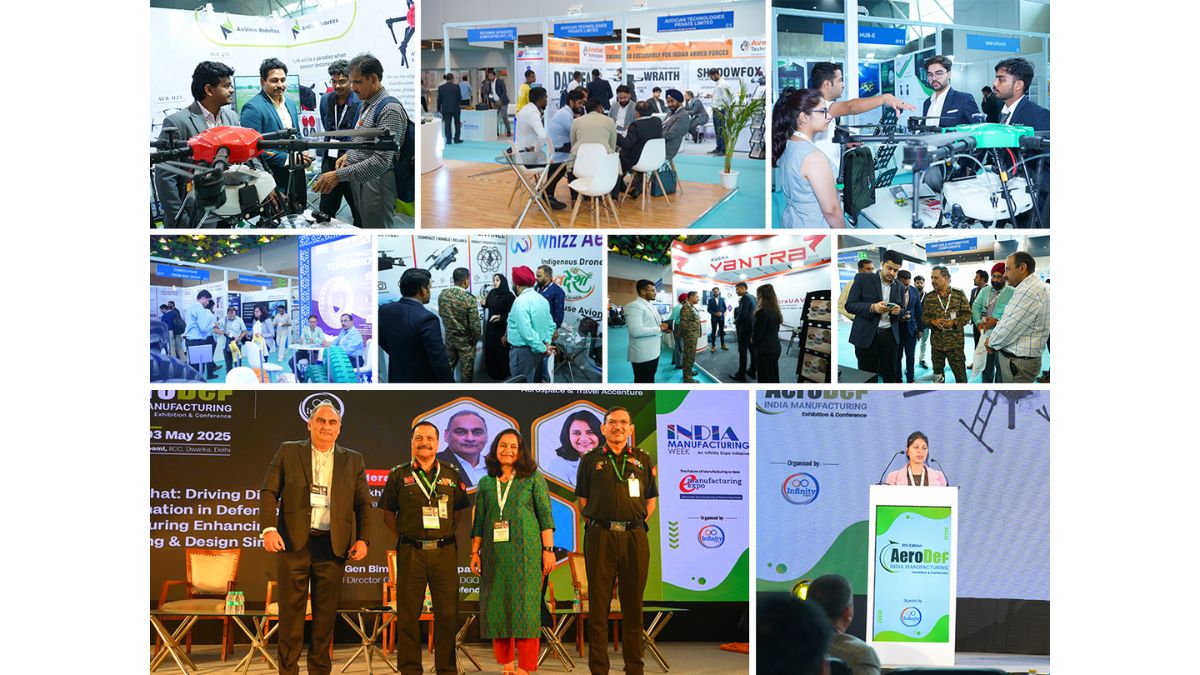
The Federation of Indian Chambers of Commerce and Industry (FICCI) conducted its ‘Pre-Budget Survey 2026–27’ capturing industry sentiment and outlining key policy recommendations ahead of the forthcoming Union Budget. FICCI’s Pre-Budget Survey for 2026–27 shows nearly 80 per cent of industry respondents are optimistic about India’s growth prospects. About half expect GDP growth to remain between 7 and 8 percent next year. Around 42 per cent of respondents expecting fiscal deficit target of 4.4 per cent of GDP to be Achieved in FY 2025–26. The survey highlights three key major priorities for the upcoming Budget — job creation, sustained investment in infrastructure, and stronger support for exports. Infrastructure, manufacturing, defence and MSMEs emerged as the sectors most likely to be in focus. Defence manufacturing, too, is being watched closely. Industry wants a bigger share of defence spending. Industries wants government must continue to lay thrust on manufacturing and capex. Setting up of a mega electronics industrial cluster to co-locate OEMs, EMS firms and component suppliers will be important to give a further push to this strategic sector. Equally important is to lay thrust on defence manufacturing. The government must enhance the capital outlay share in defence allocations to 30% to modernise frontline assets, UAVs, counter-UAV systems, EW systems and AI-enabled capabilities. Additionally, enhancing Drone PLI outlay to Rs 1,000 crore and establishing a Rs 1,000 crore Drone R&D Fund will give a boost to this emerging sector.
Given the rising global trade frictions, uncertainty on global tariffs and non-tariff barriers such as CBAM and deforestation-related regulations, the expectations of support to exports in the Union Budget is clearly evident. To strengthen India’s export performance and integration into global value chains, respondents emphasised the need for streamlining trade facilitation and customs processes, reducing logistics and port-related bottlenecks, and strengthening export incentive and refund mechanisms. It is recommended that the Union budget enhances allocations under RoDTEP to improve export competitiveness. Industry also looks forward to announcements related to reforms in SEZ policy and further rationalisation of customs tariffs in the budget. The customs tariffs can be further rationalised by converging rate slabs to three levels. This would significantly simplify the system, bring certainty and reduce compliance costs. On Direct tax, Respondents expect the government to make direct‑tax regime more user‑friendly by digitising compliance, delivering greater tax certainty and streamlining dispute resolution and litigation management. Overall, the FICCI Pre-Budget Survey 2026–27 underscores industry’s expectation that the forthcoming Union Budget will balance growth imperatives with fiscal prudence, while accelerating structural reforms to boost quality employment, enhance competitiveness, and firmly position India in global value chains.