
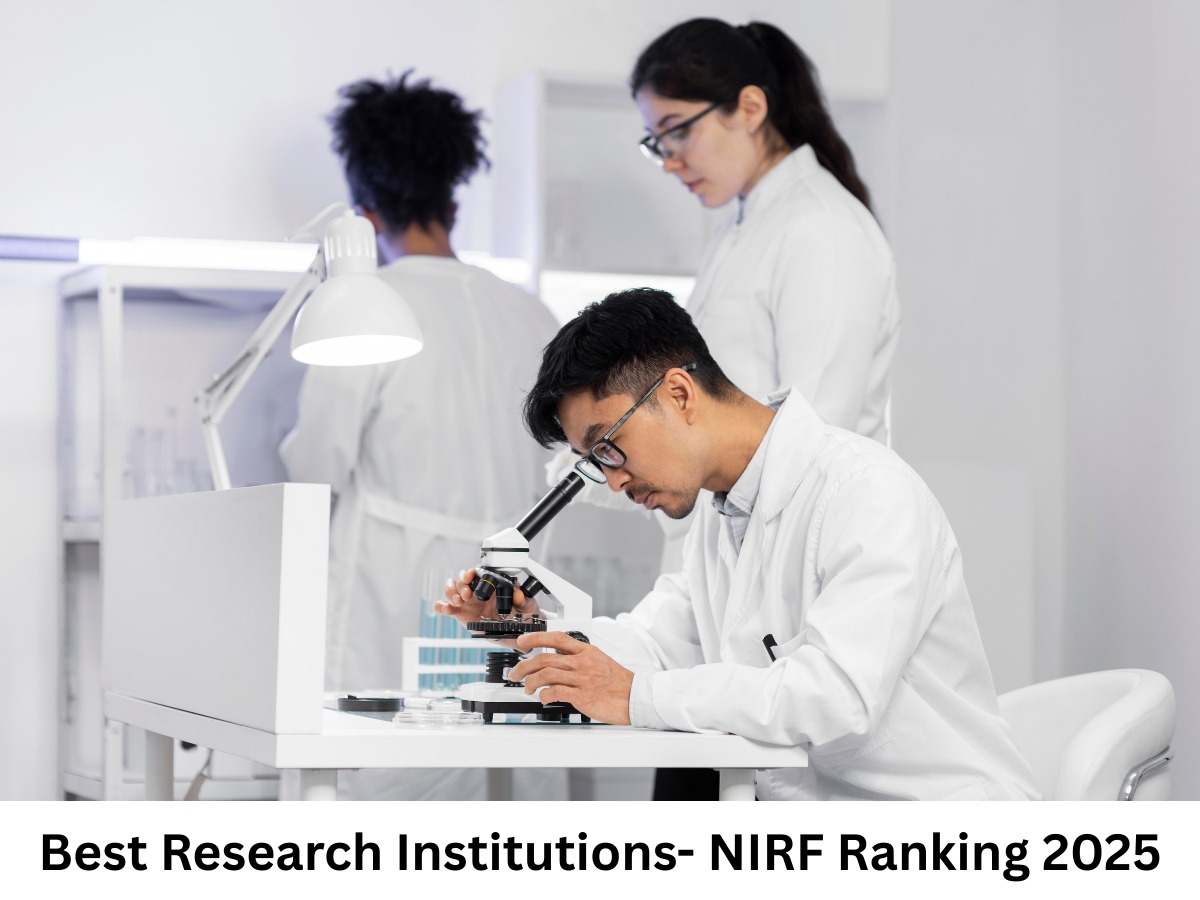
The National Institutional Ranking Framework (NIRF) has released its highly anticipated rankings for 2025, showcasing the top research institutions across India. The comprehensive list, which is often referred to as the definitive guide to India’s higher education landscape, was unveiled by the Ministry of Human Resource Development (MHRD).
Top 10 Research Institutions in India (NIRF 2025)
-
Indian Institute of Science (IISc), Bengaluru – 84.98
-
Indian Institute of Technology (IIT) Madras – 83.29
-
Indian Institute of Technology (IIT) Delhi – 81.08
-
Indian Institute of Technology (IIT) Bombay – 77.75
-
Indian Institute of Technology (IIT) Kharagpur – 72.65
-
Homi Bhabha National Institute, Mumbai – 70.11
-
Indian Institute of Technology (IIT) Kanpur – 70.04
-
All India Institute of Medical Sciences (AIIMS), Delhi – 67.43
-
Indian Institute of Technology (IIT) Roorkee – 66.78
Indian Institute of Science, Bangalore Retains Top Spot
The Indian Institute of Science (IISc), Bangalore, has once again claimed the top spot on the list. The prestigious institution has maintained its position for the sixth consecutive year, reflecting its commitment to academic excellence and its leading role in groundbreaking research.
“This is a testament to our relentless pursuit of excellence and our dedication to fostering a culture of research and innovation,” said Prof. Govindan Rangarajan, Director of IISc, Bangalore. “Our position at the top of the NIRF rankings is a recognition of the hard work and dedication of our faculty, staff, and students.”
Top Five Institutions Revealed
Following closely behind IISc Bangalore in the rankings are the Indian Institutes of Technology (IITs). IIT Madras clinched the second spot, followed by IIT Bombay and IIT Delhi. Jawaharlal Nehru University (JNU), New Delhi made a significant leap this year, rounding out the top five.
“The NIRF ranking reflects our commitment to maintaining a high standard of education and research,” said Prof. Bhaskar Ramamurthi, Director of IIT Madras. “We are proud to be recognized as one of the top research institutions in the country.”
Methodology Behind the Rankings
The NIRF rankings are based on several key parameters including Teaching, Learning and Resources (TLR), Research and Professional Practice (RP), Graduation Outcomes (GO), Outreach and Inclusivity (OI), and Perception (PR). Each institution is scored on these parameters, resulting in an overall score that determines its position on the list.
Experts believe these rankings play a crucial role in shaping the higher education landscape in India. “NIRF rankings aid in identifying the strengths and weaknesses of Indian institutions. This, in turn, helps in planning and policy making for improving the quality of higher education in India,” said Dr. Pankaj Mittal, Secretary General, Association of Indian Universities.
Emerging Institutions Show Promise
While the top spots were dominated by established institutions, the 2025 NIRF rankings also highlighted several emerging institutions making their mark in the field of research. Notably, the Indian Institute of Science Education and Research (IISER), Pune, and the Indian Institute of Technology (IIT), Hyderabad, made significant strides, breaking into the top 20 for the first time.
Conclusion
The release of the NIRF 2025 rankings underscores the dynamic nature of India’s higher education landscape. With established institutions maintaining their top spots and emerging institutions showing significant progress, the rankings reflect a vibrant and competitive research environment in India. As the country continues to prioritize higher education and research, these institutions will play a pivotal role in driving innovation and shaping the future of the nation.
As always, the ultimate goal remains to foster a culture of academic excellence and research innovation that will empower students to contribute to India’s growth story. As Prof. Rangarajan of IISc Bangalore puts it, “Our aim is not just to top the NIRF rankings but to continue contributing to the global scientific community and to the betterment of our society.”