
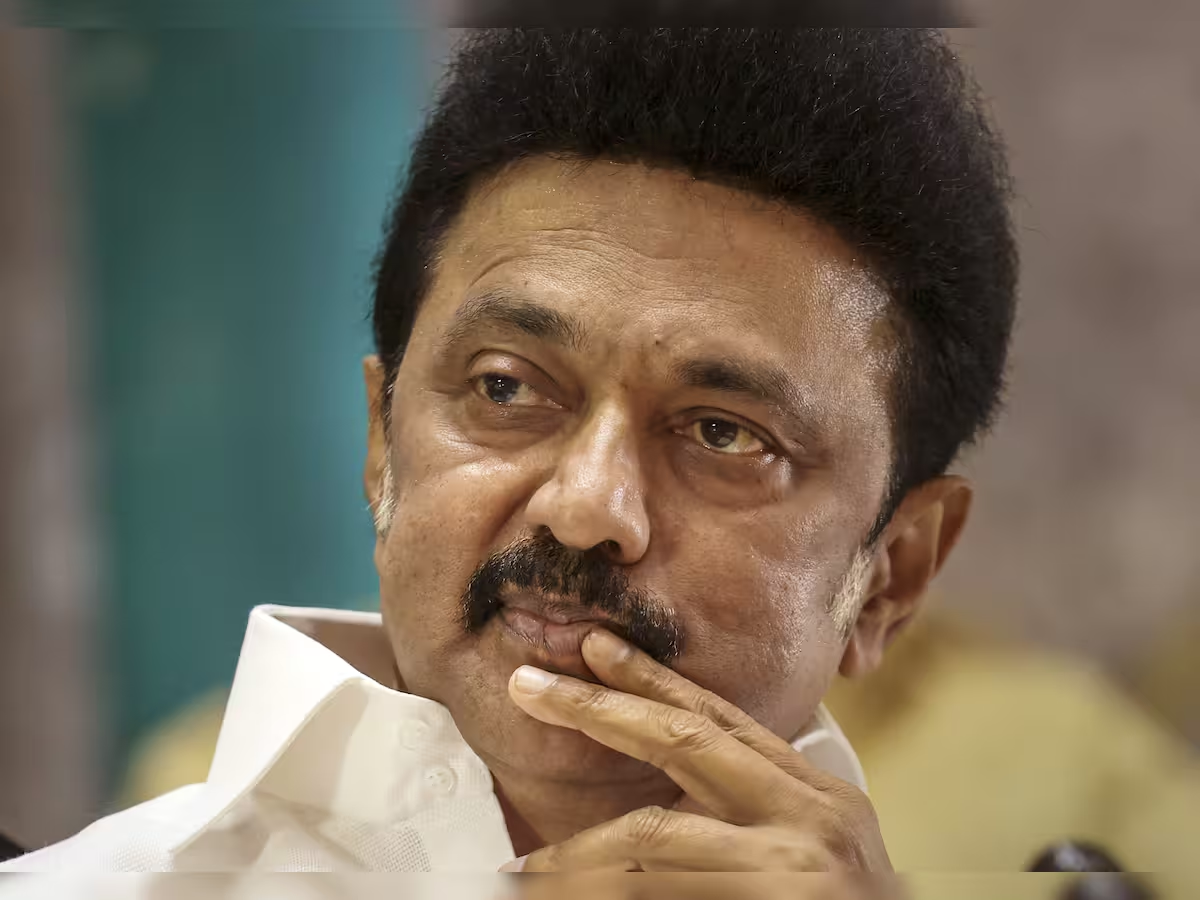
TN is readying the SEP for release, which sends a very strong message of defiance to the Centre’s NEP agenda. With Chief Minister M.K. Stalin at the forefront and Justice D. Murugesan providing guidance, the SEP counters the core tenets of the NEP-from its controversial three-language formula to central entrance exams and early standard testing.
The stance of Tamil Nadu is not one of mere administration it is of deep ideology. As the DMK government views the NEP as intervening the social justice and regional identity of the state while attempting an attack on educational equity, it asserts its right to determine its own course in education, thus strengthening the constitutional spirit of cooperative federalism.
Policy Highlights: Valuing Diversity Over Uniformity
The early feeling seems to indicate that the SEP lays greater emphasis on access, quality, and social equity. Specifically, this is the rejection of an entrance exam for undergraduate arts and science courses, marking a clear departure from the NEP hitherto. Rather, the SEP suggests using the aggregate marks from Classes XI and XII, which will lower stress levels, prevent dropouts, and increase equity.
The reports suggest the policy will then throw up wider investments in government institutions, tougher regulation for deemed universities, and targeted areas in the curriculum like science, artificial intelligence, and proficiency in the English language. By keeping the lens focused on public education, Tamil Nadu continues with its historical legacy of creating institutions for the marginalized communities putting education not as a privilege but as a right.
Political Tensions and Future of Indian Federalism
The Centre’s withholding of ₹2,152 crores under the Samagra Shiksha Abhiyan over Tamil Nadu’s refusal to adopt the NEP has created further friction. The well-resisted state condemned it as punitive and unconstitutional, arguing that education is, by law, a subject of concurrency and therefore not unilateral control. This face-off actually unravels an even deeper debate on whether the Union has the power to dictate educational policies across various socio-cultural spectrums. On the other hand, the Union government contends that the NEP is inclusive and seeks to enhance flexibility and global competitiveness.
As the new SEP comes forth, all eyes will be locked on whether it will simply oppose the NEP or clandestinely integrate its useful aspects while still being firmly based on Tamil Nadu’s legacy of social reform and linguistic pluralism.
ALSO READ: NEET UG 2025 Counselling Extended: Choice Filling Now Open Until August 7