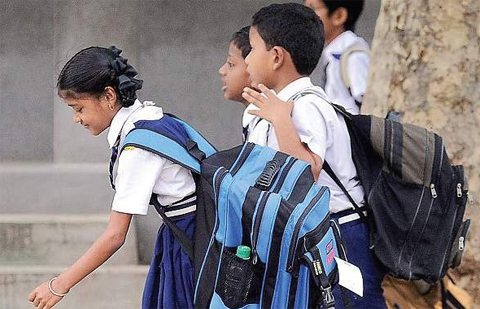
Delhi’s education system, which had previously been touted as the Indian urban education standard, is increasingly being questioned by parents and education activists alike on a number of fronts, including high fees, inefficiencies in the system, as well as a lack of transparency in admissions.
The biggest concern for parents is the ever-rising fee structure of private schools. Even secondary-grade schools in the National Capital Region (NCR) are charging over ₹2-3 lakhs a year, besides transport, uniform, book, and activity charges. There have also been “optional” schemes floated by all schools that carry unbudgeted costs, adding a secondary level of pressure on middle-class families already struggling due to inflation. A parent in South Delhi, who preferred not to be identified, said, “Education is becoming a luxury. We are not spending on our children’s future, we’re paying to keep them afloat in an ultra-competitive environment.”
It is another daunting task to get admission in elite schools. The nursery admissions, despite online applications, are a stressful experience. Parents wait for hours in queues to get papers submitted or sit through interaction sessions, and allegations of dubious selection processes haunt the system. Usually, malpractices and lack of supervision mar the execution of the Right to Education (RTE) quota.
Government schools still suffer in the face of seeming infrastructure enhancements introduced through the Delhi government’s education reforms. Teacher shortages, the quality of education, as well as sporadic attendance, remain. Even though Delhi’s education budget has grown considerably over the past few years, implementation at the local level hasn’t always led to measurable outcomes. Lapses in training, learning outcomes, and students’ retention—especially at secondary levels—have been noted in various NGO reports such as the Praja Foundation and Accountability Initiative.
Mental health load of the children also concerns parents. Along with increasing digital pressures, social anxieties, and extra-curricular pressures to perform, students are continuously exposed to burnout, and support systems remain incomplete.
Remote education, spurred on by the pandemic, has also contributed to the gap. Low-income families are still behind when it comes to device ownership and consistent internet access, making hybrid models of learning an unachievable fantasy.
Lastly, even though Delhi has made some strides in the visibility and investment of public education, the city’s education system remains beset with inequality, expense, and trust deficiencies. Widespread reforms are needed not only in infrastructure and curriculum but also in affordability, inclusion, and child-centered policy.