
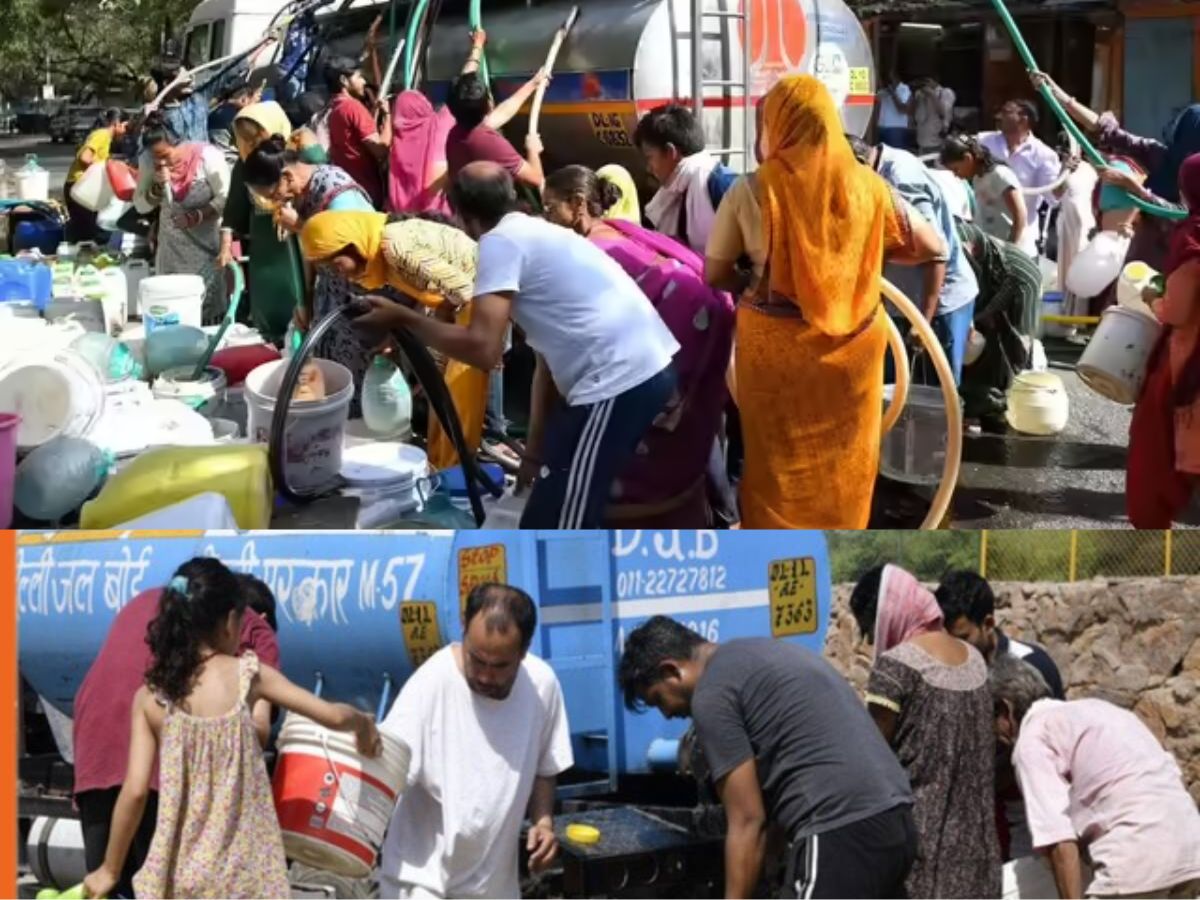
Delhi Government on Tuesday launched a series of reforms aimed at ensuring equitable water distribution, reducing wastage, modernising ageing infrastructure and promoting large-scale reuse of treated water.
A key component of the reform is the proposed Water Rationalisation Project, which seeks to address long-standing disparities in water supply across the capital.
Water Minister Parvesh Sahib Singh said water-related complaints continue to originate largely from 12 to 13 Assembly constituencies every summer, while some areas receive comparatively higher supplies.
Under the project, authorities will scientifically assess population density, demand patterns, supply levels and infrastructure availability across Delhi to create a more balanced distribution system.
Announcing the initiatives, Minister said the reforms are designed to address both immediate water supply challenges and the long-term needs of a rapidly growing city.
Delhi currently requires nearly 1,250 million gallons of water per day (MGD) during peak summer months. However, a prolonged dry spell in the Yamuna has reduced water production by nearly 100 MGD in recent days, putting pressure on supplies in several parts of the city.
The government is also targeting one of the biggest causes of water loss — the city’s ageing pipeline network. Of Delhi’s 16,634-kilometre water distribution system, nearly 5,500 kilometres of pipelines are more than 30 years old and are vulnerable to leakages and contamination.
The Delhi Jal Board has begun efforts to replace these ageing pipelines and strengthen the overall network to reduce losses of treated water before it reaches consumers.
“The work that should have been done 10 or 20 years ago is now being taken up on priority,” Singh said, stressing the need for sustained infrastructure investment.
“Delhi’s water resources are finite while its population continues to grow. The answer is not only to bring more water to Delhi but also to manage every drop more efficiently,” the Minister said.
As part of efforts to reduce Non-Revenue Water (NRW) — treated water lost due to leakages, theft and inefficiencies the government is also considering the conversion of the open DSB Canal into a closed pipeline-based system.
According to the Minister, nearly 40 to 45 per cent of water is currently lost through the canal network. A feasibility study has been assigned to IIT Roorkee to examine the proposed transition, which is expected to significantly improve water delivery efficiency.
Another step was Dual Piping System, under which highly treated recycled water will be supplied through a separate network for non-potable uses such as toilet flushing, landscaping, horticulture, construction activities and vehicle washing. Freshwater will be reserved primarily for drinking and domestic consumption.
“Delhi cannot afford to flush drinking water down toilets. By using treated recycled water for non-potable purposes, we can save millions of litres of freshwater every day,” the Minister said.
The government plans to initially implement the system in government buildings and public institutions before expanding it to hotels, commercial establishments, housing societies and large residential complexes. Incentives are also under consideration to encourage wider adoption.
Reaffirming the government’s commitment, Singh said the objective is to ensure that every household receives clean water, every drop is used efficiently and no part of the city feels neglected.