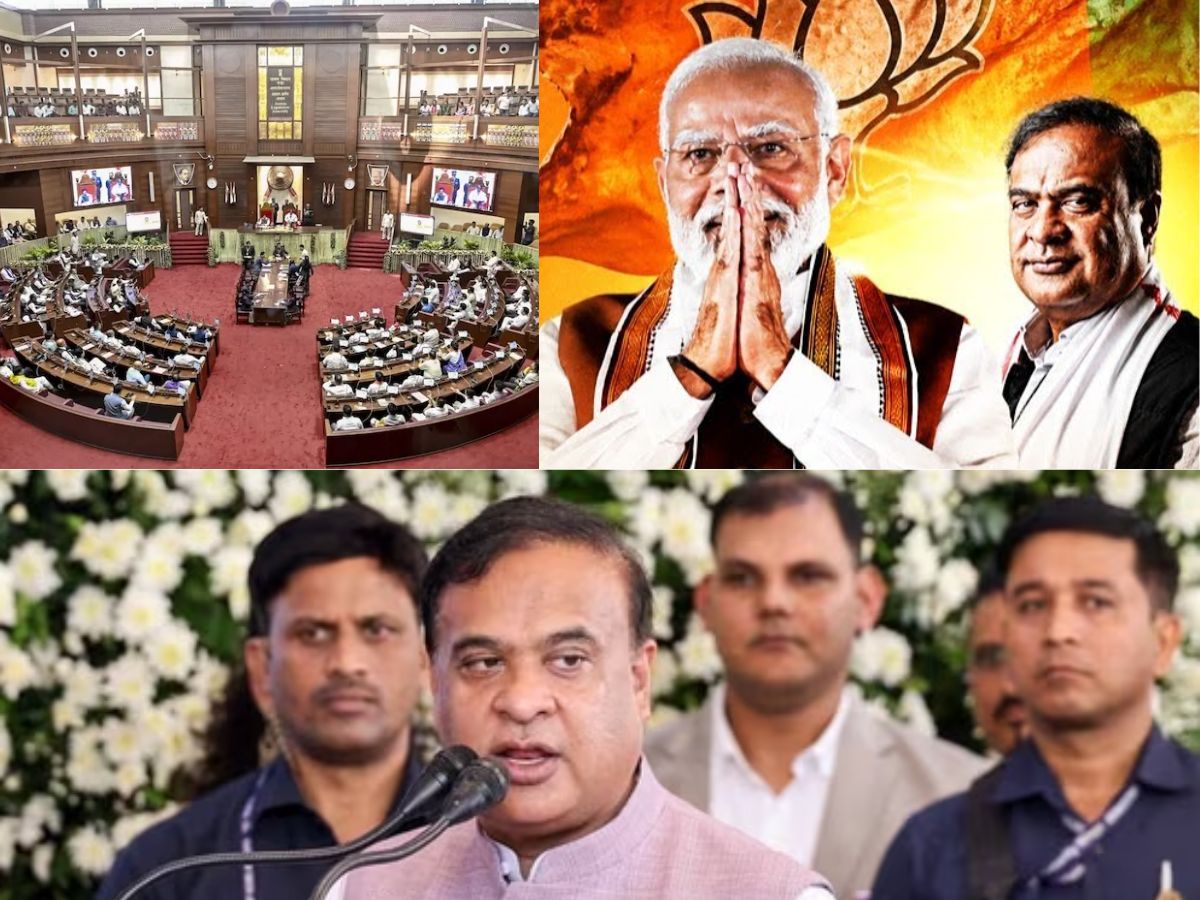
The Assam Legislative Assembly today passed the Uniform Civil Code (UCC) Bill 2026 by voice vote, making Assam the third state in India after Uttarakhand and Gujarat to adopt such a law.
Chief Minister Himanta Biswa Sarma described the development as a “watershed moment” and said the BJP government had fulfilled an important electoral promise in the first session of the newly elected Assembly.
The Bill proposes a common legal framework covering marriage, divorce, inheritance, succession, adoption and live-in relationships. It also bans polygamy and makes registration of marriages, divorces and live-in relationships mandatory, including cases where one partner is a resident of Assam. The legislation also includes provisions against coercion or deception in relationships, which the government said is aimed at curbing “love jihad”.
The law provides equal succession rights for sons and daughters and includes provisions for the protection of elderly parents.
Speaking in the Assembly and later to the media, Sarma said the legislation would strengthen gender justice in the state. “Passing of this law in Assam will be a big step towards gender justice,” he said.
The Chief Minister defended the exclusion of Scheduled Tribes (STs) from the law. ST communities make up around 12.45 per cent of Assam’s population. Sarma said tribal customary laws already protect women’s rights and discourage polygamy.
“We are aware the tribals have been residing in India since long… They have been kept outside as a mark of respect,” Sarma said. He compared the legislation to “radiotherapy” aimed at addressing specific social issues instead of applying a blanket approach.
The idea of a Uniform Civil Code is linked to Article 44 of the Directive Principles of State Policy in the Indian Constitution, which asks the state to “endeavour to secure for the citizens a uniform civil code throughout the territory of India.”
The issue has remained under debate since the Constituent Assembly period and gained attention after Supreme Court observations in the Shah Bano case in 1985 and the Sarla Mudgal case in 1995. Goa has long followed a common civil code, while Uttarakhand passed a similar law in 2024. Gujarat adopted its version earlier this year.
In Assam, the issue carries political and social significance because of the state’s diverse demographic composition. According to the 2011 Census, Hindus form around 61 per cent of the population while Muslims account for 34 per cent. Recent estimates project the Muslim population at around 38 to 40 per cent. Assam also has a significant tribal population.
The Assam government has argued that the UCC is necessary to address concerns related to demographic changes and differences in personal laws, especially on issues such as polygamy and inheritance practices under some interpretations of Shariat law. The state government had earlier banned polygamy and repealed parts of older Muslim marriage laws.
The Bill triggered a sharp political confrontation during a five-hour debate in the Assembly. Opposition parties including the Congress, AIUDF and Raijor Dal strongly opposed the legislation and demanded that it be sent to a select committee for wider consultations with religious organisations, social groups and the public.
Congress leader Wazed Ali Choudhury and other opposition members argued that existing laws were already sufficient to deal with issues like polygamy, child marriage and registration. They called the Bill a “political stunt” targeting Muslims while excluding ST communities, questioning the claim of uniformity.
AIUDF leader Mazibur Rahman and TMC MLA Sherman Ali Ahmed said the Bill interferes with fundamental rights and Quranic practices. Raijor Dal leader Akhil Gogoi raised concerns over mandatory registration of live-in relationships and warned about possible bureaucratic harassment.
Members of the ruling alliance, including AGP and BPF legislators, defended the Bill and said it would empower women. Sarma accused the Congress of practising vote-bank politics and selectively defending certain personal law practices.
The Bill will now be sent to the President for assent. The government said the rules are mostly ready and implementation is expected within three to six months after approval.
Sarma said the government is confident the law will be implemented “in letter and spirit”.
The passage of the UCC Bill is being seen as a significant political victory for the BJP after measures such as the Ram Temple and Article 370 abrogation. In Assam, it also strengthens Sarma’s image as a politically assertive leader dealing with issues linked to identity, migration and social reform.