
New Delhi:
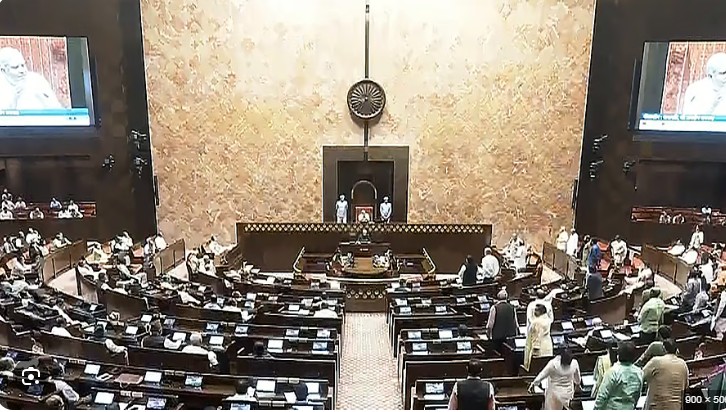
The monsoon session of the Parliament is to be held from 21 July 21 to 21 August..
The arithmetic facing the government in any future constitutional amendment vote suggests that while the ruling NDA can significantly narrow the gap to a special majority through support from regional parties, it remains unlikely to cross the threshold without either support or abstention from a larger opposition bloc, most notably the Samajwadi Party.
The NDA currently commands 312 seats in the Lok Sabha. With three vacancies, the effective strength of the House stands at 540 members. Under Article 368 of the Constitution, a constitutional amendment requires both a majority of the total membership of the House and the support of at least two-thirds of members present and voting.
Assuming all 540 sitting MPs participate in a division, the government would require 360 votes to secure passage. On its current strength, it falls 48 votes short.
The difficulty of securing a constitutional supermajority was demonstrated earlier this year in April when the Constitution (131st Amendment) Bill, 2026, failed despite receiving 298 votes in favour against 230 opposed. Although the government won the vote, it failed to obtain the two-thirds special majority required under Article 368.
However, much water has flowed in the Yamuna since then.
Apart from the TMC MPs, the DMK from Tamil Nadu has left the opposition-led INDIA bloc, and it is understood that at least six of the nine Lok Sabha MPs from Shiv Sena (Uddhav Thackeray) might do the same thing what the TMC MPs did with their party chief Mamata Banerjee.
If the DMK’s 22 MPs and six MPs from Shiv Sena (UBT) were to support the government, the tally would rise to 340 votes, leaving the amendment 20 votes short of passage. If those MPs abstained instead, the threshold would fall, but the government would still remain 30 votes short.
A broader issue-based coalition involving the DMK, YSR Congress Party, Biju Janata Dal, Marumalarchi Dravida Munnetra Kazhagam, and six Shiv Sena (UBT) MPs would increase the government’s strength to 346 votes. Even then, the government would remain 14 votes short if all members participated in the vote.
If those same parties abstained rather than voted in favour, the threshold would decline, but the government would still be 26 votes short of the required majority.
Even adding the three MPs of the Jharkhand Mukti Morcha, as is being suggested in some circles, would not be sufficient by itself. Under the broader coalition scenario, JMM support would take the government’s tally to 349 votes, still 11 votes short of the mark required for passage. Their support, too, will not make a decisive difference.
The numbers suggest that support from regional parties alone may not be enough to secure a constitutional amendment. The government would still require either additional votes from opposition benches or a significant reduction in the number of MPs participating in the vote.
This is where the Samajwadi Party assumes particular importance. With 37 MPs in the Lok Sabha, the party represents the single largest bloc whose abstention could materially alter the parliamentary arithmetic.
If the broader coalition of DMK, YSRCP, BJD, MDMK, and six Shiv Sena (UBT) MPs supported the government, taking its tally to 346 votes, and the Samajwadi Party abstained, the number of members present and voting would fall sufficiently to reduce the two-thirds threshold to 336 votes. Under that scenario, the amendment would pass by approximately 10 votes.
The calculations remain hypothetical and depend on political decisions that have not been made public. Nevertheless, they underline a central reality of the current Lok Sabha: while regional parties can bring the government within touching distance of a constitutional supermajority, none of the combinations currently under discussion appears sufficient on its own. Unless additional opposition MPs cross over, abstain, or provide issue-based support, the government’s most straightforward path to a constitutional majority may run through the parliamentary choices of the Samajwadi Party, which holds sway in Uttar Pradesh, a state that goes to the polls in the next nine months.