
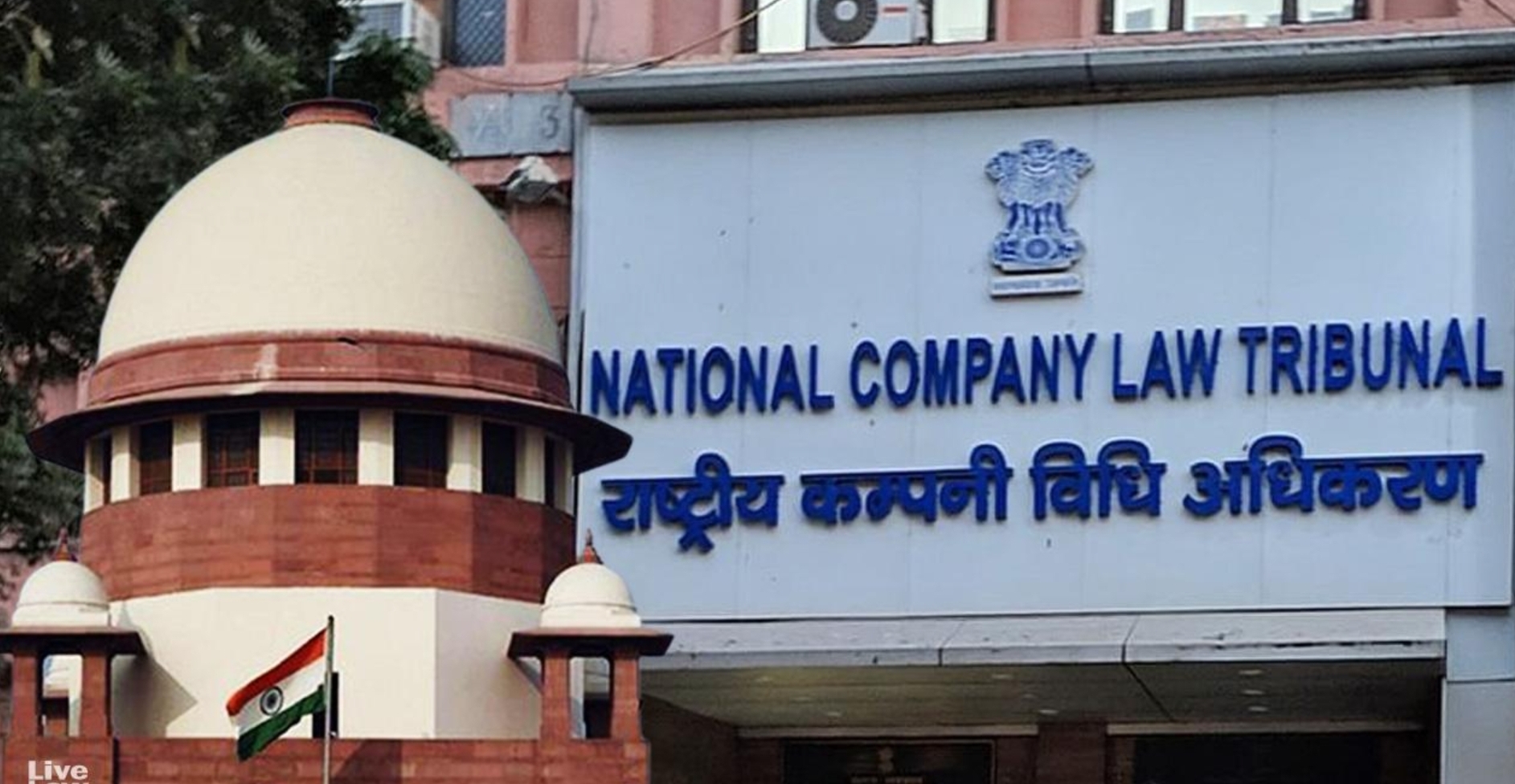
New Delhi: In a landmark 144-page judgment that exposes the inner workings of India’s individual insolvency regime, the National Company Law Tribunal has sanctioned a personal repayment plan allowing Essel Group founder Dr Subhash Chandra to resolve Rs 22,006.57 crore in personal guarantee claims for an aggregate payout of just Rs 6.50 crore, compelling both state-backed financial institutions and private lenders to absorb an effective haircut of 99.97%.
The verdict, delivered on 25 August by Third Member Nilesh Sharma, resolved a bitter split between two original bench judges and established that once a statutory voting majority approves a debtor’s proposal, courts cannot rewrite the law or block the plan merely because the recovery is microscopic.
However, legal and financial experts point out that the ruling leaves unresolved critical, substantive objections raised by genuine commercial lenders, effectively creating a playbook for promoters to defeat personal guarantees through technical loopholes.
The legal confrontation began when multiple financial institutions invoked unconditional personal guarantee and indemnity deeds executed by Chandra years earlier to back extensive credit facilities across various Essel Group entities. The creditors caught in the default comprised a mix of state-owned entities, government-backed financial institutions, and private corporate lenders.
On the public sector side, the exposed institutions included major Government of India-owned public sector banks such as Canara Bank and Union Bank of India (including its UK subsidiary), along with state-backed financial corporations like LIC Housing Finance, where the government-owned Life Insurance Corporation of India holds the promoter stake, and STCI Finance Limited, a specialized lender originally established by the Reserve Bank of India and promoted by public sector banks.
On the private side, the affected institutions included prominent private sector lenders and non-banking financial companies such as Indiabulls Housing Finance (now Sammaan Capital), HDFC Bank, Axis Bank, IndusInd Bank, and RBL Bank, alongside debt trustees representing private mutual fund schemes such as IDBI Trusteeship Services and Catalyst Trusteeship.
Under the binding terms of these guarantee deeds, executed to support transactions such as a defaulted loan facility extended to Vivek Infracon by Indiabulls Housing Finance, a Rs 250 crore facility from STCI Finance, and extensive borrowings from institutional bank consortiums, Chandra had explicitly promised that his liabilities were absolute, continuing, and independent of the corporate borrowers.
He had agreed that in the event of default, he would personally step in to satisfy all outstanding principal amounts, accumulated interest, legal charges, and associated costs without requiring lenders to first exhaust their legal remedies against the primary borrowing companies.
When the corporate borrowers defaulted and failed to repay, Indiabulls Housing Finance triggered Section 95 of the Insolvency and Bankruptcy Code (IBC) to drag Chandra into personal insolvency.
Once the personal insolvency process was formally admitted, Chandra submitted a repayment plan that capped his financial liability strictly to his disclosed personal estate of Rs 31.79 crore.
Against the total admitted creditor claims of Rs 22,006.57 crore, Chandra offered to pay a flat Rs 6.50 crore, mobilizing Rs 2.50 crore from bank balances and Rs 4.00 crore from the sale of listed shares.
From this pool, Rs 6.25 crore was slated for pro-rata distribution among 23 admitted creditors while Rs 25 lakh was set aside for resolution process costs, yielding a recovery rate of barely 0.028%.
Under this distribution, state-backed and private institutional creditors faced near-total write-offs.
The government-backed LIC Housing Finance, with an admitted claim of Rs 1,322.39 crore, was allotted just Rs 38,09,294, while state-run Canara Bank was allotted Rs 10,00,000 against its Rs 351.78 crore claim, and Union Bank of India (UK) received Rs 4,75,000 on its Rs 167.31 crore exposure. Private lenders absorbed similar reductions, with HDFC Bank earmarked Rs 19,81,250 on Rs 696.88 crore and Axis Bank assigned Rs 17,87,500 on Rs 628.78 crore.
When placed before the creditors for voting, the plan secured 80.814% approval, surpassing the statutory 75% threshold mandated under Section 111 of the IBC.
However, almost all institutional banks, spanning both state-owned lenders and private banking giants, voted against the proposal or abstained, launching a fierce legal assault against what they characterized as a rigged process.
The institutional lenders pointed out that five private corporate entities—Veena Investments Private Limited (4.99%), Direct Media Distribution Ventures Private Limited (1.15%), World Crest Advisors LLP (28.49%), Lemonade Capital Advisors LLP (16.85%), and Corpcall Capital Advisors LLP (10.30%)—collectively commanded over 61.78% of the total voting share and were instrumental in pushing the plan through.
The creditors mounted four major objections that legal experts consider highly persuasive and central to the integrity of insolvency jurisprudence.
First, the lenders argued that these five voting entities were clear related parties and associates operating under Chandra’s influence, noting that Veena Investments and its subsidiaries were controlled by the wife of Chandra’s brother, Jawahar Goel, while partners in Lemonade and Corpcall held directorships across Essel Group entities.
The banks contended that Section 109(4)(b) was enacted specifically to bar conflicted entities from voting, and that reading Section 79(2)(g) strictly to require direct shareholding by the debtor creates an absurd loophole where a guarantor can route debts through family-owned shell companies to control his own insolvency vote.
Second, the creditors produced certified net worth certificates issued by chartered accountants in 2017 and 2018 showing Chandra’s personal wealth had previously been recorded at USD 7.17 billion (Rs 45,888 crore) and Rs 40,562 crore, respectively. The banks argued that a plunge from over forty thousand crore rupees to a claimed net worth of just Rs 31.79 crore was an obvious red flag that warranted an independent forensic audit and asset-tracing exercise to uncover potential siphoning and diversion of wealth before approving any haircut.
This concern was reinforced when Canara Bank filed a separate application citing media reports regarding the reported sale of a prime residential property at 4, Bhagwan Das Road in Lutyens’ Delhi for Rs 1,260 crore, alleging active suppression of high-value assets.
Third, the lenders assailed the procedural integrity of the process, pointing out that the Resolution Professional gave them only six days instead of the mandatory 14-day statutory notice under Section 106(4)(a) to evaluate complex claims aggregating over twenty-one thousand crore rupees, while closing the voting window on the public holiday of Diwali.
Fourth, lenders exposed that the Resolution Professional had admitted claims filed through two individuals, Anil Kumar and Sunil Jain, on behalf of 960 and 300 unverified political and factory workers from Haryana, totaling Rs 147.60 crore and Rs 39.77 crore without a single piece of supporting documentation, solely on the verbal say-so of the debtor.
When the matter was initially heard, the two-judge bench split down the middle.
Judicial Member Ashok Kumar Bhardwaj held that the commercial decision of the statutory majority was binding on the tribunal under Section 114, suggesting the plan be approved while leaving dissenting creditors free to pursue independent recovery remedies.
Conversely, Technical Member Reena Sinha Puri accepted the banks’ objections, holding that the entire process was vitiated and void ab initio due to statutory timeline breaches, the wrongful participation of associate companies in the voting pool, unverified worker claims, and the fatal failure to conduct a forensic audit to trace missing wealth.
Appointed as the Third Member to break the deadlock, Nilesh Sharma rejected the banks’ core objections and ruled in favor of approving the repayment plan.
On the question of related-party voting, the tribunal ruled that Section 79(2)(g) of the IBC strictly defines a corporate associate as a company in which the debtor personally holds more than 50% of the share capital or directly controls the board. Because Chandra did not personally hold physical shares in Veena Investments or its subsidiaries, the tribunal held that courts cannot rewrite statutory text to disqualify entities based merely on family ties, commercial influence, or business proximity.
The tribunal also dismissed the demand for a forensic investigation into Chandra’s depleted wealth, clarifying that under Chapter III of Part III of the IBC, a Resolution Professional is merely an administrative facilitator rather than an investigating agency, as broad investigative powers are deliberately reserved for a Bankruptcy Trustee under Chapter IV.
It rejected Canara Bank’s application regarding the Rs 1,260 crore Delhi property as unverified newspaper hearsay, accepting Chandra’s clarification that the bungalow was owned by Greatway Estates Private Limited, mortgaged to JC Flowers ARC, and already disclosed in the repayment plan.
A separate application by STCI Finance was dismissed after finding that Chandra had executed a mortgage over Cuffe Parade properties rather than a personal guarantee, leaving STCI free to enforce its security outside the plan without requiring statutory concurrence under Section 110(5).
While the judge did agree with the banks that admitting the claims of 1,260 unverified workers without documents was an improper lapse, the tribunal simply struck those individuals from the list and ordered their funds redistributed pro-rata among legitimate lenders, holding that this minor tweak did not disrupt the overwhelming 80.8% majority approval.
Finally, addressing the legal effect of the ruling under Section 115 of the IBC, the tribunal held that an approved repayment plan is universally binding on all creditors, firmly rejecting the Judicial Member’s earlier view that dissenting lenders could independently pursue the remainder of their original debt.
Once the Rs 6.50 crore plan is fully implemented, all personal guarantee liabilities against Chandra stand extinguished under the Code, leaving public and private lenders alike with virtually zero recovery and raising serious questions about the vulnerability of India’s personal guarantee regime to structured corporate maneuvering.