
LONDON:
THE GROWING CONCERN OVER INDOOR AIR
Air pollution is no longer seen only as an outdoor environmental issue. Health researchers increasingly warn that indoor air can carry a mix of dust, fine particulate matter, chemical fumes, pollen, mould spores, and smoke particles that remain trapped inside enclosed spaces. Guidance referenced by the World Health Organization notes that people now spend a large portion of their time indoors at home, workplaces, schools, and commercial buildings—making indoor air quality a major public health concern.
In large Indian cities, where seasonal smog and traffic emissions frequently push pollution levels into hazardous ranges, outside air often enters homes through ventilation gaps, windows, and daily movement. As a result, indoor exposure to microscopic pollutants has become a routine reality rather than an occasional event.
WHY AIR PURIFIERS HAVE BECOME IMPORTANT
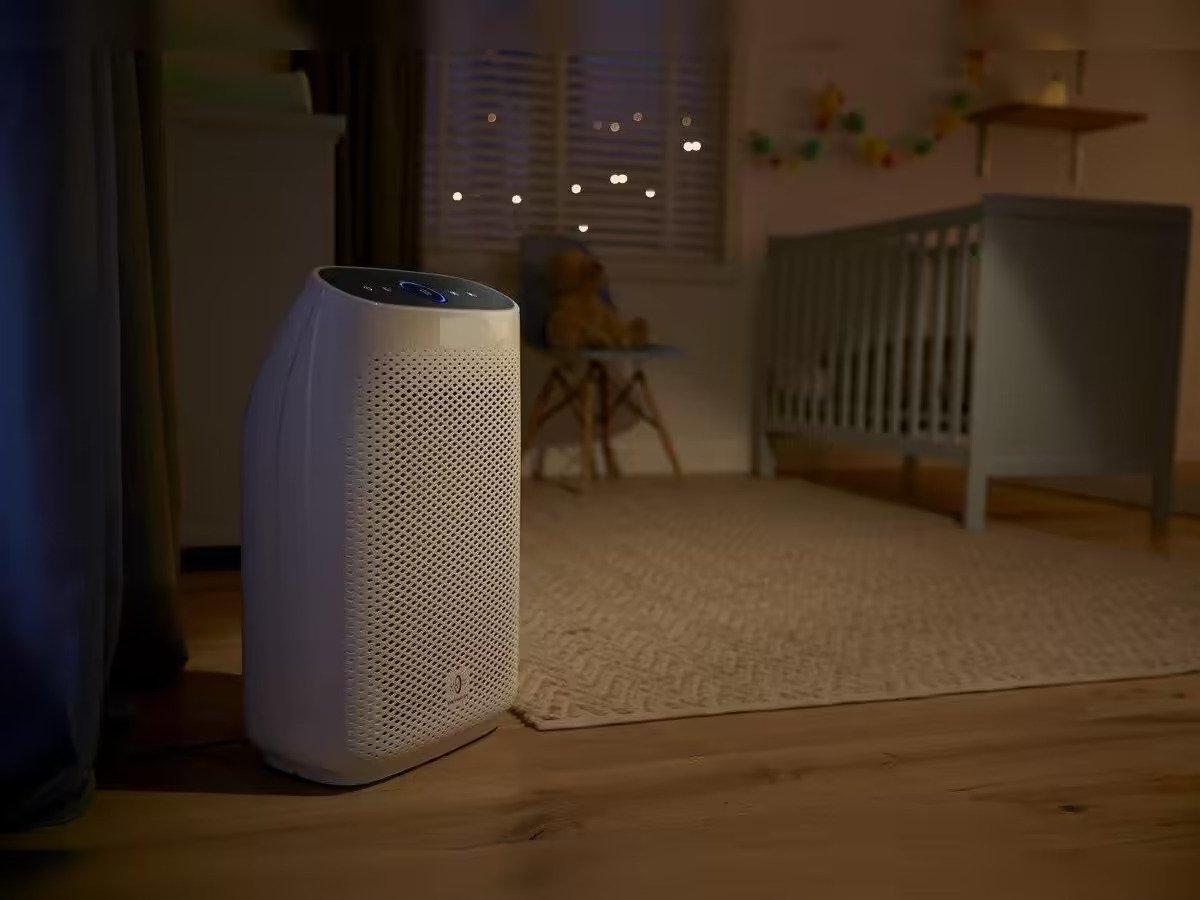
Air purifiers are designed to reduce airborne pollutants within enclosed rooms by continuously filtering the air. Their primary importance lies in lowering exposure to fine particles such as PM2.5, which are small enough to penetrate deep into the lungs.
Medical experts say indoor particle reduction can help decrease irritation of airways, reduce allergy triggers, and improve general breathing comfort. Families with children, elderly members, or individuals sensitive to dust often notice fewer symptoms such as sneezing, throat irritation, or eye discomfort when indoor particulate levels drop.
Beyond health considerations, purifiers also improve every day living conditions by reducing visible dust, absorbing lingering odours, and helping maintain cleaner indoor environments. In high-density urban areas, this functional benefit has made them increasingly common household appliances rather than niche medical devices.
HOW AIR PURIFIERS WORK
Most air purifiers operate through layered filtration systems that clean air in stages.
The process usually begins with a pre-filter that captures larger particles such as hair and coarse dust. The air then passes through a HEPA-grade filter, designed to trap extremely fine particles including pollen, mould spores, and pollution dust. Many systems also include an activated carbon filter, which absorbs smoke, gases, and odours.
Once filtered, the cleaner air is circulated back into the room. Continuous repetition of this cycle gradually lowers pollutant concentrations indoors. The efficiency of this process depends heavily on the purifier’s airflow capacity relative to the room size.
Modern models often include air-quality sensors that automatically adjust fan speed based on detected pollution levels, ensuring steady filtration throughout the day.
UNDERSTANDING THE LIMITS OF AIR PURIFIERS
Despite their usefulness, air purifiers are not a complete defence against pollution.
They function effectively only within a defined room area. If used in a space larger than their rated capacity, pollutant removal becomes slow and inconsistent. Keeping doors or windows constantly open also reduces their effectiveness, as new contaminated air continues entering faster than it can be filtered.
Air purifiers also clean airborne particles only; they do not remove dust already settled on surfaces, furniture, carpets, or curtains. Routine cleaning remains necessary to prevent re-circulation of particles.
Another key limitation is maintenance. Filters accumulate trapped pollutants over time and must be replaced according to manufacturer schedules. A saturated filter can reduce airflow and compromise purification performance.
Experts therefore describe air purifiers as support systems, not replacements for ventilation, cleanliness, or broader pollution control measures.
SUSTAINABILITY AND SUITABILITY IN INDIAN CONDITIONS
In India, air purifiers must handle a unique mix of fine particulate pollution, heavy seasonal dust, construction debris, and urban emissions. Because of this, models equipped with true HEPA filtration and strong airflow capacity tend to perform better in Indian metropolitan environments.
Energy consumption is also an important sustainability factor. Since purifiers may run for extended hours during high-pollution seasons, energy-efficient models reduce long-term operational costs and environmental impact.
Filter availability and replacement cost further influence sustainability. Devices that require rare or expensive imported filters may become impractical over time. Units with locally available replacement filters often prove more viable for long-term household use.
Noise levels, portability, and durability under continuous operation also determine whether a purifier remains practical beyond initial purchase.
FROM OPTIONAL GADGET TO EVERYDAY ESSENTIAL
A decade ago, air purifiers were seen largely as luxury appliances or specialised medical aids. Today, in many pollution-affected cities, they are increasingly viewed as preventive household equipment similar to water purifiers or kitchen exhaust systems.
Health awareness, rising respiratory complaints, and greater public monitoring of air-quality indices have all contributed to this shift. When outdoor pollution crosses severe thresholds, indoor protection becomes not just a comfort choice but a practical necessity for maintaining daily wellbeing.
While technology alone cannot solve the broader environmental crisis, air purifiers offer an immediate, controllable method for improving the quality of the air people breathe inside their own homes.
In that sense, the modern air purifier represents not simply a consumer product, but a response to changing urban living conditions—one that reflects the growing recognition that clean air indoors is as essential as clean water.