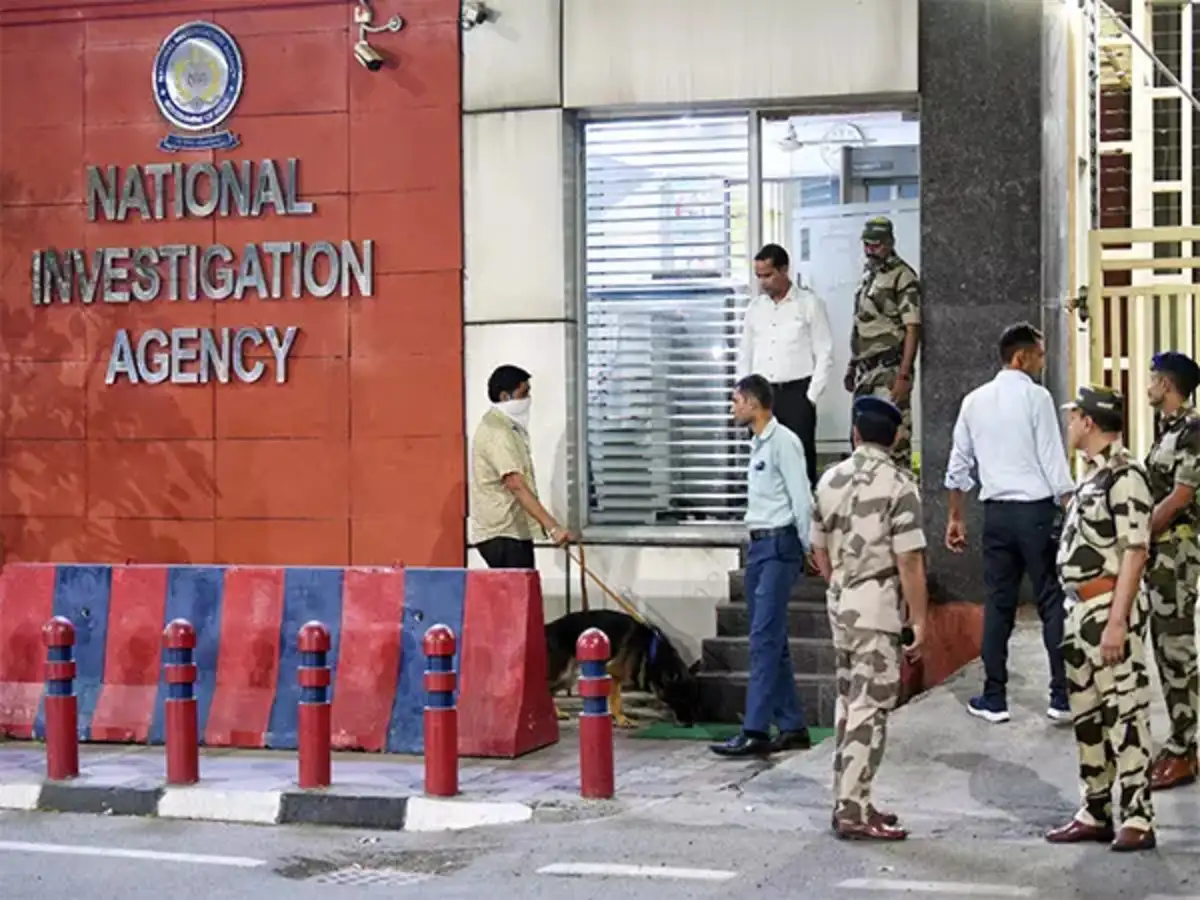
NEW DELHI: The Supreme Court on 11 February 2026 sharply questioned why the National Investigation Agency (NIA) invoked stringent anti-terror provisions to justify its investigation into the Beldanga violence in West Bengal’s Murshidabad district, saying that not every incident of public unrest amounts to a threat to national economic security under the Unlawful Activities (Prevention) Act (UAPA).
A Constitution Bench led by Chief Justice of India Surya Kant and including Justice Joymalya Bagchi was hearing the West Bengal government’s challenge to the Calcutta High Court order that had allowed the Centre to consider an NIA probe into the January incident, and the subsequent Union Home Ministry notification assigning the case to the federal agency.
The NIA had registered the case under Section 15 of the UAPA, treating the episode as a “terrorist act” that threatened India’s economic security—reasoning that was vigorously questioned by the apex court. The bench noted that the NIA did not examine the case materials or the state police case diary before concluding that UAPA applied, calling this a “pre-decisional conclusion.” “Every emotional outburst cannot be packaged as a threat to economic security,” Justice Bagchi remarked during the hearing.
The violence in Beldanga erupted on January 16–17 after the body of 30-year-old Alauddin Sheikh, a migrant worker brought from Jharkhand to his native village in West Bengal, sparked protests and clashes. The unrest saw four FIRs registered and about 30 arrests; protesters blocked a national highway and reportedly attacked a journalist.
The Supreme Court directed the NIA to file a sealed-cover status report before the Calcutta High Court indicating whether, based on materials collected so far, there was a prima facie case under the UAPA to justify its investigation. The top court then disposed of the state government’s challenge to the Centre’s decision and remitted both matters back to the High Court for fresh consideration. The High Court will now independently assess whether the UAPA provisions can rightly be invoked.
During the hearing, the bench also noted that a similar episode of violence in Murshidabad in April 2025 had previously prompted a High Court suggestion for an NIA probe, but the NIA had been slow to act then—another point of criticism from the court.