
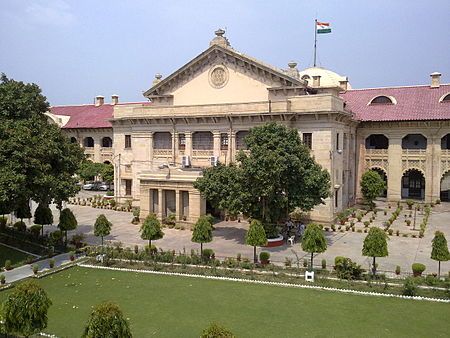
NEW DELHI: The Allahabad High Court has held that no permission from the State authorities is required to conduct religious prayer meetings within private property in Uttar Pradesh, observing that such activities are protected under the fundamental right to freedom of religion.
A Division Bench comprising Justice Atul Sreedharan and Justice Siddharth Nandan delivered the ruling in Maranatha Full Gospel Ministries v. State of Uttar Pradesh and Others, after taking note of the State government’s submission that there is no legal requirement mandating prior permission for such gatherings.
Recording the State’s stand, the Court noted that there is no prohibition on individuals or organisations from holding religious prayer meetings within their private premises. It further observed that the State is duty-bound to extend equal protection of law to all citizens, without discrimination on the basis of religion or any other consideration.
The Bench ruled that since conducting a religious prayer meeting within private premises forms part of the fundamental right under Article 25 of the Constitution, no permission is required under the law for such an activity. However, the Court clarified that this liberty is strictly limited to private property.
The Court was hearing two similar petitions filed by Maranatha Full Gospel Ministries and Emmanuel Grace Charitable Trust. The petitioners submitted that they intended to organise religious congregations for worship within their private premises but approached the Court after the State authorities failed to act on their representations seeking permission.
Disposing of the petitions, the High Court held that the petitioners are free to conduct religious prayer meetings at their convenience within their private premises, without obtaining any prior approval from the State government.
At the same time, the Bench made it clear that if such gatherings extend to public roads or public property, the organisers would be required to at least inform the police and obtain necessary permissions as mandated under the law.
The Court also underscored the State’s responsibility to ensure the safety and protection of the petitioners. “It is a concomitant duty of the State to ensure that the property, rights and life of the petitioner are protected at all costs,” the Bench observed, adding that the manner in which such protection is to be provided lies within the discretion of the police authorities.
Advocates Manoj Kumar and Akal Raj Singh appeared on behalf of the petitioners.