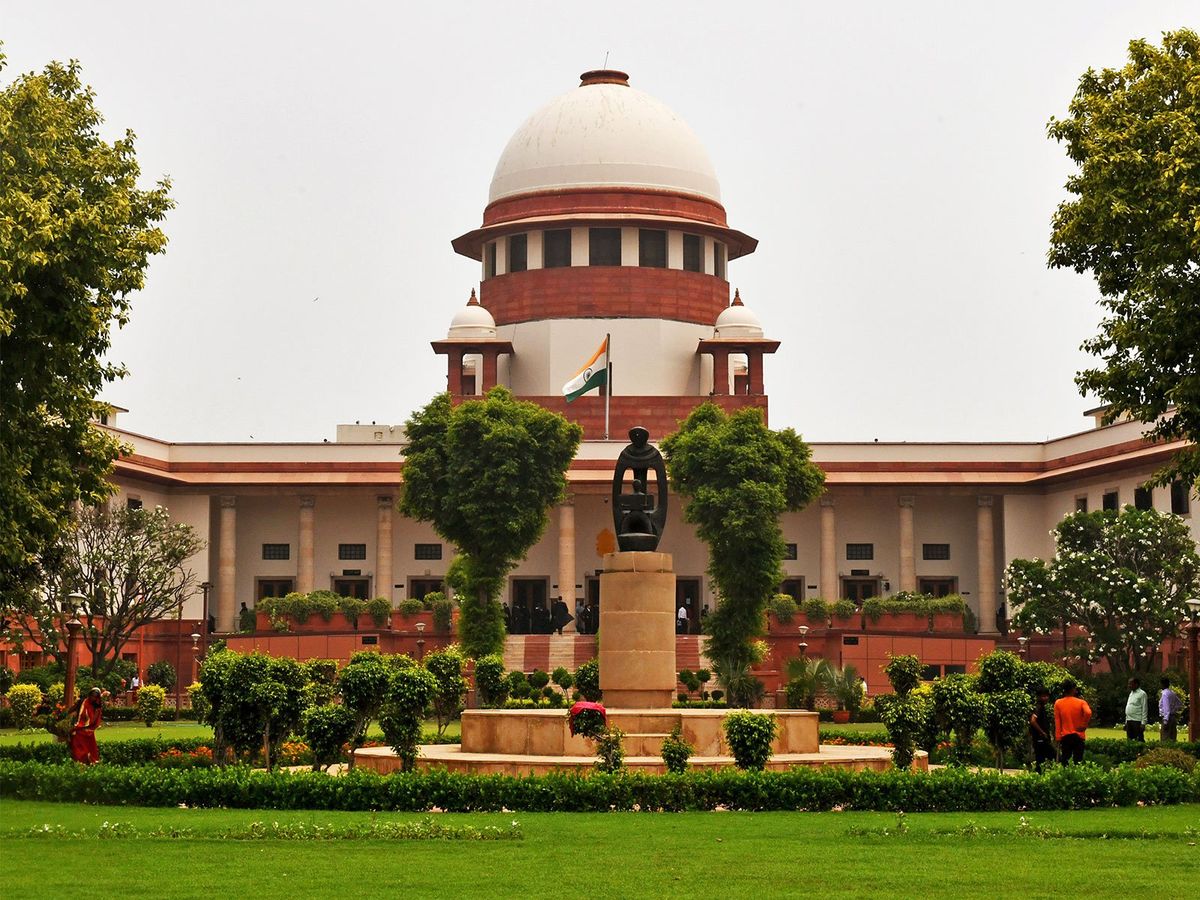
NEW DELHI: The Supreme Court on Wednesday questioned whether the Election Commission of India’s (ECI) power to conduct a Special Intensive Revision (SIR) of electoral rolls is absolute or subject to judicial scrutiny, observing that such exercises can have serious civil consequences for citizens.
A Bench comprising Chief Justice of India Surya Kant and Justice Joymalya Bagchi noted that revision of electoral rolls directly affects an individual’s right to vote and therefore cannot be insulated from legal safeguards or judicial review.
“Revision of the voter list can lead to civil consequences for a person whose name is on the list. If something affects the civil rights of people, why should the process not follow the procedure prescribed under sub-section (2)?” CJI Kant observed, referring to Section 21(2) of the Representation of the People (RP) Act, which mandates that electoral rolls be prepared and revised in a prescribed manner.
Justice Bagchi underlined that no statutory power can be unrestrained. Pointing to the Conduct of Elections Rules, he said Rule 21 itself imposes checks on the ECI’s authority. “If an intensive revision is carried out, the rules require the rolls to be prepared afresh and Rules 4 to 13 to apply. Can we really say such a power is untrammelled and beyond judicial review?” he asked.
The Court was hearing a batch of petitions challenging the ECI’s decision to conduct SIRs across multiple states. The controversy began last year after the Commission ordered an intensive revision of electoral rolls in Bihar. Several organisations, including the Association for Democratic Reforms (ADR) and the National Federation of Indian Women (NFIW), challenged the legality of the exercise. However, the ECI proceeded with the revision as the Supreme Court did not grant an interim stay.
On October 27, 2025, the ECI expanded the SIR exercise to other states and Union Territories, including West Bengal, Kerala and Tamil Nadu, triggering a fresh round of petitions. On January 19, the Supreme Court issued a set of directions to the ECI concerning the ongoing revision in West Bengal.
During Wednesday’s hearing, Senior Advocate Rakesh Dwivedi, appearing for the ECI, argued that the Commission is legally empowered to carry out a Special Intensive Revision. However, the Bench pressed him on whether the ECI is exempt from following the procedural safeguards laid down in the statute and rules.
Dwivedi responded that the RP Act itself provides a framework for such revisions, but emphasised that Sections 21(2) and 21(3) operate in different domains. “Unless otherwise directed, the revision contemplated must be carried out strictly in the prescribed manner,” he submitted. He further argued that the statutory scheme incorporates fairness, reasonableness and due process, adding that voter rights under Article 336 of the Constitution cannot be compromised.
Justice Bagchi also reflected on the historical context behind continuous monitoring of electoral rolls, citing post-Partition migration. Referring to West Bengal’s Murshidabad district, he noted that parts of the region were in Pakistan at the time of Independence, necessitating ongoing vigilance over voter lists. He also made a personal reference, mentioning that his mother hailed from East Pakistan.
The matter will be taken up for further hearing on Thursday.