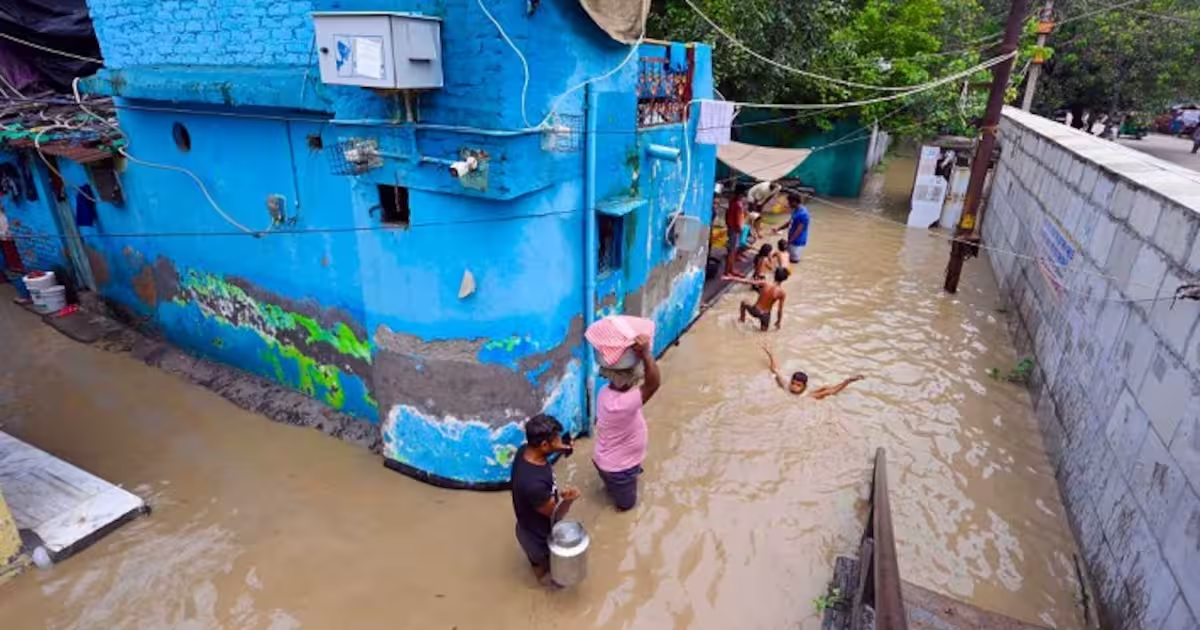
In the aftermath of massive water releases from Hathnikund Barrage in Haryana, the Yamuna River in Delhi has risen to 204.14 m, which is only 0.36 m shy of the 204.50 m warning level. The Central Water Commission report says that discharges remained above 50,000 cusecs for several hours, peaking at 54,707 cusecs around 1 am, further aggravating the rise in river flow. Officials expect the water levels to stay high for the next 24-48 hours, as it takes time for peak flows to reach Delhi.
They may not have crossed the danger mark of 205.33 m, but the authorities remain alert in all monitoring stations. Residents living along the banks have been cautioned to avoid low-lying areas and stay alert for directives.
According to recent images from Prayagraj, the Ganga and Yamuna rivers are overflowing, causing flooding in a number of places. Low-lying areas have been flooded by the rising water levels.
The recent visuals of Prayagraj where river Ganges and Yamuna are flowing above danger level. The coastal areas of these rivers are totally submerged in water and the continuous rain has further aggravated the problem. @NDRFHQ & @SDRF_UP is doing a great job on ground level for… pic.twitter.com/se0MWyO4Ki
— Rishabh Pandey (@rishabhpost) August 3, 2025
In Varanasi, the Ganga River’s water level has increased dramatically as a result of ongoing, intense rainfall. The overflowing water is slowly approaching the stairs in these photos taken from Tulsi Ghat.
#WATCH | Uttar Pradesh: The water level of River Ganga rises following heavy rainfall in Varanasi. Visuals from Tulsi Ghat. pic.twitter.com/F2pZkpc1bV
— ANI (@ANI) August 3, 2025
Flood Alerts Sounded Across Uttar Pradesh
In the meantime, in Uttar Pradesh, both the Yamuna and Ganga rivers are going above the emergency level with serious flooding in Prayagraj and nearby areas. The Yamuna at Naini has crossed its danger level of 84.73 m with the Ganga also crossing its warning mark.
The flood crisis has affected over 61 wards, leaving thousands homeless and evacuations on a massive scale. Nearly 100 relief camps have been established, with hundreds of boats in service and emergency supplies dispatched.
The Ganga in Varanasi is also hovering near its flood warning mark, with floodwaters affecting cremation ceremonies at traditional ghats and inundating neighborhoods along the river. PM Modi personally reviewed the situation, ordering immediate relief in flood-affected areas.
According to the Meteorological Centre in Jaipur, Rajasthan received 285 mm of rain in July, the most in 69 years. 308 mm set in July 1956 was the previous record.
Six districts were under a yellow alert for moderate to heavy rains, and sixteen districts kept their schools closed on Friday.
ALSO READ: Storm Floris: Weather Alerts Issued for 8 Counties Ahead of Wet, Windy Holiday
Vigilance and Preparedness Remain Key
Though Delhi is not yet in the critical danger-level category, the meteorological department is predicting continued rainfall upstream, which could lead to the Yamuna reaching unsafe levels pretty soon. Normally, the waters released from the barrage in Haryana take anywhere between 48 and 50 hours to reach a level in Delhi, reminding the need for constant monitoring.
Residents are urged to remain vigilant and to avoid riverbank areas and follow official advisories. With the evacuations infrastructure already in place, authorities prepared to act swiftly should water levels continue to rise.